It’s safe to say that most of us arrive in Kyoto with a lifetime of spending time in gardens already behind us. However, Kyoto’s gardens are quite unique, and I was surprised by the variety on offer, which go well beyond raked gravel and rocks.
Note that at some of the most famous ones, you can’t set foot in the garden at all, and the most beautiful parts sit behind a rope. I’ll admit that my first reaction was mild disappointment. All of this beauty and you have to stand well away from it, I thought. Over time, though, I’ve come to rethink that rope as a positive thing.
Here’s a guide to the zen, strolling, shakkei and tsuboniwa gardens you might encounter while in Kyoto.
What makes Kyoto's gardens special
Kyoto has been a center for gardens for over a thousand years. Pond gardens, or chisen, came first, built by the aristocrats of the Heian period (794–1185). Dry gardens, or karesansui, came into their own later, in the Zen temples of the Muromachi period (1336–1573).
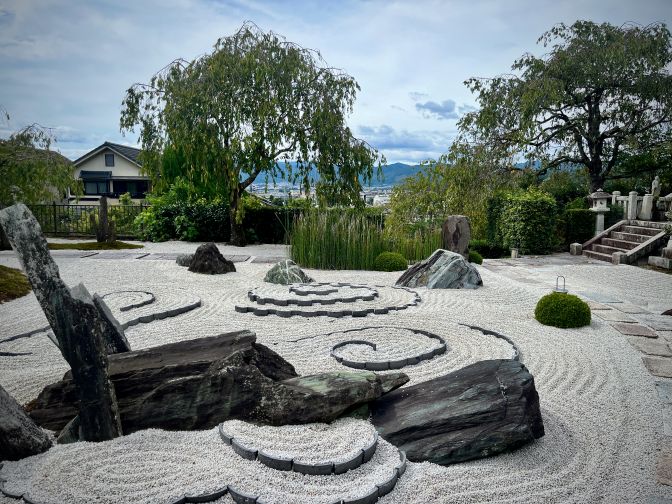
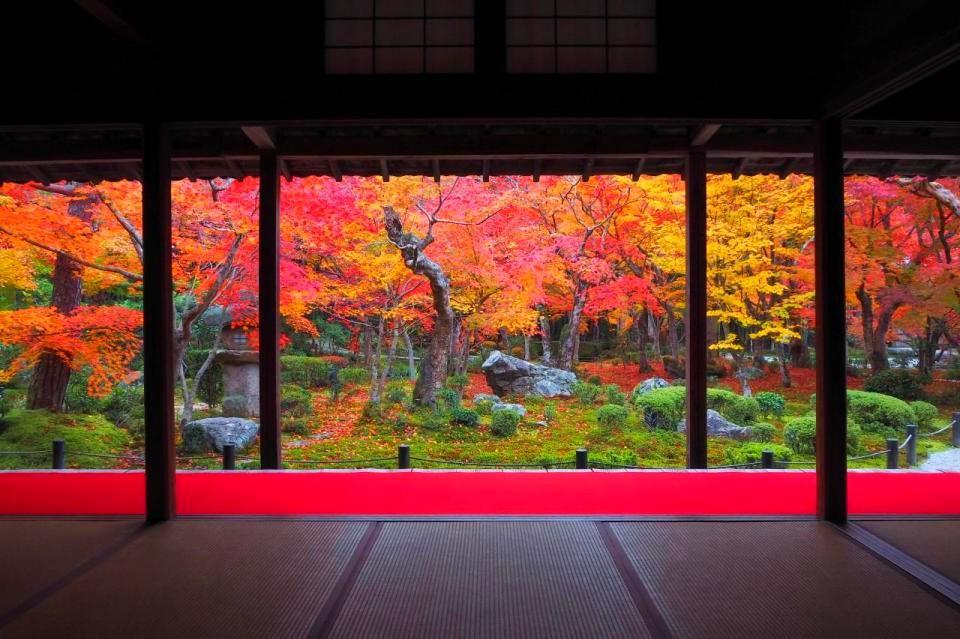
The dry garden at Enko-ji Temple uses gravel and stone to represent islands and water.
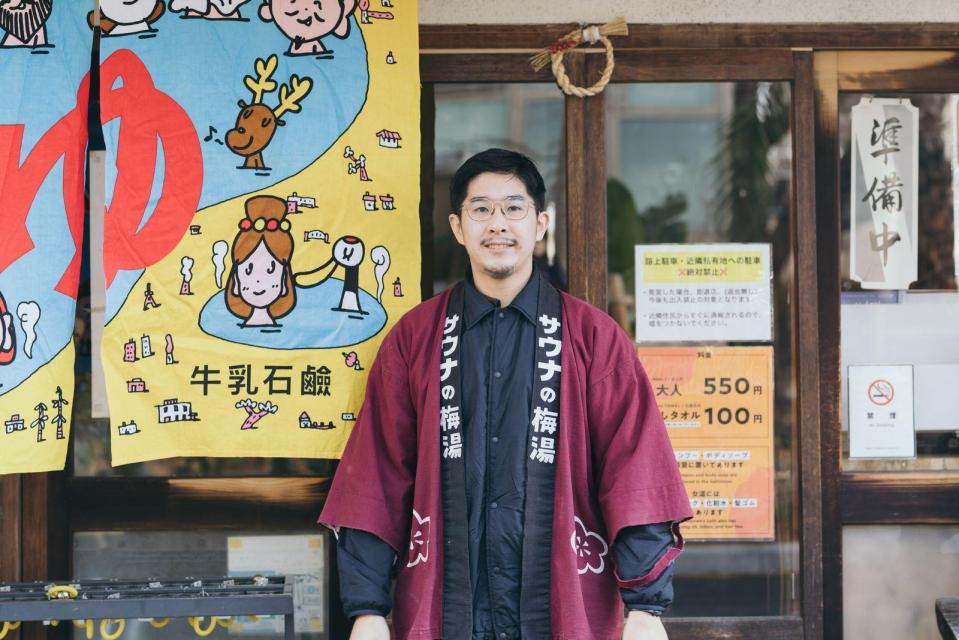
History only explains so much, though. To understand what to look out for, it helps to ask someone who tends to these gardens. KK Kimura is a gardener friend who works between Osaka, Nara and Kyoto.
I visited Tofuku-ji Temple with him and asked about the biggest difference between Western and Japanese gardens. He believes it has something to do with symmetry.
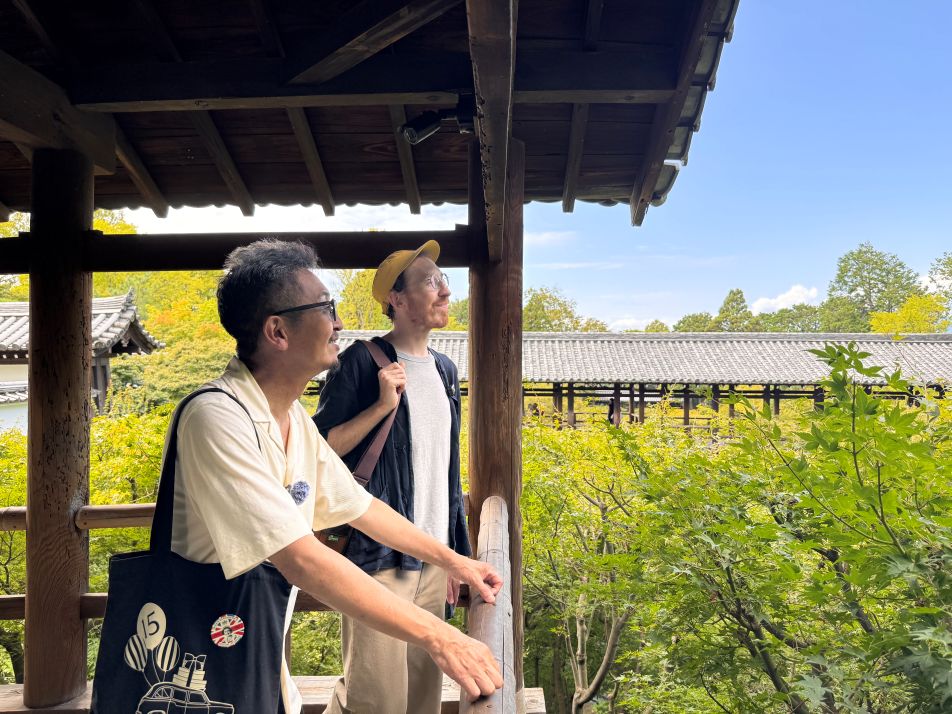
Gardener KK Kimura shares his perspective on Kyoto’s garden design at Tofuku-ji.
Think of the formal gardens of Europe, like those at the Palace of Versailles, where one side mirrors the other. In Tofuku-ji’s north garden, Kimura pointed me toward a checkerboard of paving stones and moss. On the left it’s as neat and tidy as a chessboard. But toward the right, the squares drift apart and fade into the moss.
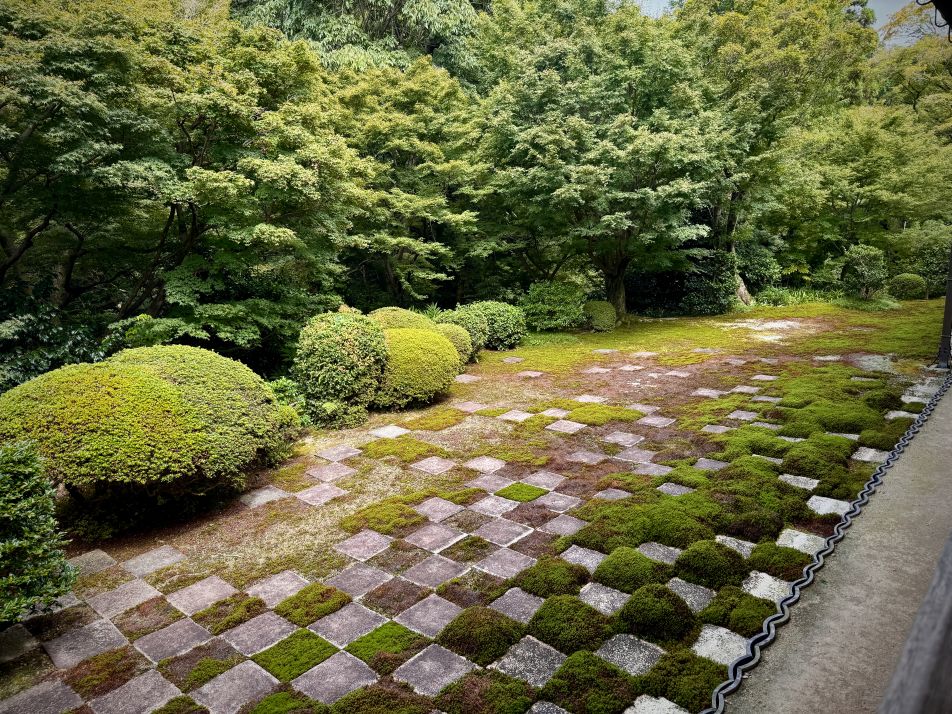
Tofuku-ji’s checkerboard garden fades into moss, reflecting Shigemori Mirei’s painterly design.
The designer, who trained as a painter, let the grid fade out as if it were a brushstroke. Kimura pointed it out because it’s not trying to be perfect. To see the fade most clearly, it helps to stand at the left end of the corridor and look toward the far right corner.
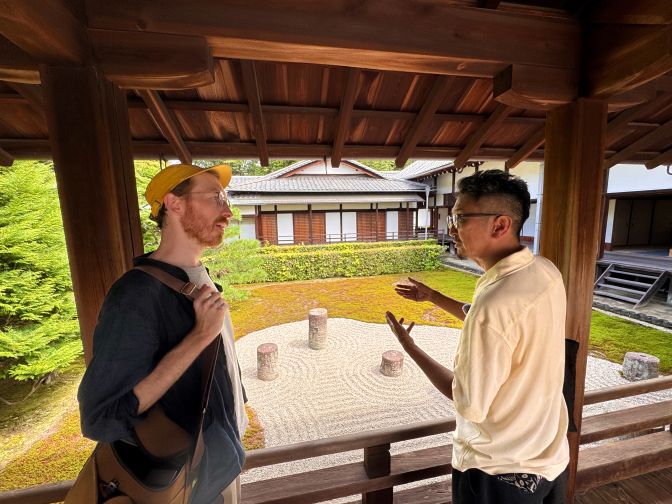
Gardener KK Kimura explains how Japanese gardens embrace imperfection.
That idea runs through many of Kyoto’s gardens, and Kimura traces the idea back to Buddhism. Nothing in the garden has to be perfect, and neither does the person looking at it, he told me. One really interesting point he mentioned is that you don’t need to understand the designer’s intention to fully appreciate a garden. “However the garden makes you feel, is the right way to see it.” he said.
Kyoto’s zen gardens
Zen temples take the idea of a garden in a different direction. A karesansui, or dry landscape garden, creates landscapes of mountains, islands, and water out of rock and gravel. The rocks are boulders, some knee-high, some taller than an adult, and the raked gravel around them represent waves.
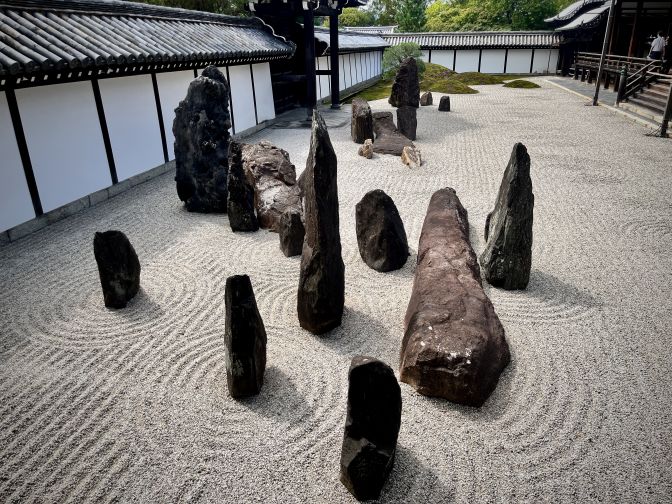
The south garden at Tofuku-ji uses raked gravel to suggest the sea around stone islands.
These gardens were designed to be viewed from the veranda, never walked through, so definitely take time to really slow down and take in their austere beauty. As you explore Kyoto’s gardens, you may notice how few flowers there are in relation to gardens you may be familiar with. That’s on purpose. When flowers do appear, it’s a special event rather than a regular thing.
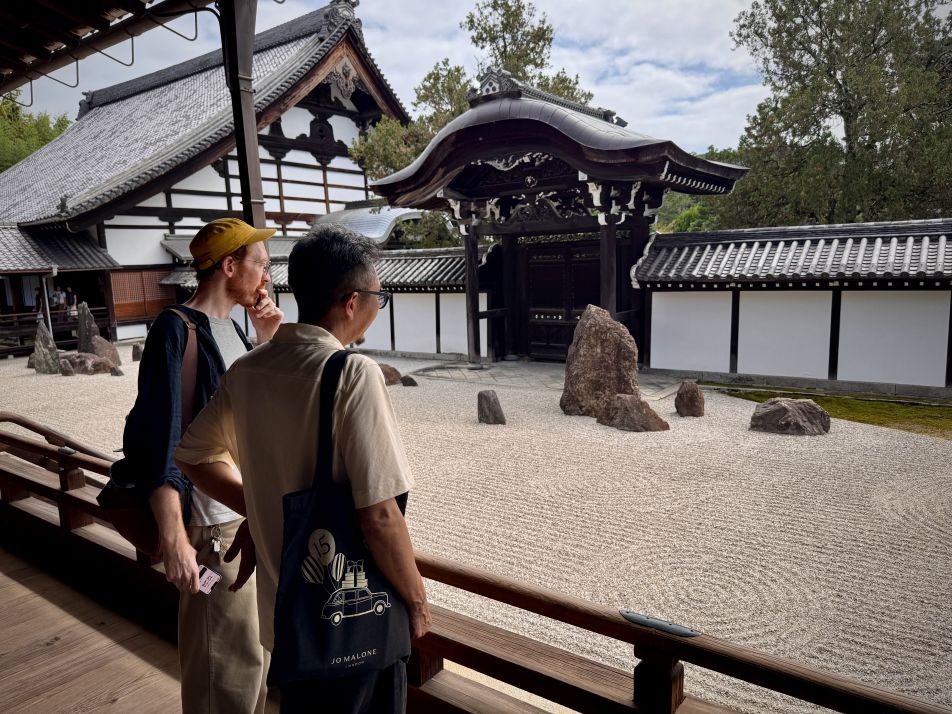
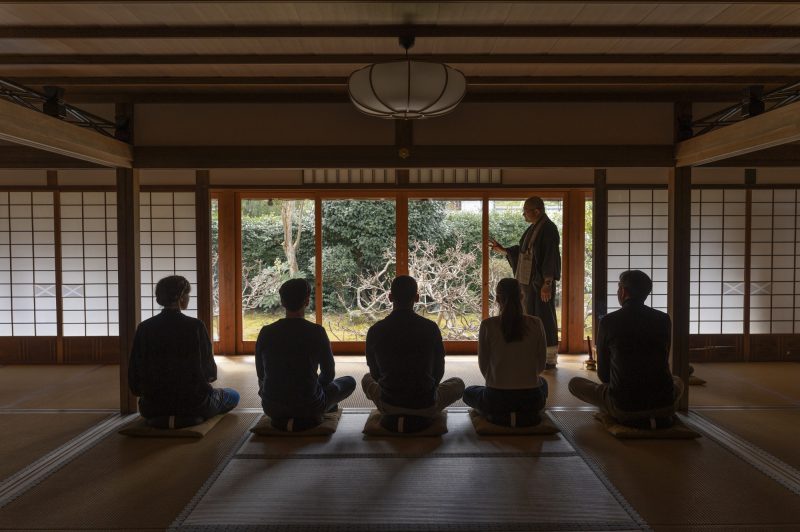
Kyoto’s Zen gardens are designed to be viewed slowly from the veranda.
Tofuku-ji Temple
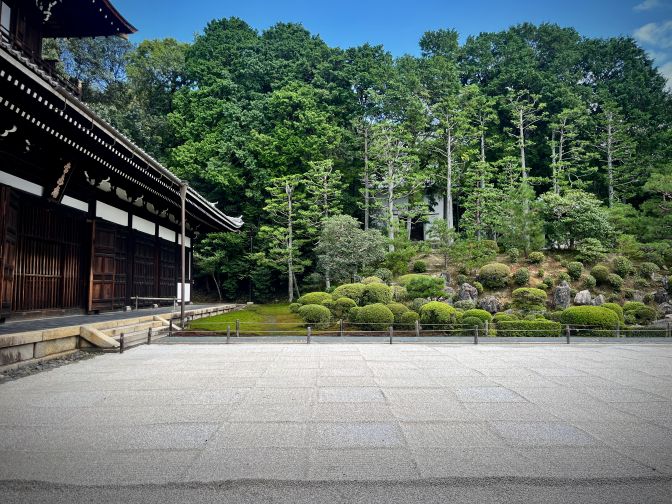
In 1939, the designer Shigemori Mirei (1896–1975) remade the gardens around the abbot’s quarters. The temple gave him one specific condition: nothing on the grounds could be thrown away. So the seven pillars used to represent the Big Dipper in the east garden are hewn out of old foundation stones from the temple’s latrine.
Tofuku-ji is famous for its maples, and rightly so; they’re utterly gorgeous. Expect big crowds in November, but it is relatively quiet for the rest of the year.
Ryoan-ji Temple
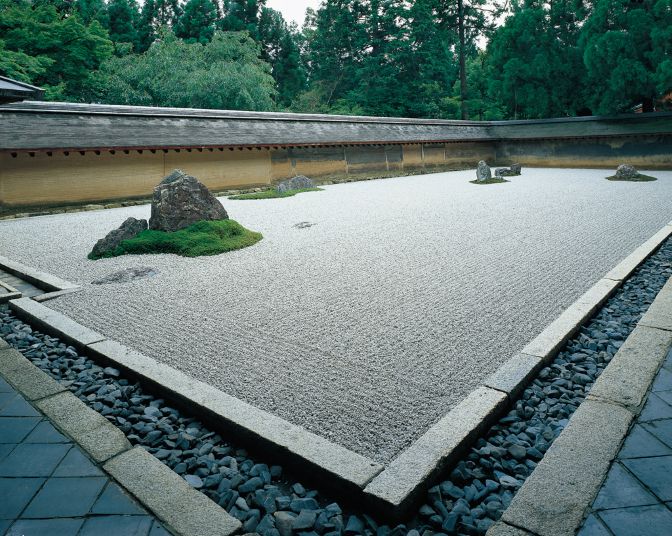
This temple is home to perhaps one of the most famous karesansui gardens in the world. Fifteen rocks surrounded by perfectly raked gravel, arranged so that at least one of them is always hidden from view, no matter where you sit on the veranda.
This garden is very popular, so aim to arrive when the gates open at 8:00 AM (or 8:30 AM in winter). On the way out, make sure to find the stone basin carved with the words ware tada taru o shiru: “I know only what is enough.”
Renge-ji Temple
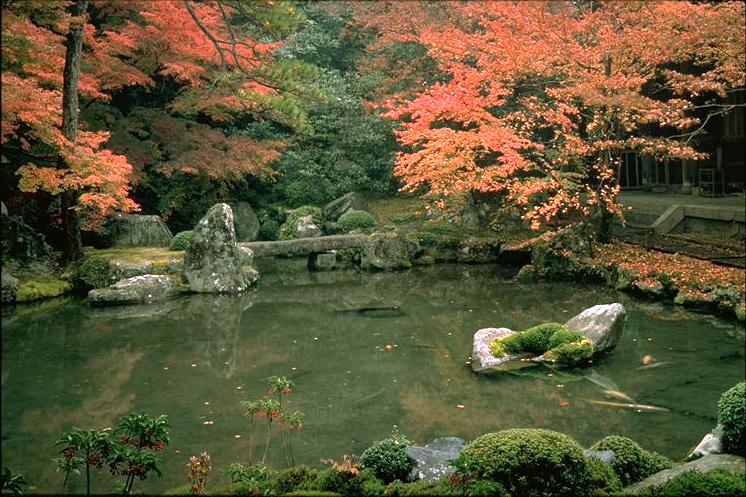
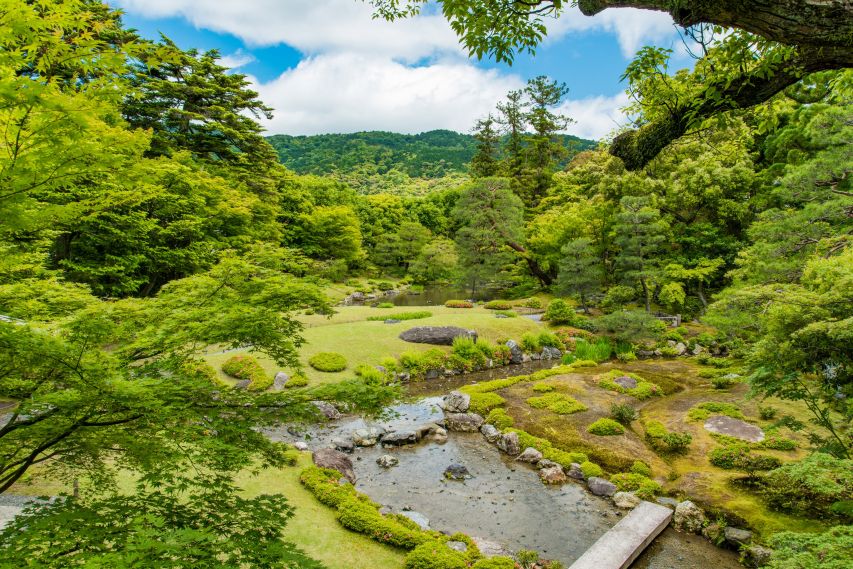
Renge-ji is a Tendai sect temple rather than a Zen one, and its garden is built around a pond. However, I still think it must be included because it has the same stillness of a karesansui garden, and is one of my favorite places in the whole of the city to sit and think. Keep an eye out for the resident heron, often seen standing perfectly still at the water’s edge, waiting to catch some fish for his lunch.
Don’t be put off by a rainy day either. The lower light suits Renge-ji well, and the closeness of the pond and the planting feels far more intimate than under bright sun.
Enko-ji Temple
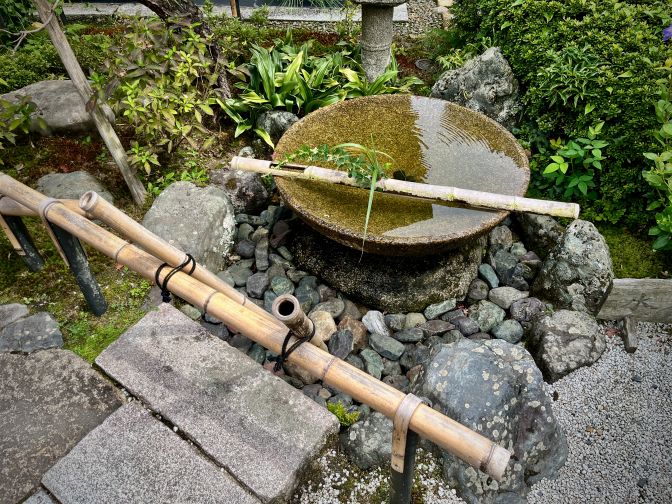
Renge-ji is a Tendai sect temple rather than a Zen one, and its garden is built around a pond. However, I still think it must be included because it has the same stillness of a karesansui garden, and is one of my favorite places in the whole of the city to sit and think. Keep an eye out for the resident heron, often seen standing perfectly still at the water’s edge, waiting to catch some fish for his lunch.
Don’t be put off by a rainy day either. The lower light suits Renge-ji well, and the closeness of the pond and the planting feels far more intimate than under bright sun.
Kyoto’s strolling gardens
Walk through Kyoto's strolling gardens
At Shoren-in Temple, visitors have a different, more immersive experience, as this kaiyu-shiki teien, or circuit-style garden, is made to be walked. Many of them were designed to feel like a real journey, with miniaturized versions of famous landscapes along the way.
The path isn’t really a suggestion though. It runs one way, and the best views are sometimes hidden until just the right moment. Gardeners call this miegakure, or hide and reveal.
At Shoren-in, the path climbs the hillside behind the temple, and on the way up you see almost nothing because of the trees blocking your view. Then you reach a clearing near the top and suddenly the view appears: the temple and garden against the backdrop of Kyoto, framed by maples like a painting.
Kimura told me that he never prunes a single tree on its own. He always has the whole garden in mind. I feel that same mindset at work here.
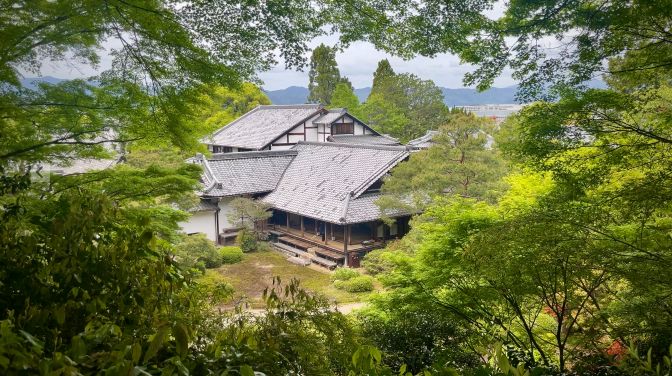
The hillside viewpoint at Shoren-in reveals Kyoto framed by maple trees.
Murin-an Villa

This strolling garden is not to be missed. Water from the Lake Biwa Canal runs through it and you hear the landscape before you see it, with the pond intentionally hidden from the teahouse where the path starts. The three-step waterfall at the back is believed to be modeled on one at Daigo-ji Temple. Entry is by timed slot, which you can book on their website.
Okochi-Sanso Villa
The bamboo path of Arashiyama ends at a gate that most people walk past. Behind it is a garden commissioned by film star Okochi Denjiro (1898–1962). He spent thirty years and his own samurai-film earnings on designing this hillside view. In front of the Daijokaku villa you can look east to Mt. Hiei, but turn around and there rises the peak of Arashiyama. An actor spending three decades designing a place for his audience to soak in the grandeur of nature is a beautiful idea.
Shakkei and tsuboniwa: Kyoto's smallest and largest garden views
Shakkei: borrowed scenery in Kyoto
Sit on the veranda at Entsu-ji Temple and look straight out. Where the hedges of the garden end, Mt. Hiei rises above them, framed majestically between tall trunks of cedar.
This is shakkei, or borrowed scenery, and Entsu-ji is a great example of it. The hedges are designed to hide anything that sits between the garden and the view outside, allowing the near and far to blend seamlessly. The aforementioned Murin-an is also a fantastic spot for shakkei and there’s a stunning example at Shugaku-in Imperial Villa, which you can only visit on a guided tour.
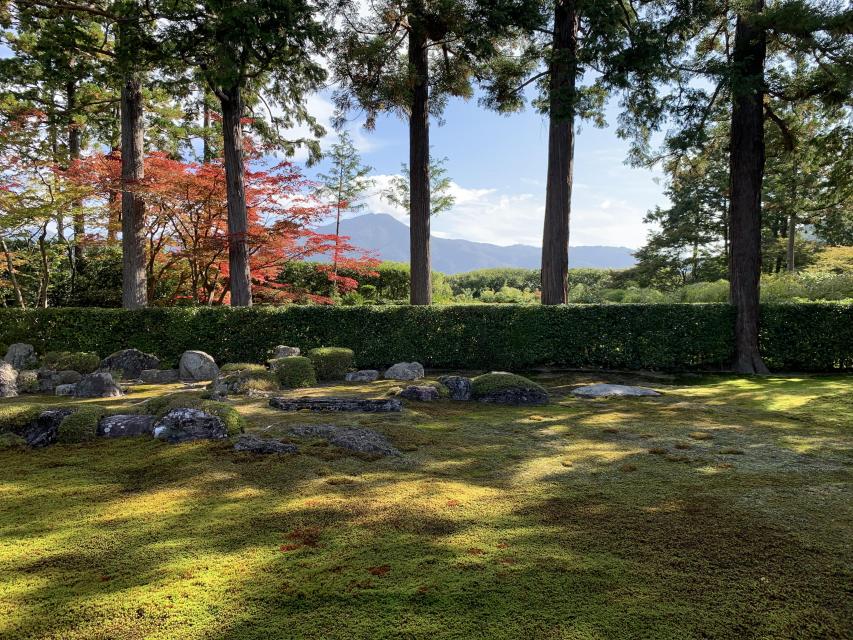
Entsu-ji’s famous borrowed scenery frames Mt. Hiei beyond the garden.
Tsuboniwa: Kyoto's courtyard gardens
On the other end of the scale we have tsuboniwa; small courtyard gardens which often only span a few square meters. They are found in the traditional machiya townhouses of Kyoto, which are typically long, narrow and dark. A small open square in the middle of the house lets in daylight and pulls air through in summer.
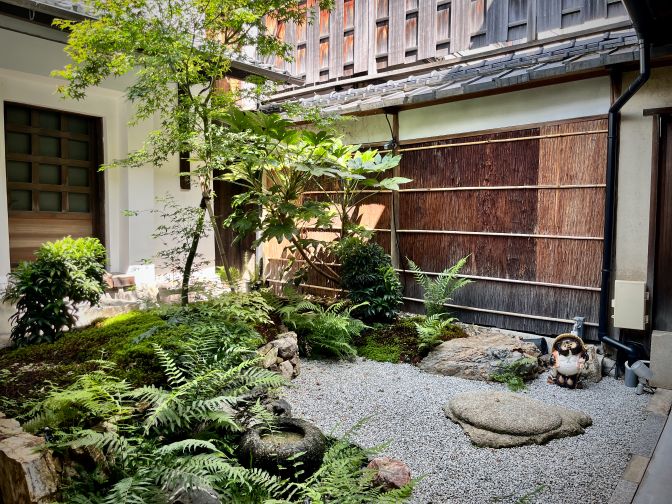
BRILL’s restored machiya courtyard garden creates one of Kyoto’s most relaxing café settings.
More and more, you’ll find them in cafes and restaurants, which I find fascinating. That little garden is floor space that could hold another few tables of paying customers. Back in London, I’ve squeezed sideways through coffee shops so packed that nobody would dream of giving that space up for a maple tree and some moss. But here, people still choose the garden.
Yoshimura Yoshiaki runs BRILL out of his grandparents’ old machiya and during the renovation he stripped the original garden back to bare ground and then rebuilt on top. This shows how important the garden was to him, and the best seats in the house are absolutely those facing it.
Why Kyoto's gardens are meant to be viewed, not walked through
So, back to that rope I mentioned at the beginning. I asked Kimura why it’s there. Partly because these gardens sit on sacred ground, and partly because so many people now visit. But mostly it’s by design, because most gardens here are simply made to be looked at rather than walked through.
Of course, gardeners step over it each and every day. Later that afternoon, at a nearby shrine, Kimura took us into a garden with no other visitors. It was halfway through its trim, a little ragged and unfinished, and it was my favorite moment of the day. Most of us only ever see these gardens at their best. The gardeners are the ones who mostly see them mid-haircut.
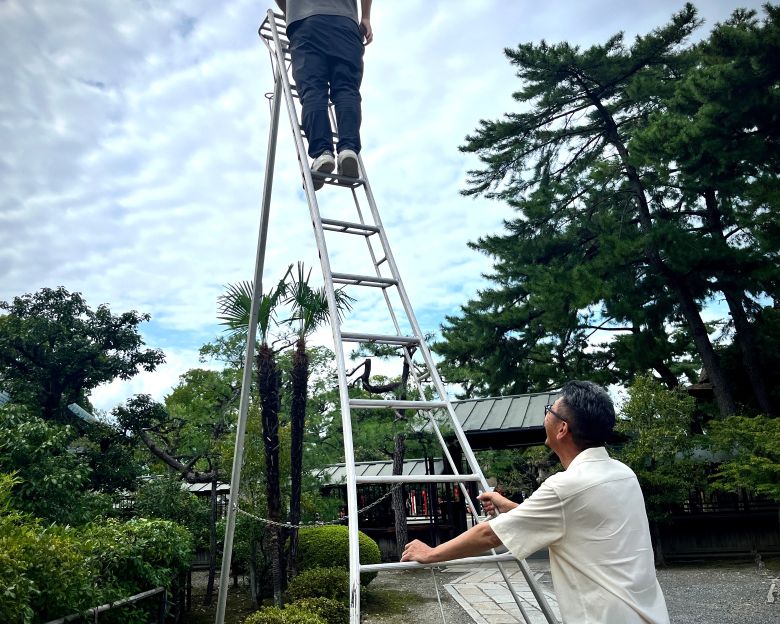
Gardener KK Kimura’s towering ladder offers a glimpse into the hidden work behind Kyoto’s gardens.
They don’t stay on the far side of the rope for long though. While working, a gardener will walk back around and stand on the veranda, right where visitors would be. Seeing the garden from the visitor’s spot is an important part of keeping it beautiful. I learned that the rope doesn’t keep you away from the best view, but rather shows you where to see it.
As for when to visit, Kimura’s advice was clear: early morning or close to sunset is best, when the light changes everything. He’s also fond of winter, especially after snow. Mid-November to early December are beautiful of course, but gardens can get very busy at these times. Whenever you do visit, find the spot that the garden is pointing you to, and take some time to sit and look. Whatever you find there, Kimura would tell you it’s enough.
Practical information
Ryoan-ji Temple
Address: 13 Ryoanji Goryonoshita-cho, Ukyo Ward, Kyoto
Access options:
- 10 minutes’ walk from Ryoanji Station (Keifuku Kitano Line).
- Kyoto City Bus 59 to Ryoanji-mae.
Tofuku-ji Temple
Address: 15-778 Honmachi, Higashiyama Ward, Kyoto
Access: 6 minutes’ walk from Tofukuji Station (JR Nara Line / Keihan Main Line).
Tip: Very crowded in November, go early.
Website
Renge-ji Temple
Address: 1 Kamitakano Hachiman-cho, Sakyo Ward, Kyoto
Access options:
- 7 minutes’ walk from Miyake-Hachiman Station (Eizan Railway)
- 1 minute from the Kamibashi/Kanbashi stop (Kyoto Bus).
*They have free parking for cars and bikes just to the left of the entrance on the main road.
Phone: 075-781-3494
Location (Google maps)
Enko-ji Temple
Address: 13 Ichijoji Kotani-cho, Sakyo Ward, Kyoto
Booking: Required only for the autumn leaf viewing. 2026 dates: November 10–December 10, by date-and-time slot; booking opens October 20 at 9:00 AM. Same-day slots are sold only if any remain. Dates move from year to year, please check online.
Access options:
- 15 minutes’ walk from Ichijoji Station (Eizan Railway).
- Kyoto City Bus 5 to Ichijoji Sagarimatsucho, then 10 minutes’ walk
Shoren-in Temple
Address: Awataguchi Sanjobo-cho, Higashiyama Ward, Kyoto
Access: 10 minutes’ walk from Higashiyama Station (Subway Tozai Line).
Phone: 075-561-2345
Website
Murin-an Villa
Address: 31 Nanzenji Kusakawa-cho, Sakyo Ward, Kyoto
Booking: Hourly entry slots. Book on the official site (opens 30 days ahead, closes 1 hour before). Walk-ins may be turned away when busy.
Access: 7 minutes’ walk from Keage Station (Subway Tozai Line).
Phone: 075-771-3909
Website
Okochi-Sanso Villa
Address: 8 Saga Ogurayama Tabuchiyama-cho, Ukyo Ward, Kyoto
Access: Next to Torokko Arashiyama Station (Sagano Scenic Railway); about 15 minutes’ walk from Saga-Arashiyama Station (JR Sagano Line), through the bamboo grove
Location (Google maps)
Entsu-ji Temple
Address: 389 Iwakura Hataeda-cho, Sakyo Ward, Kyoto
Access options:
- Kyoto Bus 40 to Nishihataeda (Entsuji Temple), then 5 minutes’ walk.
- About 5 minutes by taxi from Kitayama or Kokusai-Kaikan Station (Subway Karasuma Line).
*Free parking for 20 cars
Phone: 075-781-1875
Website
Shugaku-in Imperial Villa
Address: Shugakuin Yabusoe, Sakyo Ward, Kyoto
Access options:
- About 20 minutes’ walk from Shugakuin Station (Eizan Railway).
- Kyoto City Bus to the Shugakuin Rikyu-michi stop, then about 15 minutes’ walk.
Booking: Guided tours only; no free wandering. Apply online in advance through the Imperial Household Agency. A limited number of same-day numbered tickets are handed out at the villa from 8:40 AM, first come first served, until full. Bring photo ID (driver’s license, passport or student ID) both to collect the ticket and to join the tour
Tours: About 1 hour 20 minutes, in Japanese, with audio guides in other languages
Website
Manshu-in Temple
Address: 42 Ichijoji Takenouchi-cho, Sakyo Ward, Kyoto
Access: About 20 minutes’ walk uphill from Shugakuin Station (Eizan Railway).
*Free parking for 50 cars.
Phone: 075-781-5010
Website
BRILL
Address: 122 Keikain-cho, Kamigyo Ward, Kyoto
Access options:
- Kyoto City Bus 9 or 12 to Horikawa Kamidachiuri, then 5 minutes’ walk.
- Kyoto City Bus 6 or 206 to Kenryūkō-mae, then 10 minutes’ walk.
- About 20 minutes’ walk from Imadegawa Station (Subway Karasuma Line)

Article Author