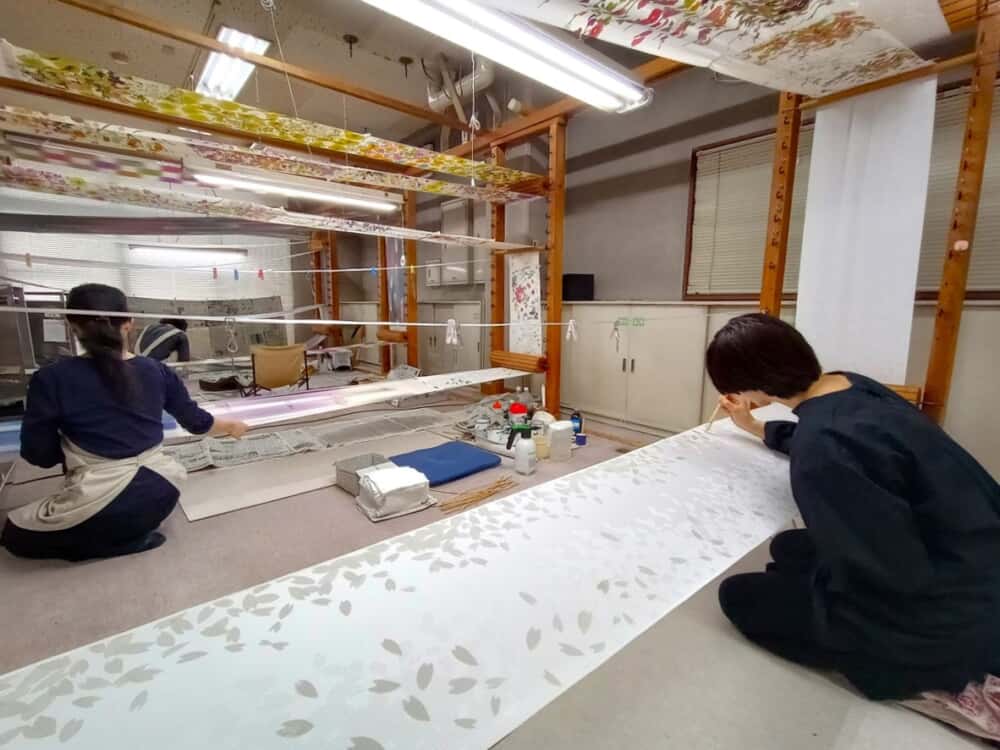
Kimono, Japan’s traditional clothing, is admired around the world for its beauty and delicate craftsmanship. As a symbol of Japanese culture, the kimono embodies centuries of refined aesthetics and artisanal skill.
Among the many techniques used to create kimono, Kyoto’s woven textiles such as Nishijin-ori and dyed fabrics such as Kyō-Yūzen and Kaga Yūzen stand out as some of Japan’s most celebrated traditional crafts.
For this feature, we visited Okayama Kōgei Co., Ltd., a Kyō-Yūzen workshop located in Kyoto’s Fushimi Ward.
Okayama Kōgei: Founded by the First Female Master Craftsperson
We spoke with Maki Okayama, the company’s current president and representative director. She is the eldest daughter of the workshop’s founders, Kōzō Okayama and Takeko Okayama.
Takeko Okayama achieved remarkable accomplishments in the world of Kyō-Yūzen. She became the first woman to be certified as a Traditional Craftsperson (Dentō Kōgeishi) in the field. She was also the first female Yūzen artisan to receive the Kyoto Prefecture Traditional Industry Outstanding Technician Award—“Kyō no Meikō” (Master Artisan of Kyoto).
In addition, she and her husband Kōzō became the first married couple in Japan to both be certified as Traditional Craftspeople.
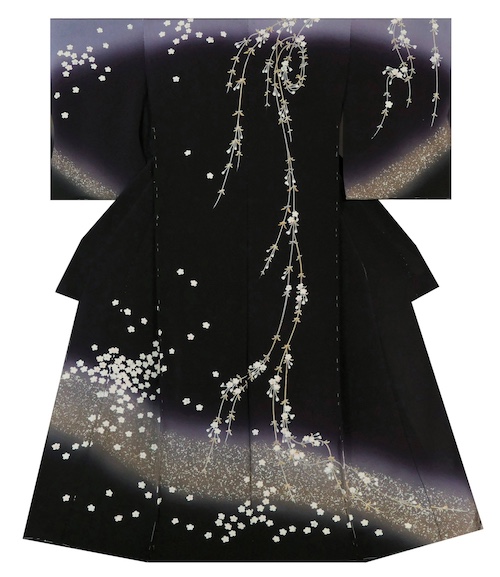
Takeko’s work reflects a distinctive perspective: creating kimono that enhance a woman’s beauty, a sensibility born from her experience as a female artist. Her signature designs include yuragi (blur), to create soothing colors and patterns, and Takeko bokashi (gradation), characterized by soft, gently blended hues.
Maki recalls her mother’s path into the craft:
“My mother loved drawing from a young age and originally painted designs on Kiyomizu ceramics. But after visiting a kimono exhibition, she realized, ‘I want to paint on a much larger canvas.’ That moment led her to pursue the path of Kyō-Yūzen.”
Takeko constantly asks herself how a design might look when expressed on a kimono. With her creative mind and rich artistic sensibility, she continues to bring diverse patterns to life on fabric.
Her husband Kōzō has also received high recognition. In 2019, he was awarded the Order of the Sacred Treasure, Silver Rays, by the Japanese government in recognition of his contributions to Japanese culture.
Today, Maki herself carries on the tradition and is one of the few women leading companies in the kimono industry.
What Is Kyō-Yūzen?
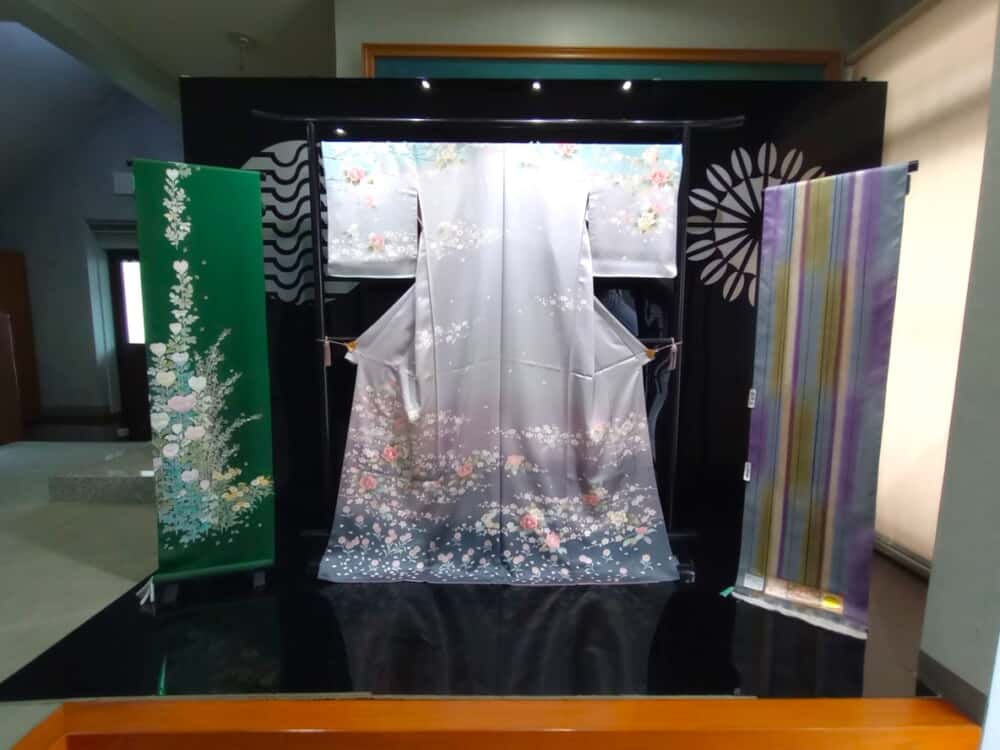
Kyō-Yūzen (Kyoto Yūzen) is one of the three major styles of Yūzen dyeing in Japan and is often considered synonymous with the kimono itself.
The term refers to dyed textiles created on white fabric using either freehand painting (tegaki-zome) or stencil dyeing (kata-zome) techniques.
The history of Kyō-Yūzen dates back to 17th-century Kyoto. It began when the fan painter Miyazaki Yūzensai, whose decorative fans were highly popular at the time, applied his distinctive painting style to textile patterns.
The technique evolved by combining the sophisticated dyeing methods already practiced in Kyoto at the time.
Production begins with planning the overall kimono design. Next comes itome-nori-oki, in which a resist paste is applied along the outlines to prevent colors from bleeding. Artisans then paint colors with brushes and add embellishments such as embroidery or gold and silver leaf.
The innovation of freehand Yūzen, in which designs are painted directly onto the fabric, spread quickly throughout Kyoto as a groundbreaking technique.
Creating a finished piece of Kyō-Yūzen involves around twenty separate processes, each handled by specialists with highly refined skills. Okayama Kōgei is responsible for roughly five to six stages, from creating the composition to executing the hand-painting.
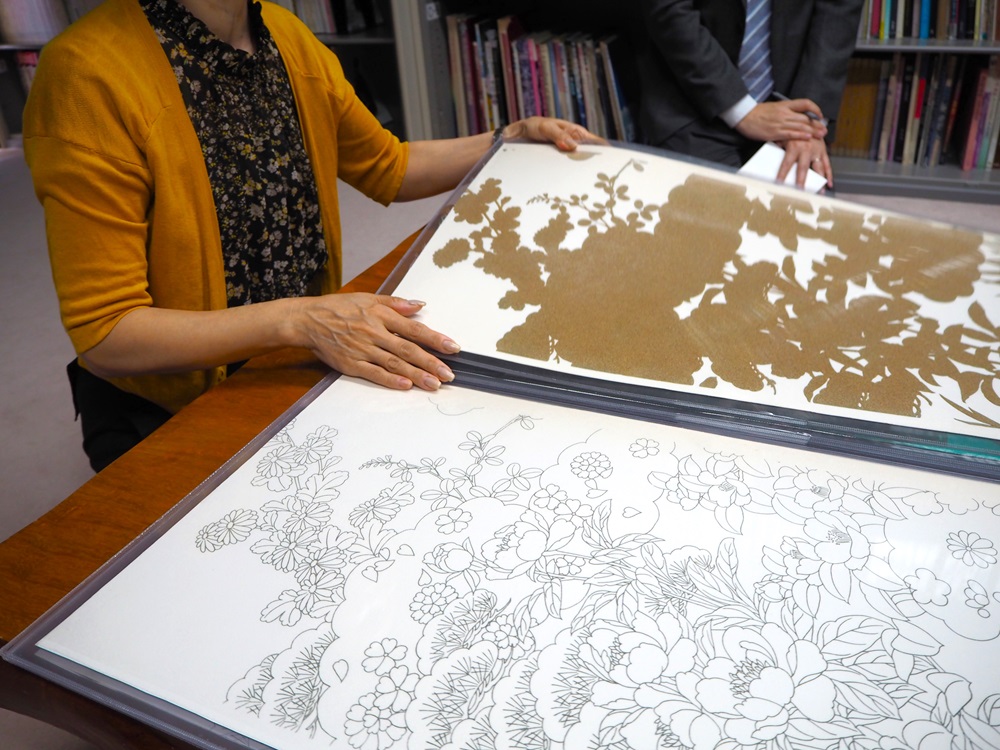
Explaining the process of painting color on the patterns outlined with resist paste
Opening the Doors to Train the Next Generation
The number of kimono produced in Japan has been declining sharply. After peaking at 31,288 inspected pieces in 1980, the figure dropped to just 565 pieces in 2022, less than two percent of its former peak.
Okayama Kōgei currently employs 32 staff members, about half of whom are artisans—making it a relatively large workshop for a dyeing studio.
Because the workshop was founded by the first female Traditional Craftsperson in Kyō-Yūzen, many aspiring artisans come here inspired by her achievements.
Even those with no previous experience in painting are welcome to train if they wish to pursue a career in Yūzen dyeing. The workshop accepts trainees of all ages—from students to people in their sixties.
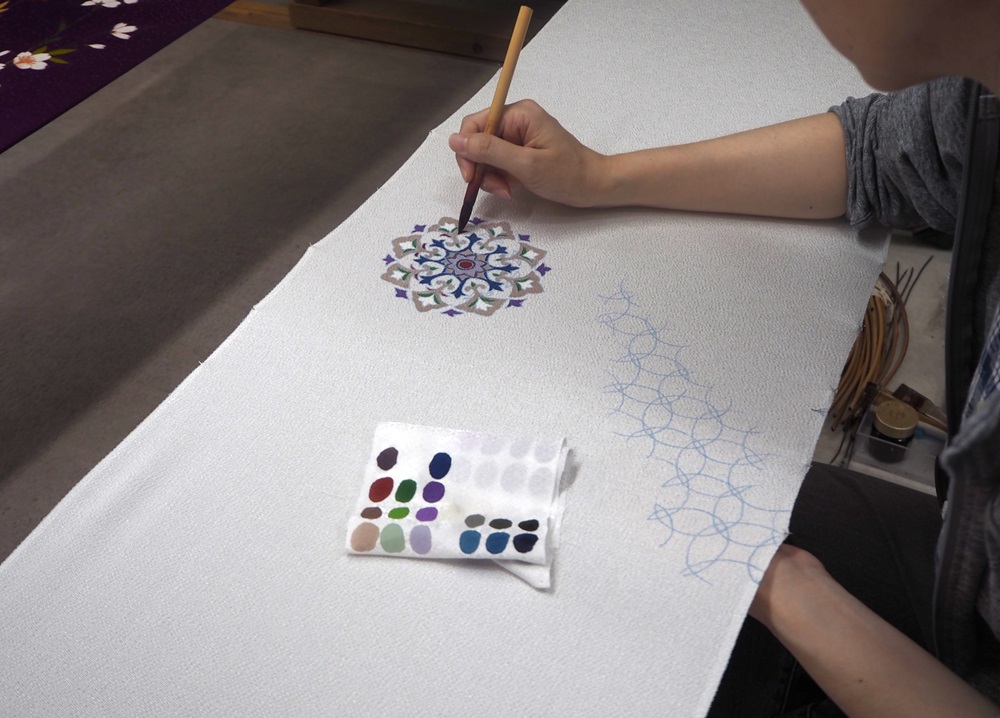
One stroke at a time, an artisan carefully paints on white fabric
Experience the Beauty of Kyō-Yūzen Workshop Tours and Dyeing Classes
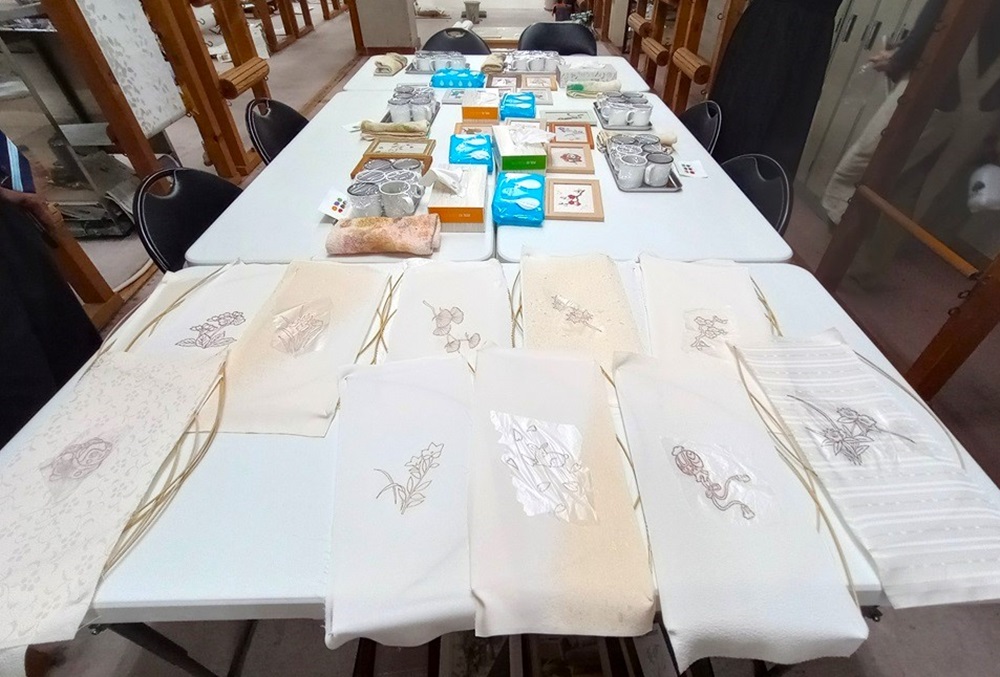
Paint the patterns outlined by resist paste with colors of your choice
Okayama Kōgei offers workshop tours and hands-on dyeing classes for visitors who want to experience the beauty of Kyō-Yūzen firsthand. On the day of our visit, preparations were underway to welcome a group of local elementary school students.
The tour begins with an introduction to the history and techniques of hand-painted Yūzen through videos and panels. Visitors are then guided through the workshop, where they can watch artisans at work up close as they dye fabrics.
During the dyeing experience, participants can choose one of three items to create: a framed panel, a handkerchief or an obiage/scarf.
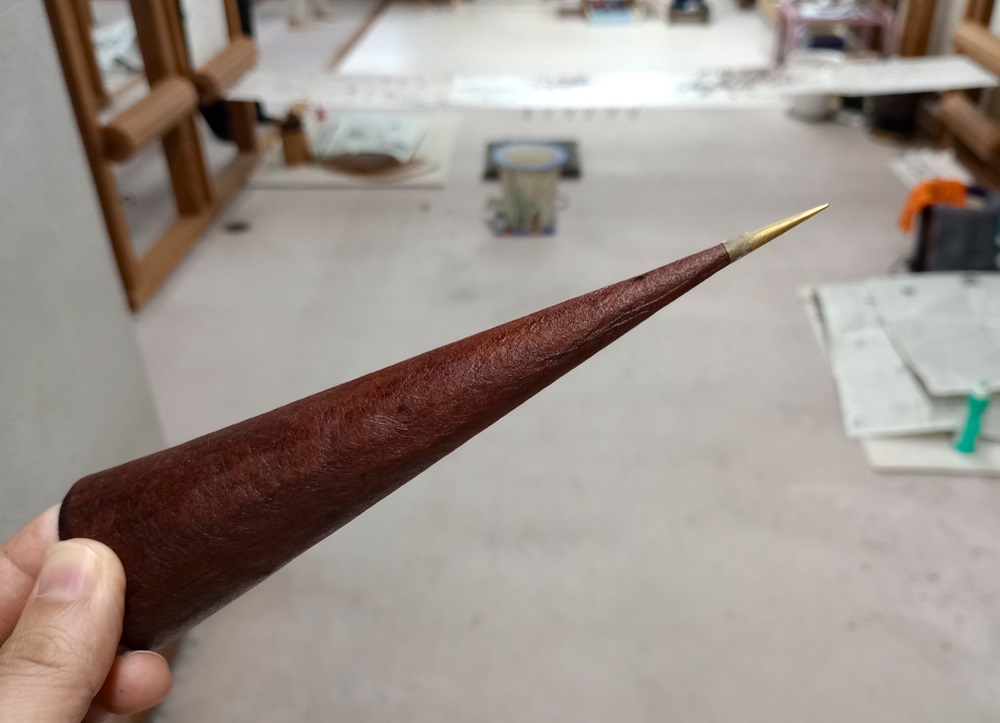
The resist is applied through a strenuous process using a metal tip with an opening as narrow as a needle attached to a small tube made of Japanese paper treated with kakishibu (a water resistant solution made from persimmon tannin)
The easiest option, the framed panel, involves dyeing a postcard-sized piece of silk. The finished work is placed in a frame and can be taken home the same day. For handkerchiefs and stoles, additional finishing processes are required, so the completed piece is mailed to participants about a month later.
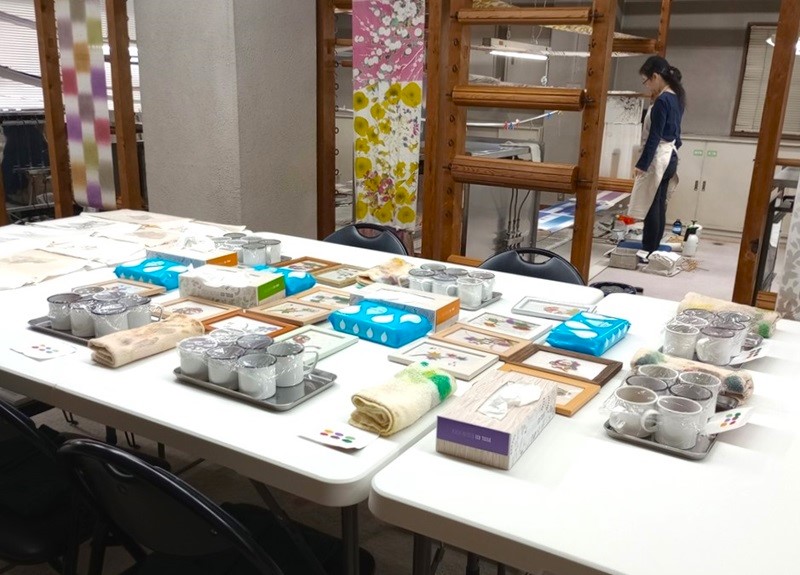
The workshop space (front) and the artisans’ workspace
The workshop space itself is shared with the artisans’ actual working area, allowing participants to feel as though they have stepped into the role of a craftsperson.
A New Form of Kyō-Yūzen—Beyond Kimono
The dyeing workshop area also sells goods made from Kyō-Yūzen fabrics that are available only on site and cannot be purchased through the workshop’s online store. Fabrics that would otherwise be discarded—for example, pieces of textiles that did not meet the standards for kimono production. These are transformed into small accessories such as business-card holders and clasp purses. Each item is carefully handmade and features a one-of-a-kind pattern, making every piece a special Yūzen item.
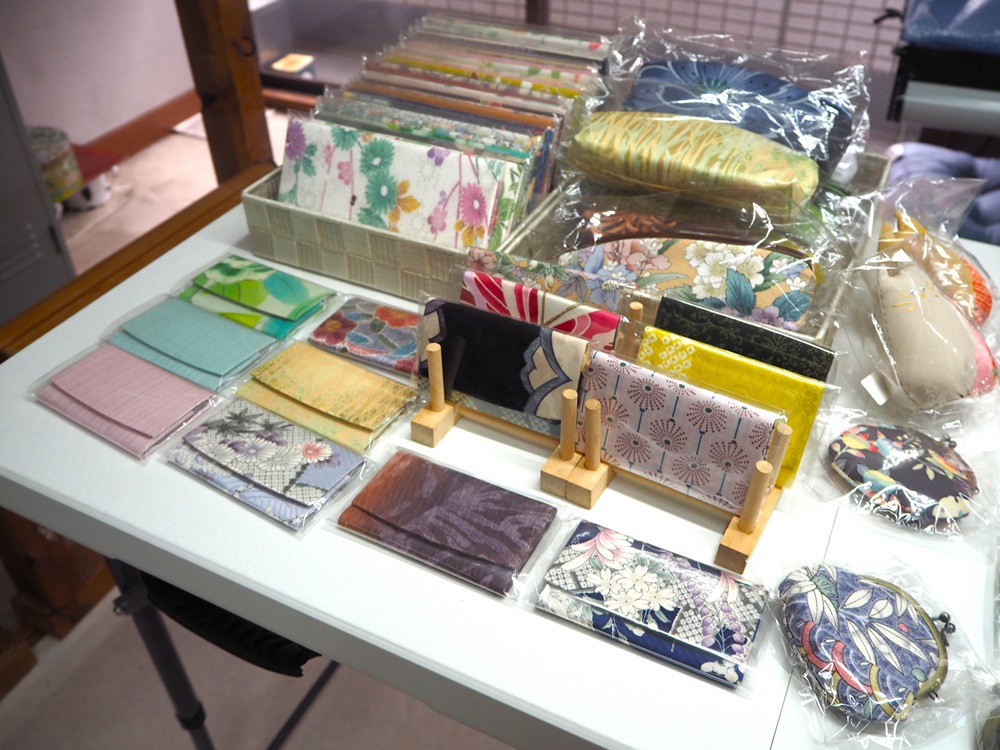
You can enjoy looking through the many patterns and find one you like!
As our visit to Okayama Kōgei drew towards its end, Maki reflected on the future of the craft:
“We try not to be overly bound by existing rules and instead explore new possibilities for what we can do. The most important thing is simply to help more people discover the appeal of Yūzen dyeing.”
Speaking with her offered a renewed appreciation for the intricate beauty of the patterns painted on kimono and textiles.The traditional craft of Yūzen dyeing still holds many untapped possibilities, and its future continues to inspire great expectations.