Durée recommandée : 1 jour
Want to experience Fushimi Inari Taisha Shrine beyond the famous torii gates? This 2–3 hour hike follows part of the Kyoto Isshu Trail to hidden shrines, quiet forest paths and Tofuku-ji Temple, while helping you avoid the crowds that arrive later in the day.
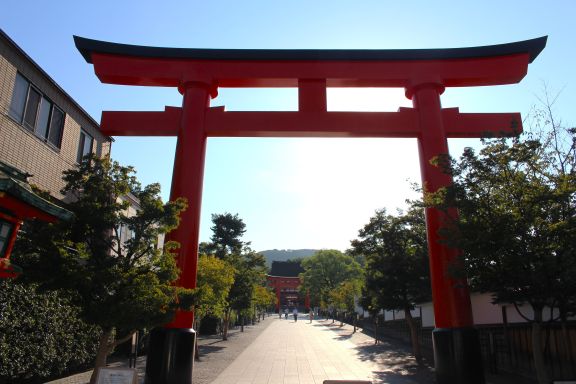
Arriving before 6:30 AM means having Fushimi Inari’s entrance torii gate all to yourself
Sanctuaire Fushimi Inari Taisha
Start your hike at Fushimi Inari Taisha
As someone who tries to avoid crowded places, when in Kyoto I always get up very early to take advantage of the many sights that are open well before breakfast time. On this particular summer day, I arrived at Inari Station just before 6:30 AM, and was rewarded with blissful quiet and an unimpeded view of the massive torii gate that marks the start of the hike.
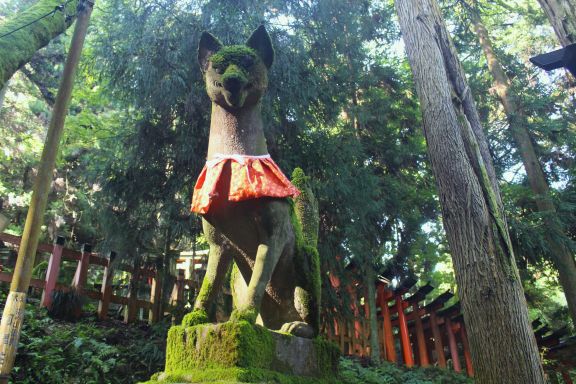
The first section of the trek is very simple, as you just have to follow the signs to the Yottsu-tsuji crossroads point. You will pass through the famous Senbon Torii (which means many gates, in this case about 800!) as you make your way slowly up Mt. Inari. Early in the morning you are likely to get nice photos without anyone else in shot, and can take your time looking at all the little sub-shrines and stone foxes that dot the route. Be sure to stop at the bathroom you will see before the trail starts going up steeply, as it is the last one for at least an hour or so.
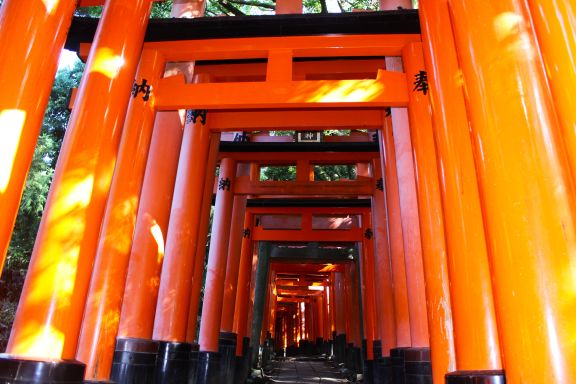
An early start allows you to truly feel the sacred atmosphere of Fushimi Inari Taisha Shrine
What to bring for the Fushimi Inari to Tofuku-ji hike
– While it is a relatively short hike, the section that goes through the forest can be slippery and has rocky sections, so be sure to wear proper hiking shoes, along with long pants to protect your legs.
– Know your limits. The first part of the hike is straight up and especially in summer can be a bit strenuous.
– Make sure to bring water and snacks.
– Print out these directions and make sure you have a fully functioning phone, both for emergencies and checking map apps if needed.
– Keep an eye out and stay away from any wildlife, wild boars are often spotted on the trail.
– An early start in summer is strongly recommended, to avoid heat exhaustion.
– In summer I also highly recommend bringing a clean shirt to change into after the hike, as the heat and humidity mean you will likely completely sweat through the one you are wearing.
-
Walk 35 minutes
Yottsu-tsuji Crossroads
Start to head off the beaten path
Depending on speed (and how many times you stop to take photos!) you should reach the Yottsu-tsuji crossroads in about 30~40 minutes. Take a breather, enjoy the panoramic view of Kyoto, and then follow the sign (shown below) that points towards Gozendani-houhaisho. Along the way you will spot one of my favorite foxes, who also happens to be a fountain. Often wreathed in incense with a flame burning nearby, this tiny shrine feels particularly magical in the early morning mist.
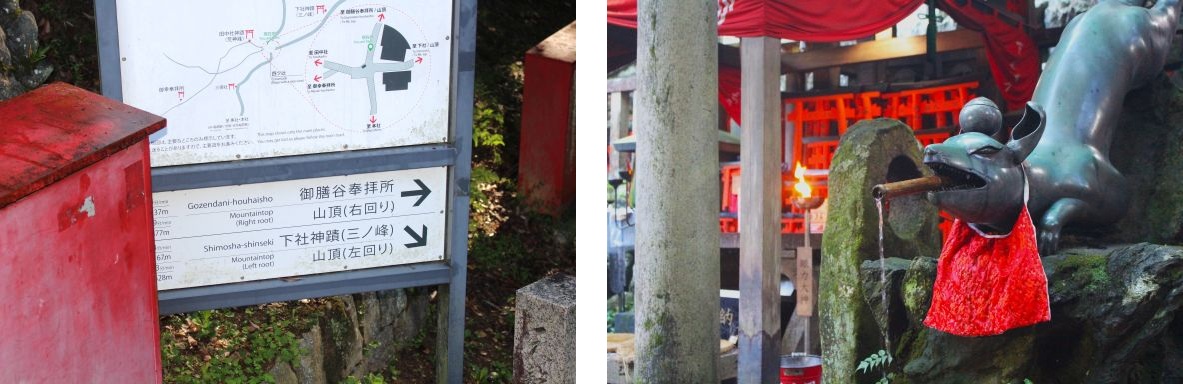
Follow this sign toward Gozendani-houhaisho to continue the hike. Head towards Gozendani, and be sure to say hi to the fountain fox!
-
Walk 8 minutes
Gozendani
Mossy fox statues and bronze horses
Continuing along the torii-covered path, in 5 minutes or so you should eventually arrive at the Gozendani area, where the route splits into three, as shown below.
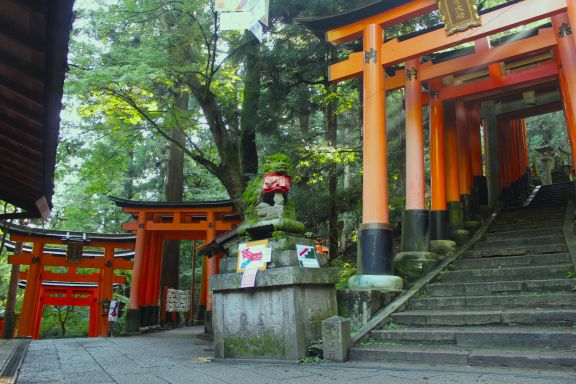
The route splits into three here, so take a moment to explore the Gozendani area
The leftmost path (marked as the way to the Kiyotaki Waterfall) will join the Kyoto Trail, which is what you will follow for the rest of the hike. However, before heading down be sure to first check out the shrine you can reach by either of the other two paths, as it is one of my favorite spots along the trail.
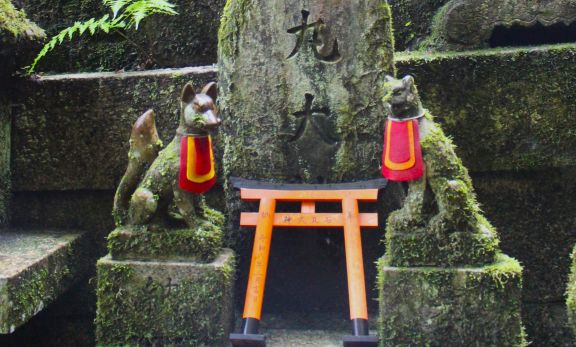
Head behind the shrine building to see two marvelous bronze horse statues covered in silky offerings, and wander among row upon row of smaller stone torii and fox statues, all covered in moss. With the early sun peeking through the tree trunks and sound of birdsong, it truly feels like you might be spirited away at any moment.
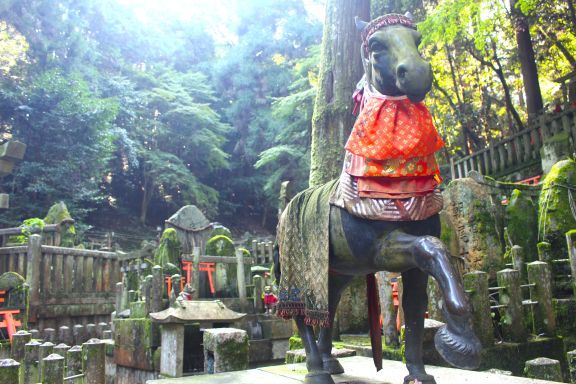
Make sure to explore the Gozendani area
Once you have wandered enough through the mossy wonderland, return to the spot where the trail splits and take the route toward the Kiyotaki Waterfall. Many visitors tend to miss this little hidden gem, which is also home to a number of mossy stone foxes.
-
Marcher 10 minutes
Kyoto Trail
Join the Kyoto Trail
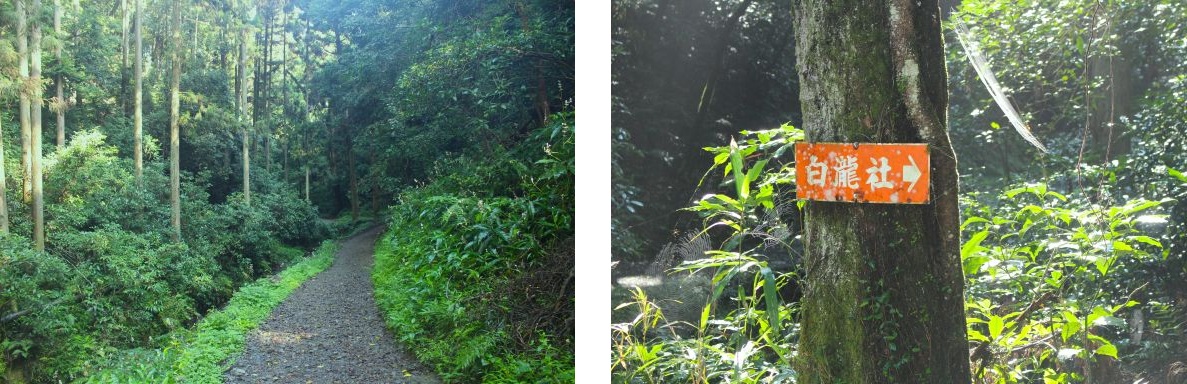
Cross the rickety bridge and then take the path on the left that leads downhill. Congratulations! You are now on the official Kyoto Trail (an 84-km trail through the mountains that surround Kyoto), and are very likely to have this bucolic path all to yourself. After 10 minutes of walking, you will come to a flat bridge, where the path splits (look for the bright red sign on a tree to your left).
While you will need to go right to stay on the trail, I do recommend making a short side quest to Shirataki Shrine by first going left, to pay your respects at the rather whimsical bronze “snake waterfall,” which should only take 15 minutes round-trip.
Once back on trail, just keep following it downwards. Eventually you will pass under a torii gate and on your left will be a small bamboo grove (which is privately owned, so no gallivanting among the stalks please). A few minutes after that you should see one of the official trail markers on your left.
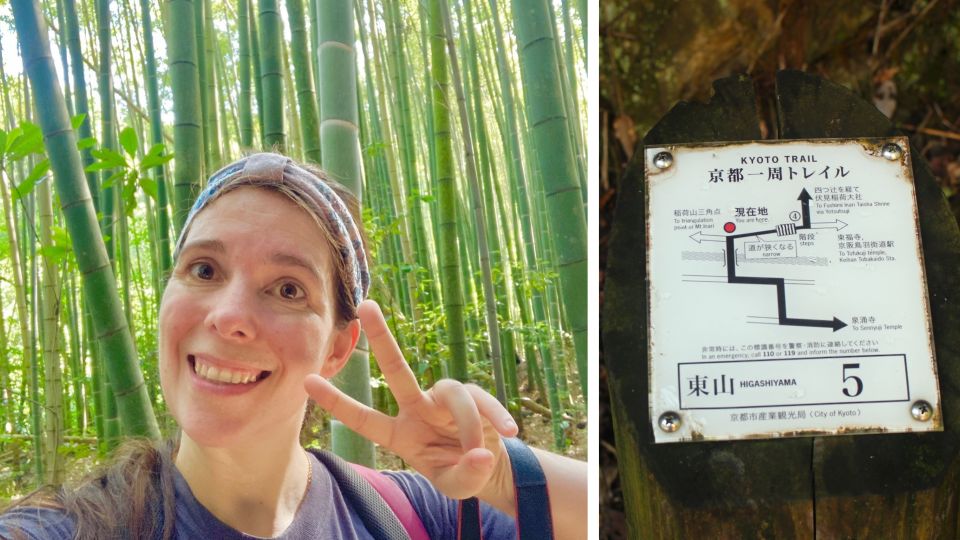
Take the path toward Sennyu-ji Temple, crossing a small bridge and turning left into a quiet residential street (keep an eye on your left, as there are two small but lovely shrines along the riverside). When the street splits, go right (uphill) staying on the road until you come to the next marker, which should only take a couple minutes.
Hiking etiquette on the Kyoto Trail
– I wish I didn’t have to say this, but don’t deface bamboo, trees, statues, buildings or anything else on the trail
– Please keep your voice down. Shrines and temples are sacred spaces, and several parts of the hike go through residential areas, so be considerate.
– Remember that temples and shrines are sacred, not selfie spots.
– If you do see other hikers on the section after the waterfall, say hello to them as you pass.
– In summer I also highly recommend bringing a clean shirt to change into after the hike, as the heat and humidity mean you will likely completely sweat through the one you are wearing.
-
Marchez 5 minutes
Temple Sennyu-ji
Customize your Kyoto hike
The great part about this hike is that you can customize it at this point. If you are getting tired, then follow the directions on the trail marker toward Tofuku-ji Temple and end your adventure there. But, if you want to continue and see some lesser-known spots, take the stairs up toward Sennyu-ji Temple.
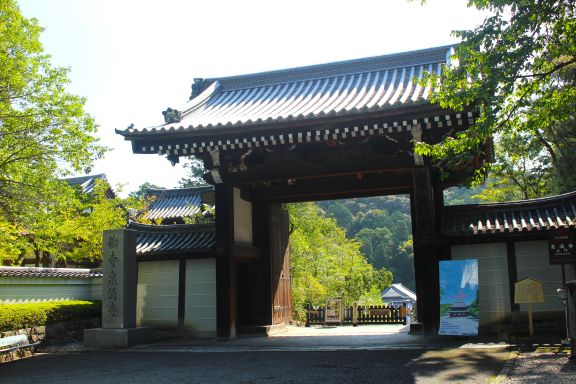
The massive temple gate stands above the temple’s halls, framing a dramatic view
Sennyu-ji Temple is a massive complex of halls, sometimes known as Mitera (the imperial temple) for its strong ties with the Imperial household. On the grounds you will find the Tsukino-wa Imperial Mausoleum and other imperial tombs. During the fall foliage season the colors of the Goza-sho Garden are particularly splendid. Because it is a bit of a hike from the closest bus stop, Sennyu-ji is often empty and peaceful.
Ouvrir: 9:00 AM–4:30 PM (March–November); 9:00 AM–4:00 PM (December–February)
-
Marchez 5 minutes
Temple Imakumano Kannon-ji
A peaceful temple with lots to see
Continuing on, just across from the road exit you will spot the large stone lanterns, pillars and red banners of Imakumano Kannon-ji Temple. Go in and follow the main path until it splits (as shown below).
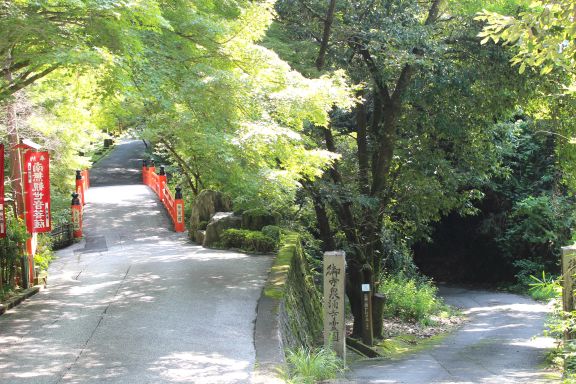
The path to the right takes you to the temple, while the path on the left takes you onward on the Kyoto Trail
Take the path over the vermilion bridge to visit this charming temple, which has a magical feel, with many interesting statues to spot and a bright pagoda peeking through the trees. According to legend, Emperor Go-Shirakawa was cured of his terrible headaches when he prayed here, and to this day people come to this temple to pray for anything head-related, from relief from migraines to academic success, wisdom and even mental clarity.
You can take a break with matcha tea and traditional sweets on their Kanza terrace overlooking the trees, which are reflected in the highly polished floor.
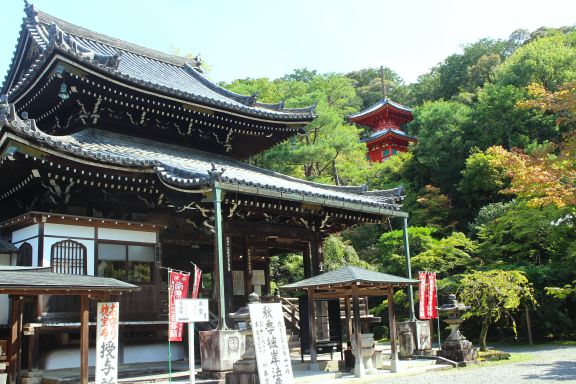
Ouvrir: 8:00 AM–5:00 PM
Kanza terrace: 10:00 AM–4:00 PM (last admission 3:45 PM; irregular closures)
-
Marcher 10 minutes
Tsurugi Shrine
Pray for tooth health at this small neighborhood shrine
Return to the section where the paths split, and take the road to the right (you will see a trail marker). Simply follow the route as straight as possible for about 10 minutes, where along the way you will get a nice view of Kyoto Tower and pass by some truly beautiful homes. Once you cross the small bridge, you should see little Tsurugi-jinja Shrine (below), where parents go to pray for their children’s wellbeing and dental health.
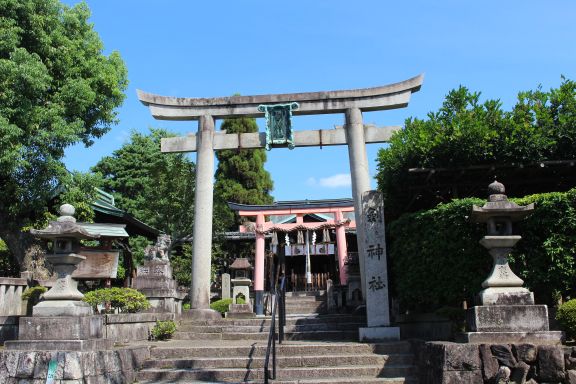
The entrance to Tsurugi Shrine
-
Walk 15 minutes
Temple Tōfuku-ji
Finish the hike by exploring Tofuku-ji Temple
Keep on going straight past the shrine through a quiet residential area for about 5 minutes, and then turn left when you come to the large road. Keep following it until you see signs for Tofuku-ji Temple, at which point follow those directions. It is a huge temple complex, so it may take you a while to get to the main halls (just keep following signs that say 東福寺 or 寺福東).
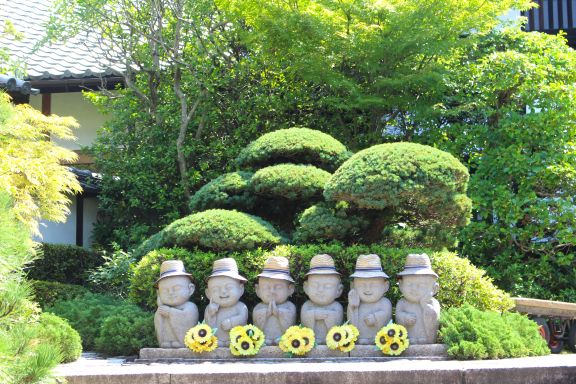
Spotted at one of the many sub-temples around Tofuku-ji Temple
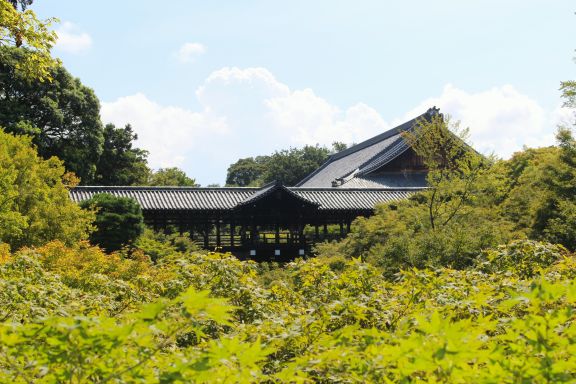
Founded in 1236, Tofuku-ji Temple is one of the largest Zen temple complexes in Kyoto, with many sub-temples surrounding the main halls and several lovely landscape gardens featuring moss and stones, including the strikingly modern Hojo Garden. In the mornings it is often uncrowded, except during the fall foliage season when people flock to see the bright maples from the temple’s iconic Tsutenkyo Bridge.
The looming Sanmon Gate is the oldest Zen-style one of its kind, dating back to 1425 and on the grounds, you can see rare examples of Zen architecture from the Muromachi period (1333 — 1573), such as the Zendo meditation hall, belfry and baths.
There are a number of small eateries by nearby Tofuku-ji Station, and the JR trains will get you to Kyoto Station in just a few minutes. Happy hiking!
Ouvrir: 9:00 AM–4:00 PM (April 1–December 6); 9:00 AM–3:30 PM (December 7–March 31). Tsutenkyo Bridge opens at 8:30 AM during the peak autumn foliage period.

Auteur de l'article