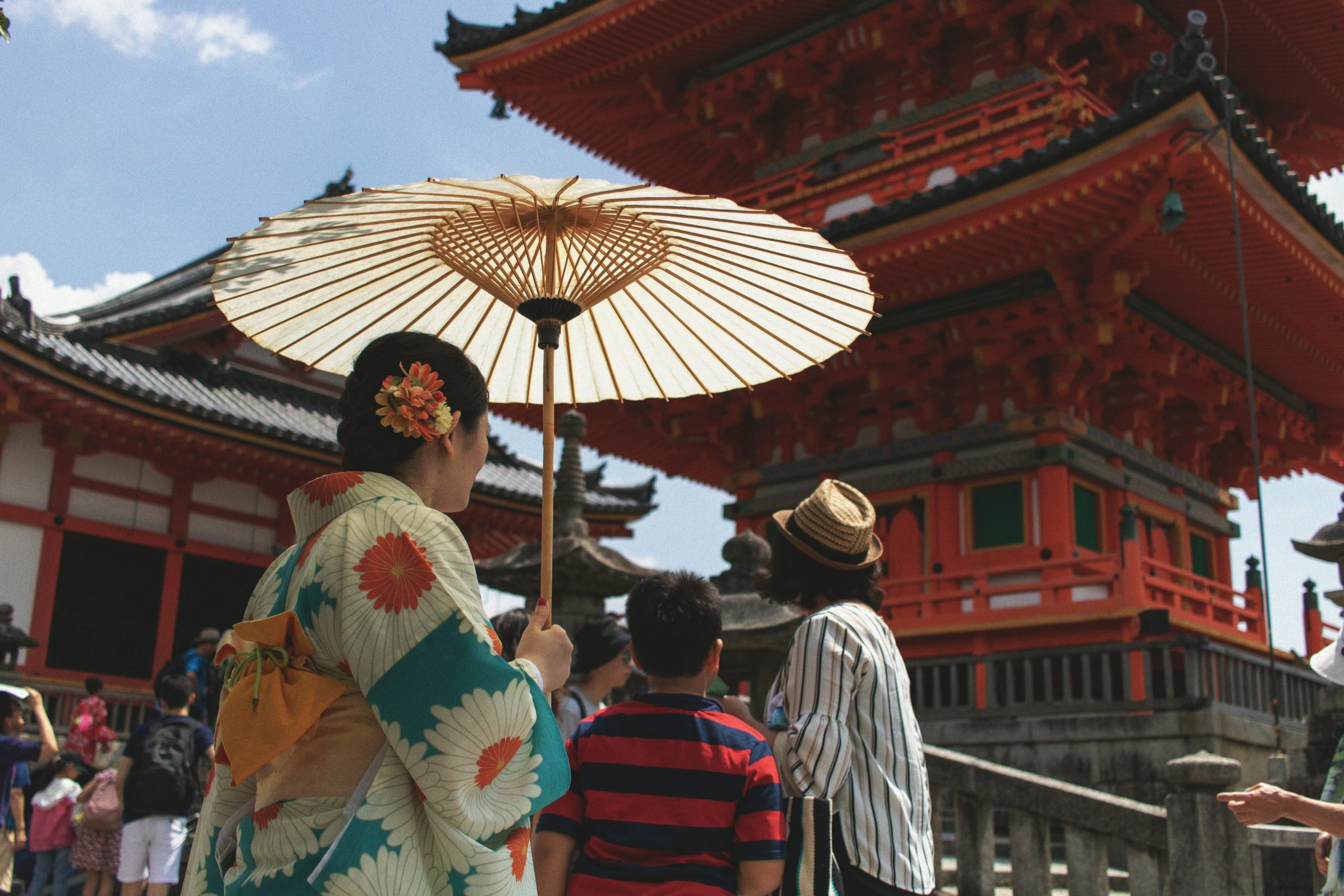
Kyoto’s vegetables carry the character of the city itself, making it a rewarding experience to eat its plant-based cuisine. Photo by Tankuma Honke, Inc.
Vegan food in Kyoto is not simply a recent trend. It connects to the city’s long history of Buddhist cuisine, tofu, and special local vegetables, while a growing number of contemporary restaurants now make plant-based dining more easily accessible to visitors.
A day exploring Kyoto's vegan food culture
Known for their love of bread and coffee, Kyotoites love a spread that satisfies the palate. And in recent years the number of high-quality vegetarian and vegan restaurants has increased dramatically.
Check out this map of Kyoto’s vegan spots
From neighborhood bakeries to modern cafes and traditional kaiseki restaurants, Kyoto has delicious plant-based choices for breakfast, lunch, or dinner. Here’s where to start.
Vegan breakfast and cafés in Kyoto
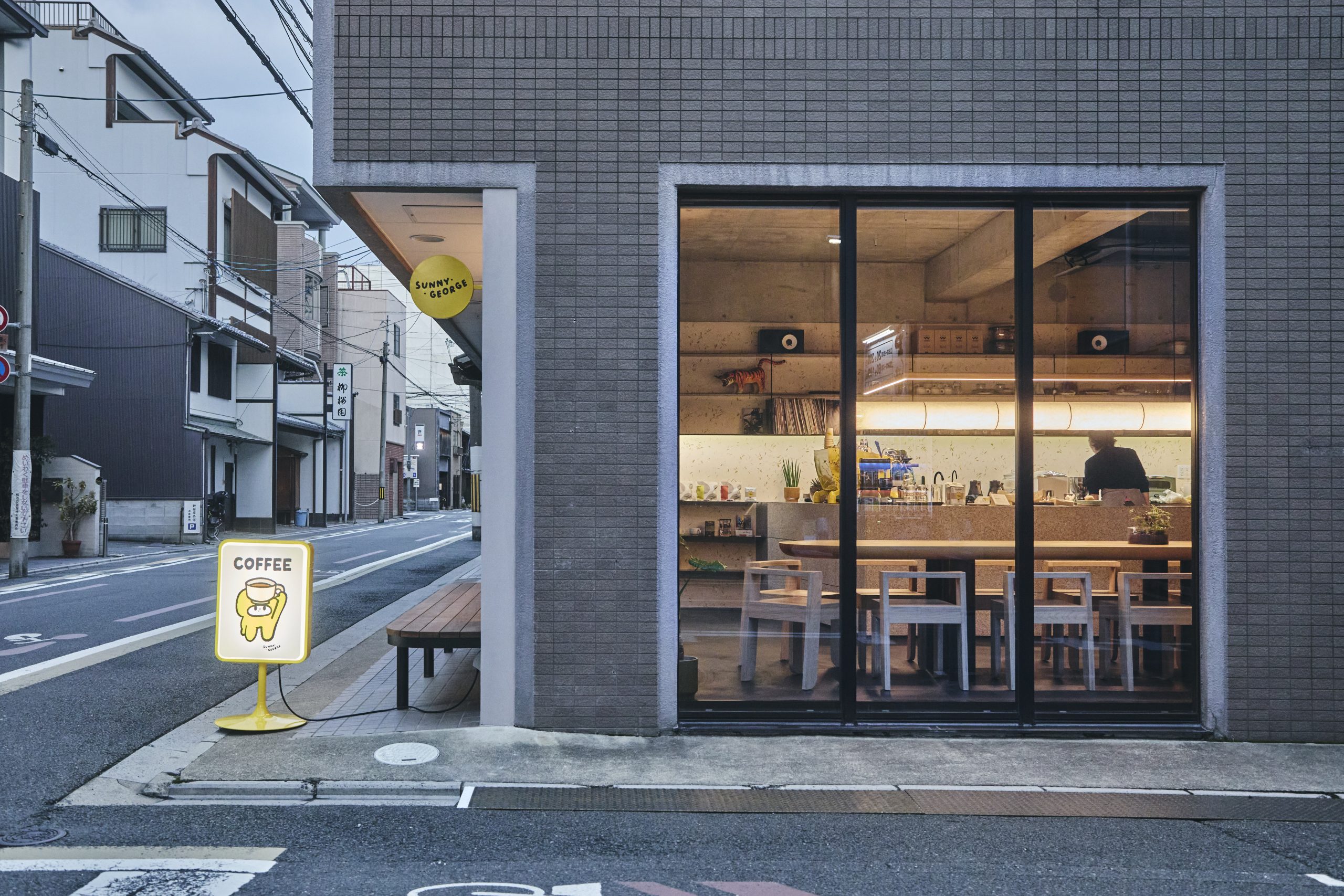
Enjoy an oat milk latte at one of Kyoto’s newest plant-based cafes. Photo by Kingy
A bright yellow coffee machine beckons from behind painted glass. Inside, the cafe is warm with the smell of spices mixed with coffee. A large wooden table dominates the space. Owners Junko Uchiyama and Christopher Flechtner hope it will encourage all who sit there to “look up and say hello.”
Sunny George is one of Kyoto’s newer plant-based cafes, having opened on Halloween 2025. It has a cosy feel: the tables and chairs are made from locally sourced wood, while washi paper lampshades soften the light. An iconic window mural featuring regulars and staff was painted by a Japanese neighbor.
Junko and Chris are recent arrivals to both Kansai and veganism, moving in and making the switch only a few years ago. Being both chefs and parents has made balanced nutrition central to their cooking.
“We often go somewhere and they’re like, ‘Oh, we can make it vegan.’ But then they just take the protein off the plate and put a mushroom there,” Chris laughs. Junko adds that flavor, too, is an important factor. “We want our food to feel homemade. And we’re not afraid of spices.”

Cinnamon and cardamom rolls are baked fresh each day, but they tend to sell out quickly! Photo by Kingy
The pastries on the menu were inspired by the Swedish tradition of fika, or the act of slowing down over a sweet treat. Seattle too, where Junko first bought an oven and learned how to bake, influences the comforting vibe and aesthetic. Koji, the fermentation culture behind sake and miso, serves as the starter for the breads and adds a zesty depth to the cafe’s salad dressings.
Cinnamon and cardamom rolls are best sellers, especially when paired with an oat milk latte or espresso. The avocado toast, served with a salad of seasonal vegetables from an organic farm in Kyoto’s Keihoku area, is an excellent brunch option. Though still quite new, Sunny George has already become an important part of Kyoto’s plant-based scene, creating a space that feels as welcoming to regulars as it does to short-term visitors passing through.
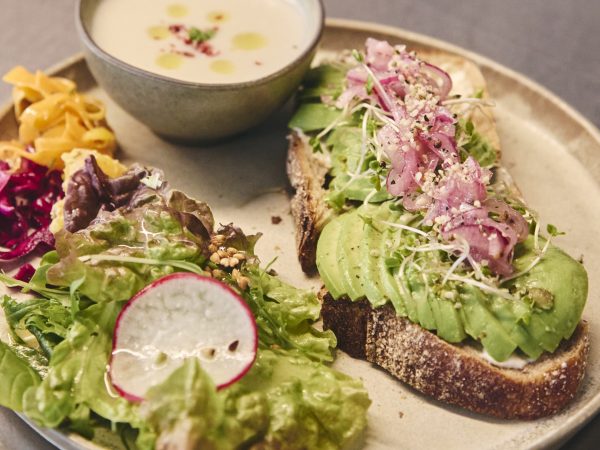
A hearty plant-based breakfast to start your day in Kyoto. Photo by Kingy
Kyo-yasai: Kyoto's seasonal vegetables
There are several reasons why Kyoto’s vegetables, called kyo-yasai, are prized so highly in Japan. Geography is partially to thank for this delicious produce. As anyone who has visited Kyoto in mid-summer or winter knows, the city sits in a basin surrounded by mountains. The resulting extremes in temperature between day and night, as well as the seasons, contribute to the distinctive flavor of its vegetables.
For example, Kyoto’s kamo-nasu eggplant is rotund and larger than the usual variety, while the slender fushimi amanaga peppers are distinctively sweet and full of umami. The abundant soft groundwater beneath the city also contributes to the quality of its vegetables, as well as to the city’s sake and tofu.
Kyoto’s inland location also shaped its cuisine, as historically the city had limited access to fresh seafood. Vegetables consequently became central to its food culture, and knowing how to bring out their best qualities became fundamental to Kyoto cooking.
Finally, the city was home to successive generations of emperors and aristocrats for over a thousand years. With the imperial court came demand for the finest ingredients, and refinements of the techniques used to prepare them.
Vegan lunch in Kyoto
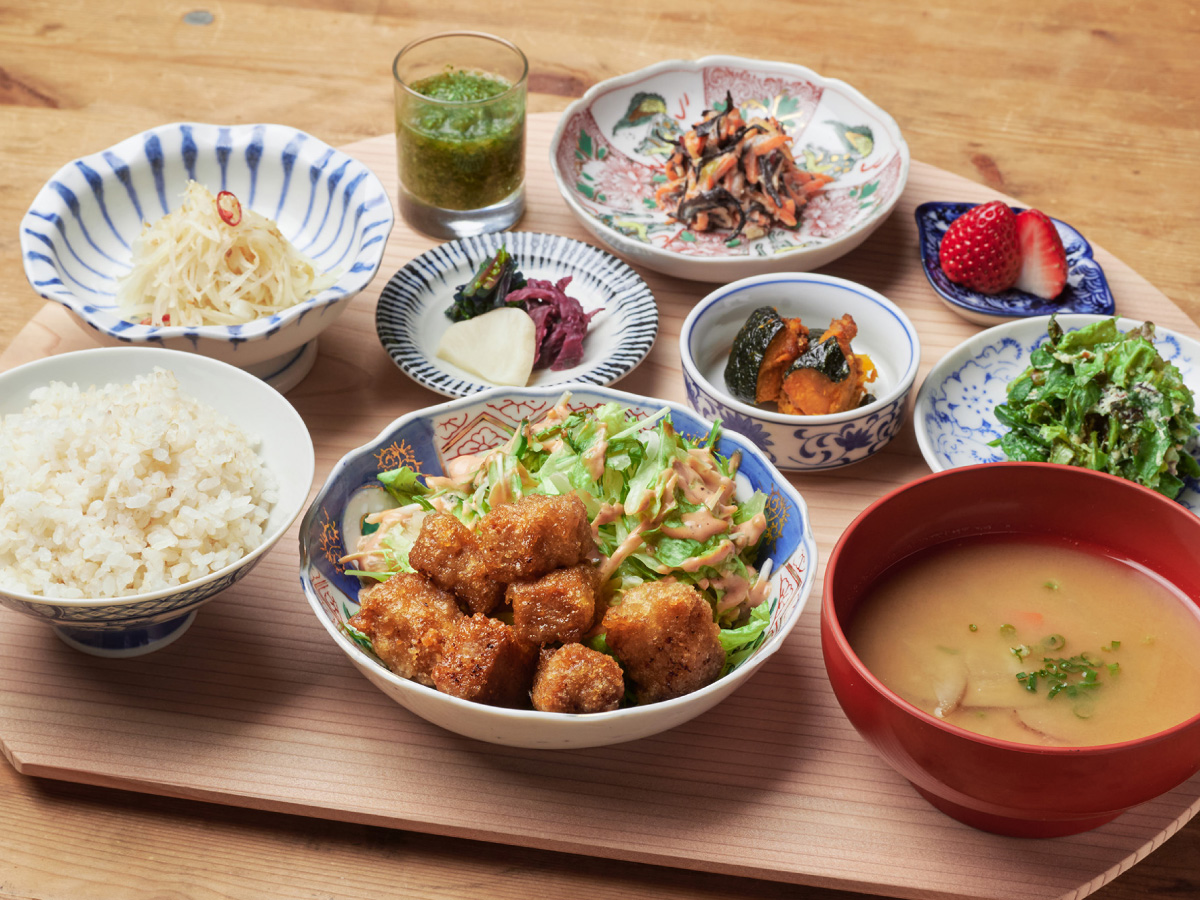
From hamburgers to karaage, Mumokuteki serves up classic comfort food favorites. Photo by mumokuteki
Close to the shopping arcades of Nishiki and Teramachi, Mumokuteki is an easy stop for lunch. The roomy interior has a handmade feel, with wooden tables and large windows overlooking the garden.
The cafe serves teishoku, a classic Japanese set meal of rice, miso soup, pickles, small side dishes and a main. The difference here is that everything is plant-based. Soy meat is shaped into tofu hamburgers, while okara konjac is used to make a plant-based, karaage-style fried dish.
The most popular choice is the Mumokuteki Sanshu Gozen, which brings together three fried options: miso katsu, karaage and tofu hamburgers.
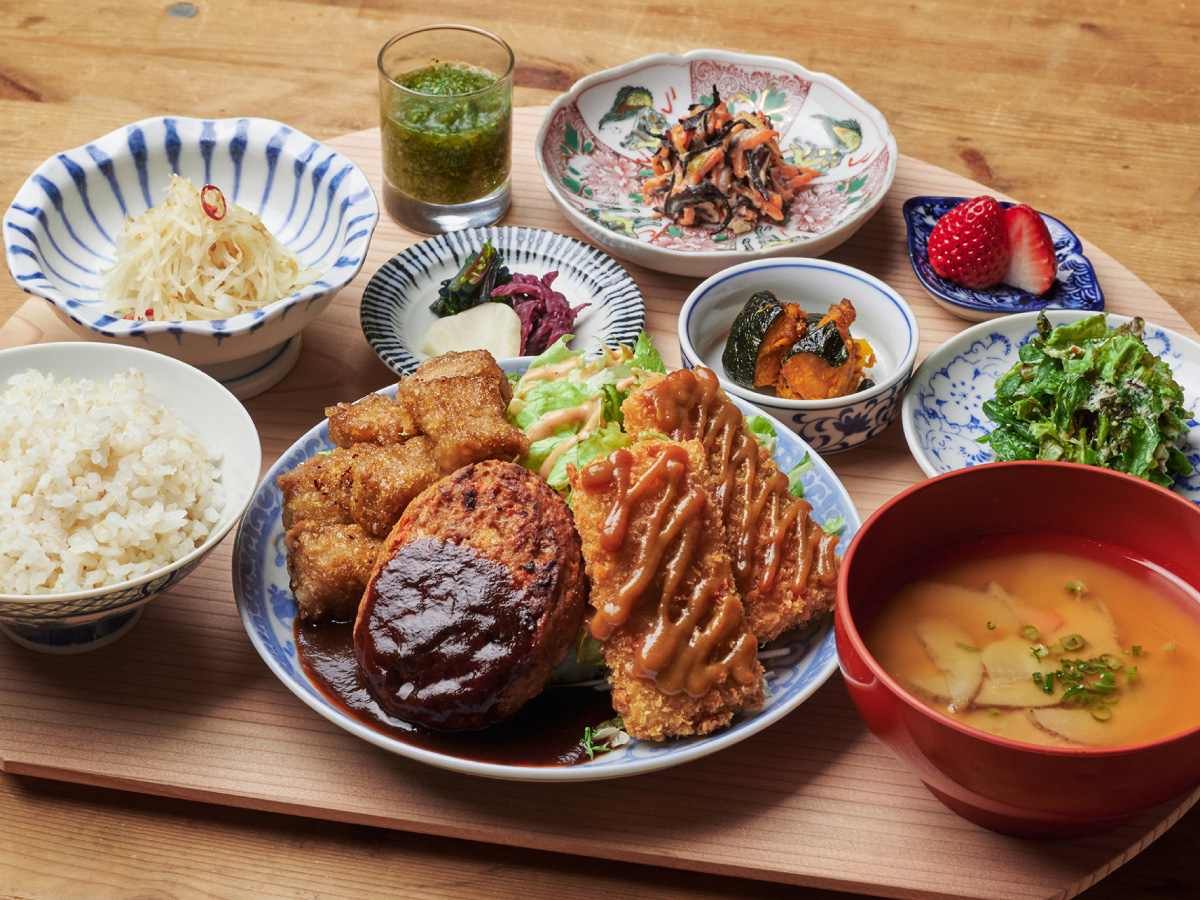
Feeling hungry? The Mumokuteki Sanshu Gozen packs three of the restaurant’s popular vegan dishes into one satisfying set. Photo by mumokuteki
Maintaining a strict vegan diet can be challenging in Japan, with animal-derived oils and meat powder used as flavoring in many products. Mumokuteki switched to being completely plant-based in 2019, so that all guests could feel at ease during their meal. “The idea was to make a place where everyone can enjoy the same food at the same table,” explains the manager.
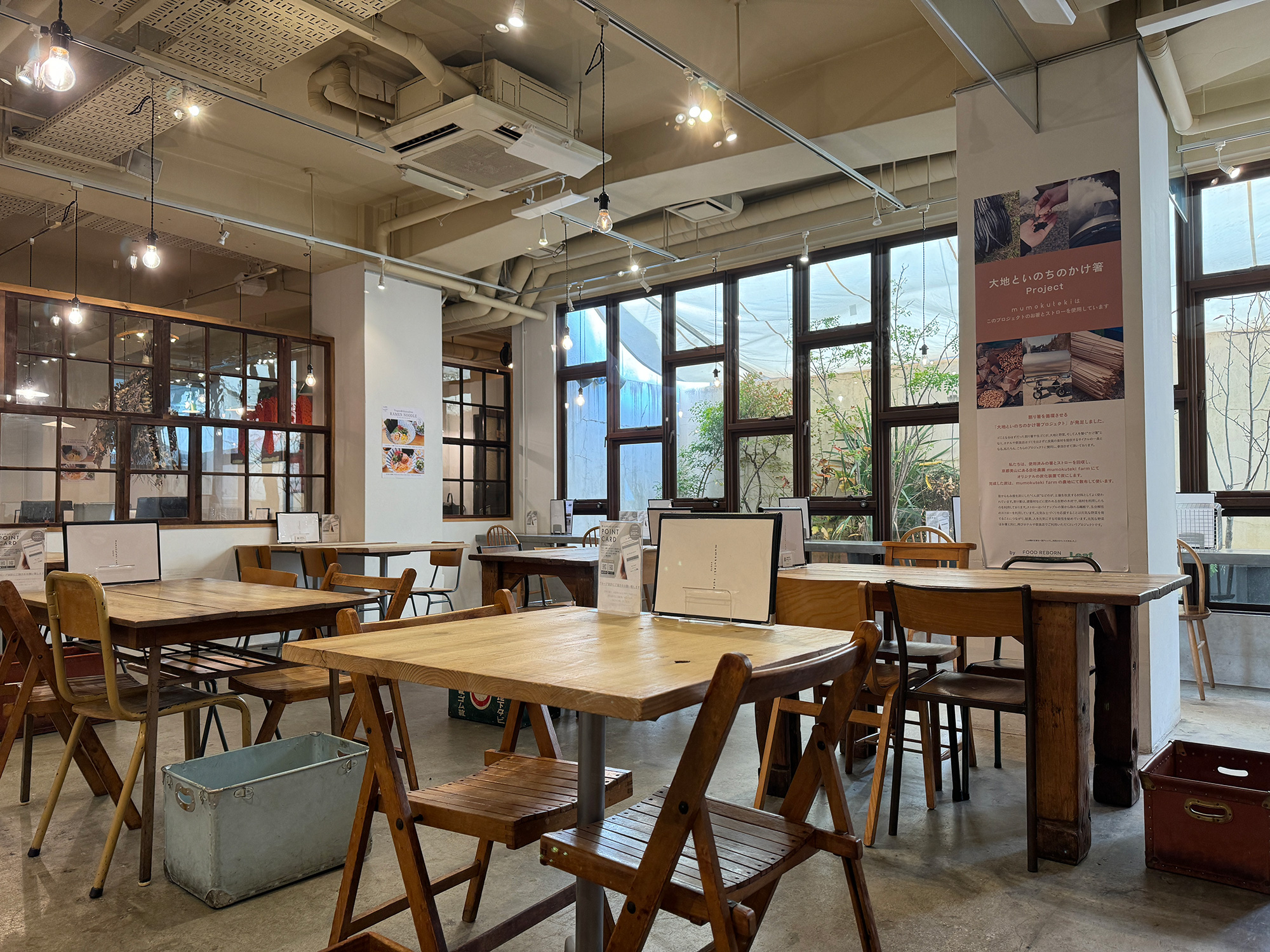
Unusually spacious for downtown Kyoto, Mumokuteki has plenty of seating for friends and family groups. Photo by mumokuteki
The idea seems to have struck a chord. Despite its spacious interior, Mumokuteki fills up around lunch and dinner. For a quieter visit, try dropping in between 2:00 PM and 4:00 PM on a weekday.
What is shojin-ryori?
Shojin-ryori is the traditional plant-based cuisine of Buddhist temples, developed as part of monks’ daily meals. With so many temples in Kyoto, it makes sense that over the centuries, cooks developed ways to prepare vegetables that brought out their natural flavors. These principles influenced Kyoto’s kaiseki course cuisine, which focuses on fresh, seasonal ingredients. While shojin-ryori is often a good option for vegans, it is worth checking with the restaurant in advance. Some dishes may contain fish-based dashi, eggs, or honey, so be sure to confirm that the meal meets your dietary requirements.
Vegan kaiseki in Kyoto: a traditional dining experience
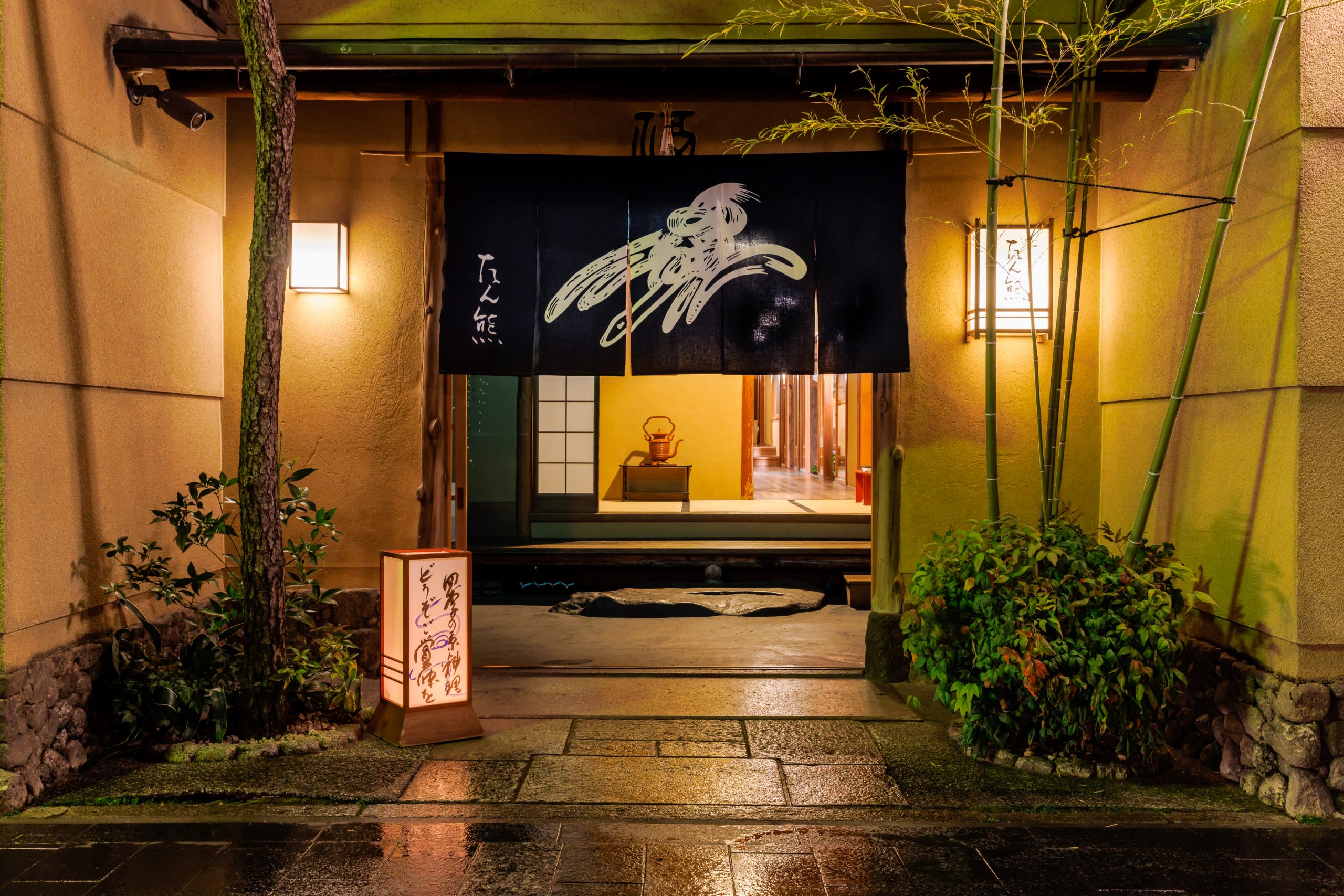
Since opening in 1928, Honke Tankuma Honten focuses on a “simple is best” philosophy letting Kyoto’s ingredients speak for themselves. Photo by Tankuma Honke, Inc.
Sprigs of bamboo and a lone pine tree frame the entrance to one of Kyoto’s finest destinations for vegan kaiseki course cuisine: Honke Tankuma Honten. Inside, a dark wooden corridor draws the visitor into a world of culinary craftsmanship and omotenashi hospitality. Official certification for halal and kosher cooking, and a strict adherence to vegan principles, make the experience accessible to all.
The word kaiseki evokes expectations: a parade of small, seasonal, beautifully presented dishes enjoyed within a traditional atmosphere. At Honke Tankuma Honten, every detail feels chosen with care. Handpainted seasonal motifs of vegetables and flowers decorate the walls; the sound of water spilling from the shishi-odoshi bamboo fountain in the garden adds to the serenity; while bamboo lanterns add a soft glow to the moss as the night deepens.
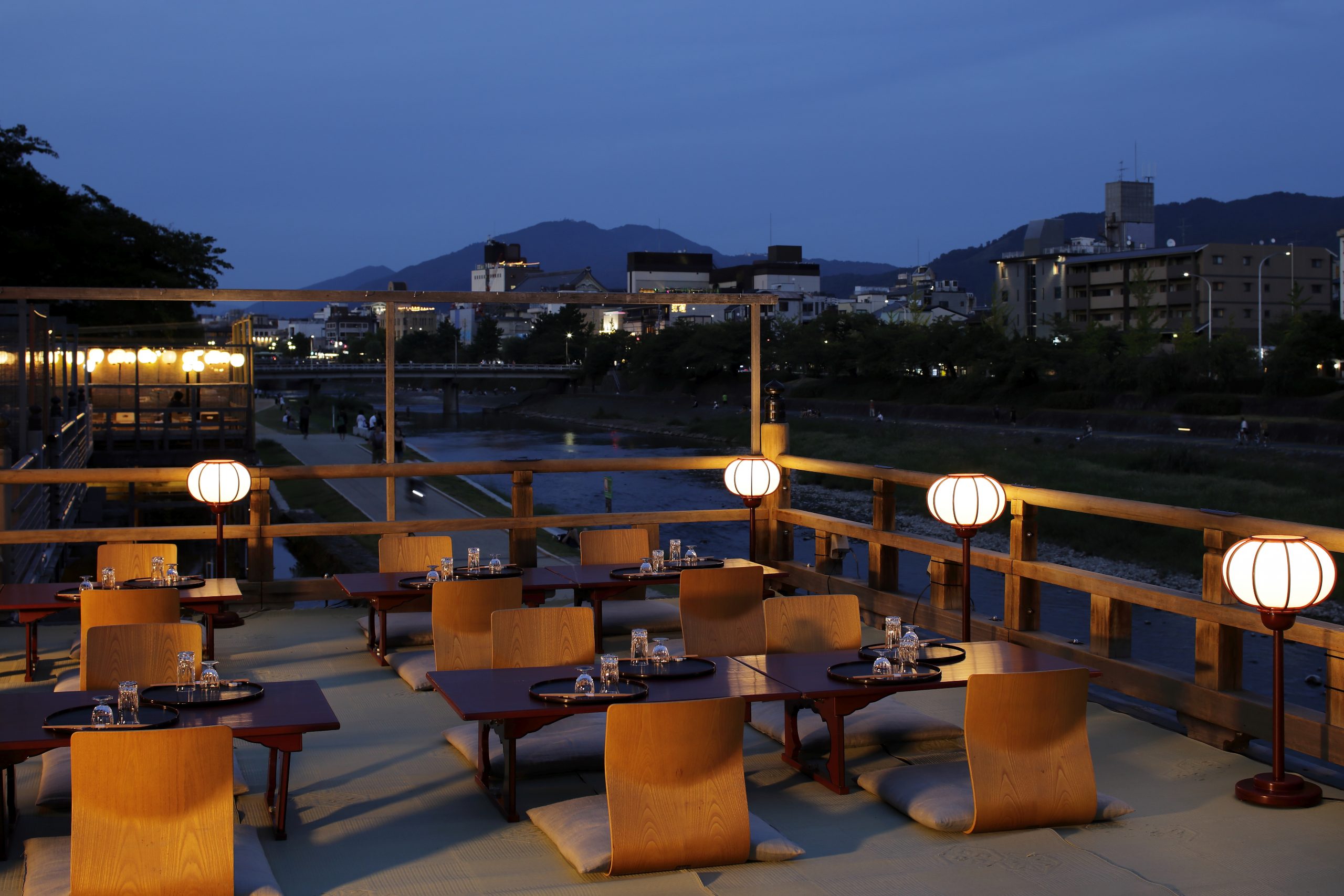
For those wanting an even more special dining experience, Honke Tankuma Honten offers terrace seating between May and September. Photo by Tankuma Honke, Inc.
The restaurant is famous for its monmo style cooking. Monmo is Kyoto dialect for “as it is”, a style of cooking that lets each ingredient speak for itself. Underpinning the Tankuma menu is a three-part articulation of the seasons: hashiri, the rare ingredient just ahead of its time; shun, the ingredient at its peak; and nagori, the last taste of a season already passing.
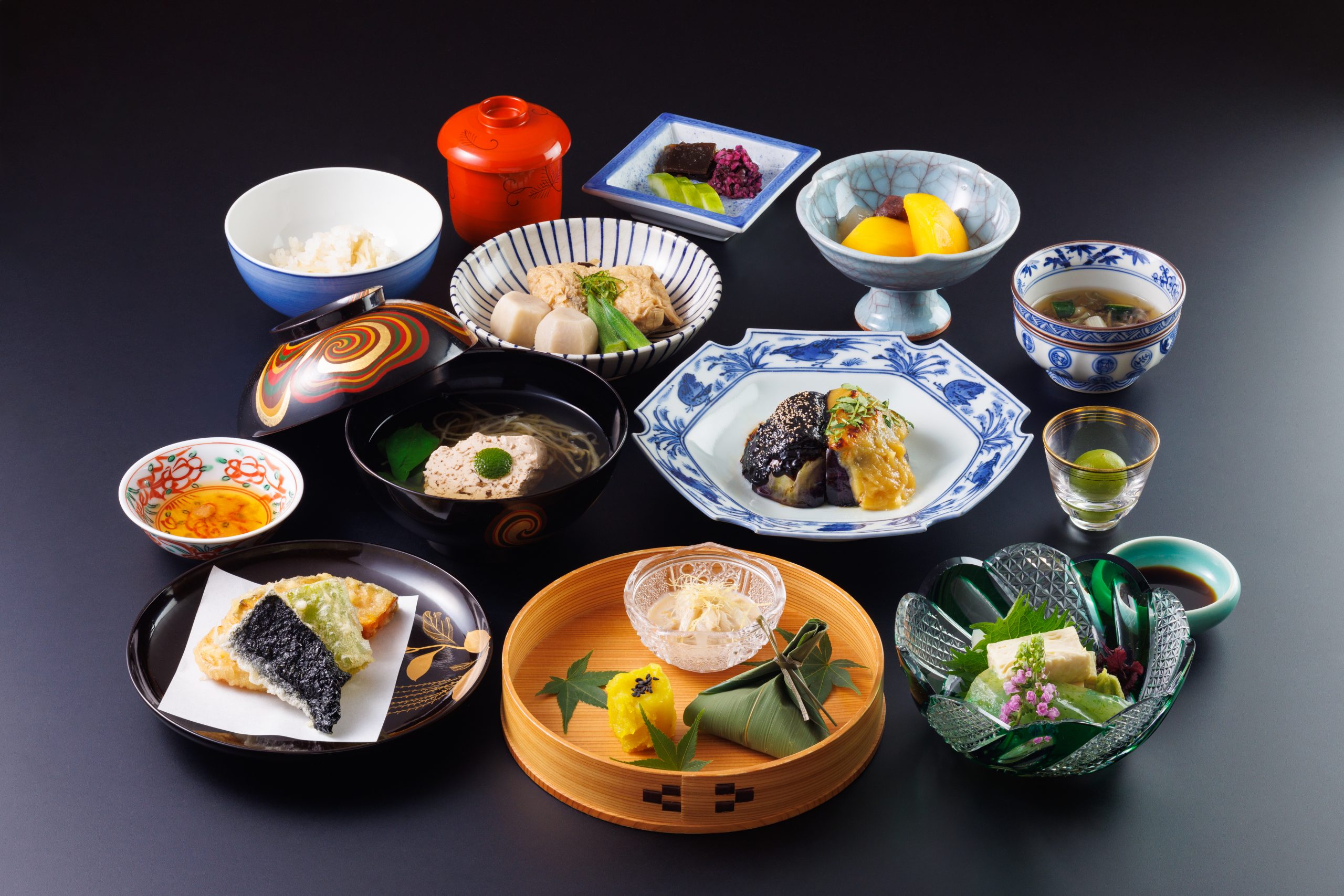
The dishes in the vegan omakase (chef-curated course) change with the seasons. Photo by Tankuma Honke, Inc.
“Our focus is serving each season’s defining ingredients at the moment they are at their peak, using simple cooking methods that allow guests to appreciate them as they are.” Junichi Kurisu, the young owner and chef explains.
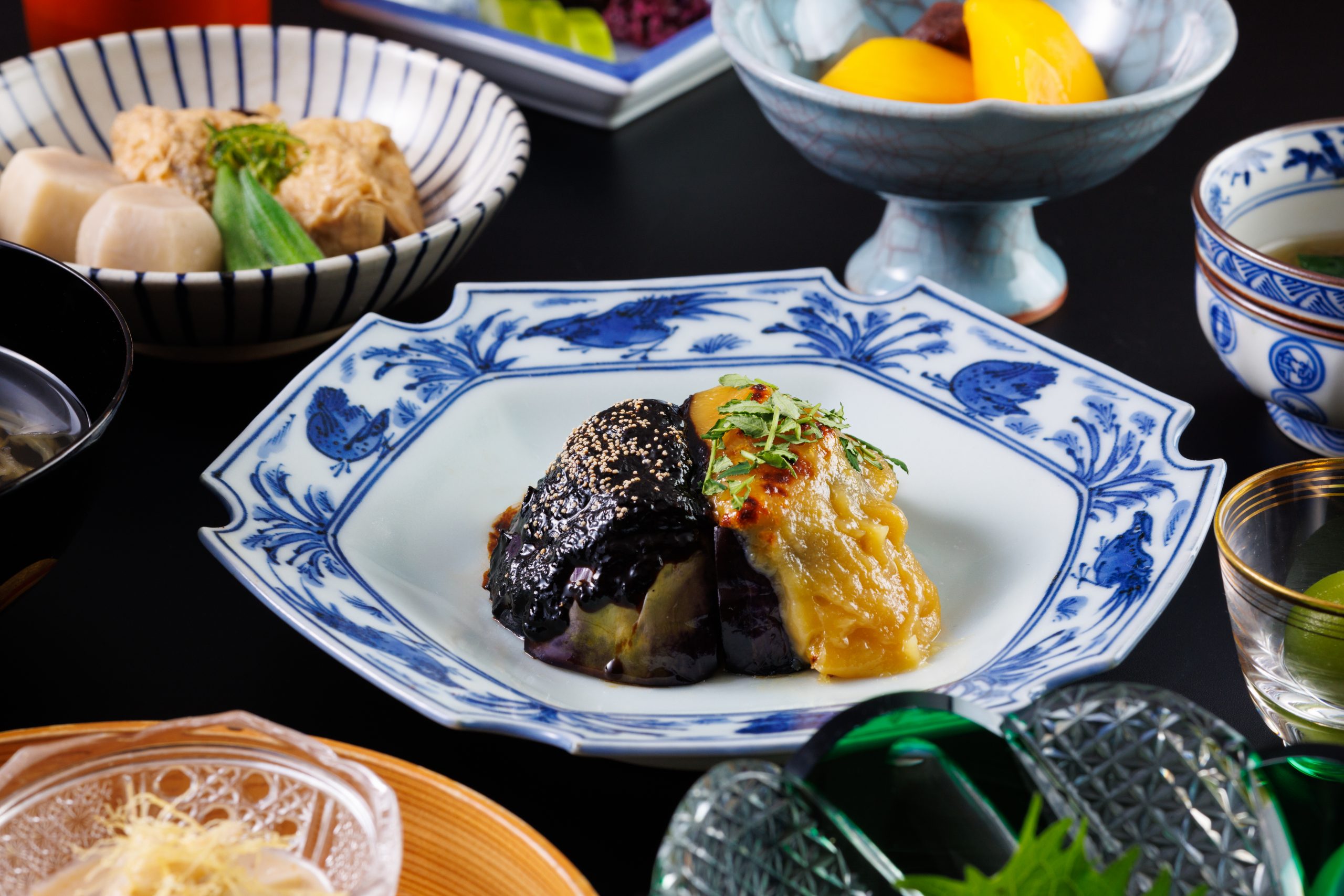
One summer spread included fried ginkgo nuts as the hint of autumn to come; a plump kamo eggplant smothered in two flavors of miso, one sweet and the other smoky; and a dish of tempura manganji pepper, lotus roots and shiitake mushrooms. Kyo-yasai at their peak.
A world traveler with 75 countries under his belt, Kurisu is determined to showcase Japan’s best food to a global audience. “During my travels I was treated so kindly by Muslim people in the Middle East. I wanted to repay that. Then I saw on television that Muslim visitors were bringing instant noodles from home to eat, out of concern for the ingredients. I thought: what a waste. Japan calls itself the capital of food culture, and here were people never getting to experience it.”
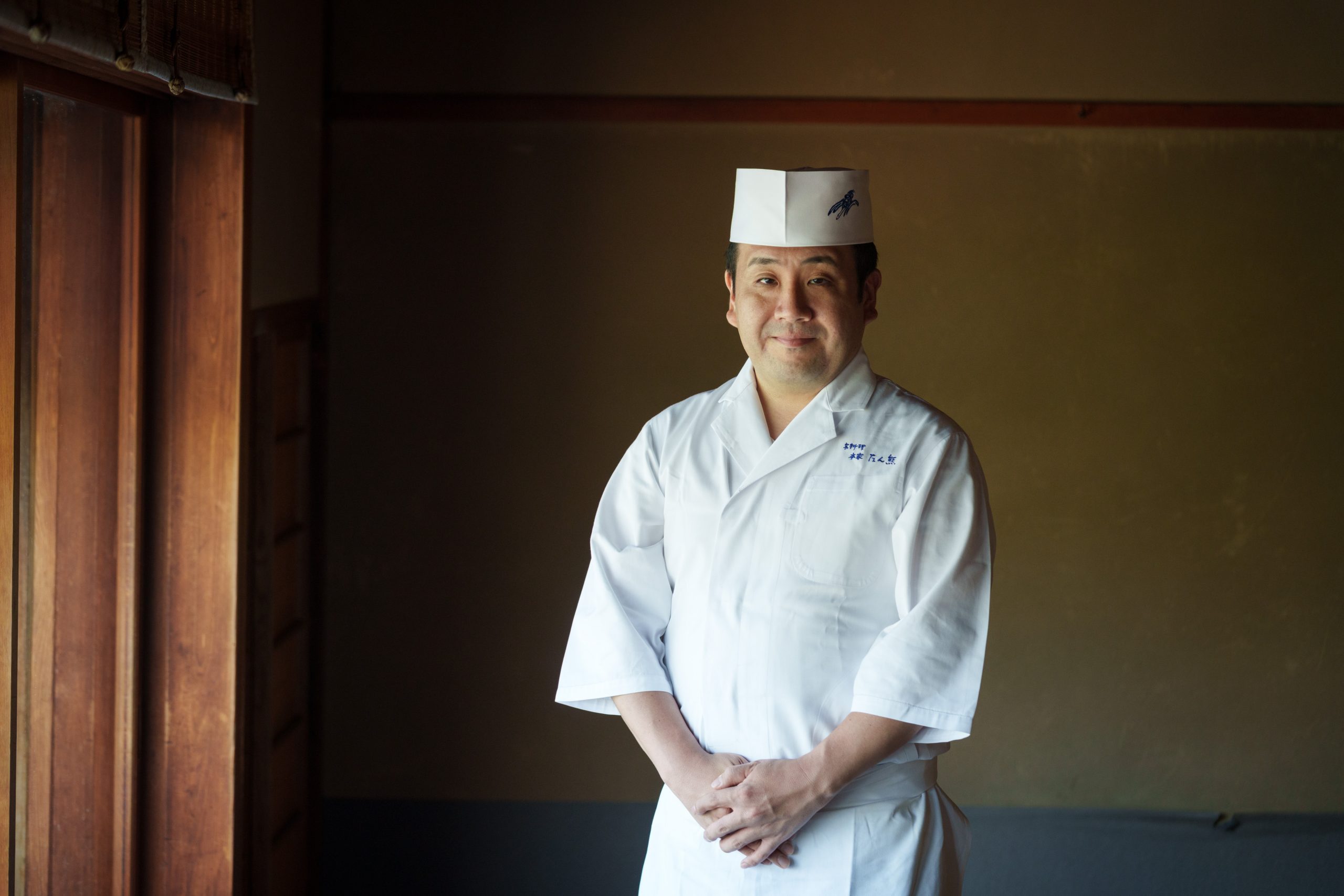
“The important thing is that everyone in the group, whether following a vegan, halal, or kosher diet, can enjoy the meal together.” – chef and owner, Junichi Kurisu Photo by Tankuma Honke, Inc.
The instinct to make Kyoto’s cuisine work for all guests extends to the vegan menu – though it puts the monmo philosophy, and the skills of the chef, to the test. The soul of Japanese cooking is dashi, a broth which typically receives its rich umami from dried bonito fish. There is a stigma towards vegan food, a belief that it lacks flavor. Honke Tankuma Honten proves otherwise, building depth into its dashi with kelp, soybeans, and dried shiitake.
For Kurisu, his dishes carry a personal weight as much as a culinary one. As the fourth generation to lead the restaurant, he is measured against his father’s decades of experience. Reworking Japan’s most traditional cuisine into something entirely plant-based, halal, or kosher, without losing an ounce of its depth, is one way he does exactly that. The result is a truly special meal to savor.
Other vegan restaurants to add to your Kyoto itinerary
Each year, more excellent vegetarian and vegan-friendly restaurants open in Kyoto, offering delightful meals, peace of mind, and authenticity. Some other popular spots vegans may wish to add to their itinerary are Vegan Izakaya Masaka for those who like a night on the town or the intimate space of a seven-seat counter at Nijiya. Splurge with a special shojin-ryori course at Ryotei Yachiyo, or stop by for an informal Buddha bowl at Cafe Phalam.
From a hundred-year-old ryotei to a seven-seat counter, Kyoto’s vegan future looks as varied as its past.
Article Author