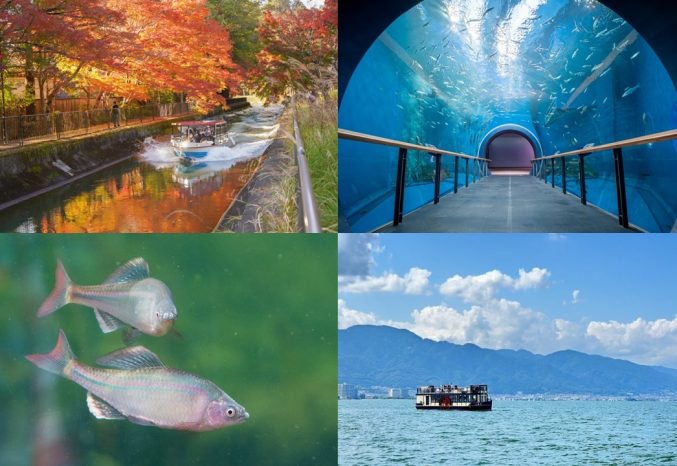
The Lake Biwa Canal is a peaceful waterway connecting Kyoto to Lake Biwa, Japan’s largest freshwater lake and one of the world’s few ancient lakes, whose history spans over four million years.
The canal was once one of Kyoto’s most ambitious infrastructure projects, built by a staggering four million workers. But in an ancient capital as grand as Kyoto, this time I was there to discover something much smaller: the story of a fish once abundant in Lake Biwa but now critically endangered.
As I followed the Lake Biwa Stamp Rally route, I explored historic sites, visited museums, and traveled along the city’s waterways. Seeing these places firsthand gave me a deeper understanding of how the canal, Lake Biwa, and the surrounding ecosystem are interconnected—and how they helped shape the Kyoto that enchants visitors today, as it has for generations.
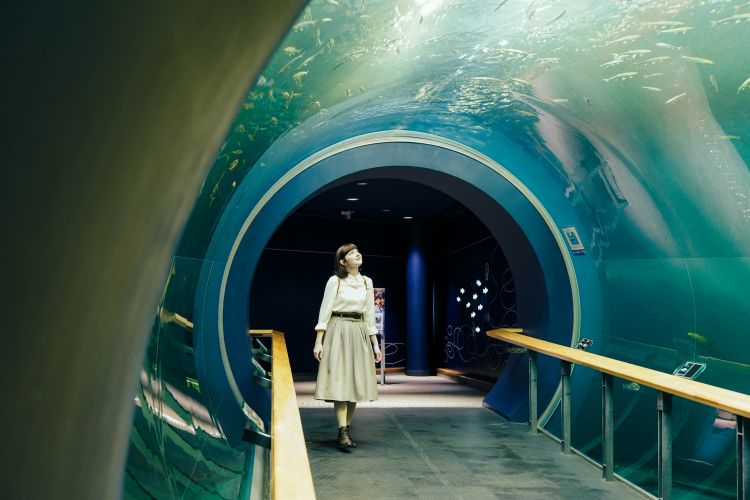
Fish native to Lake Biwa glide overhead in the Lake Biwa Museum’s tunnel tank.
The stamp rally consists of six stops, each adding a colorful layer to my stamp. Known as kasane-oshi, the technique involves layering differently colored stamps to create a single image, much like traditional ukiyo-e woodblock prints.
The tiny fish at the heart of my journey
I collected my first stamp at Heian Jingu Shrine, where the massive vermilion gate completely dwarfed visitors as they passed through. Beyond the gate, the expansive shrine grounds opened up, leading toward its quiet public gardens.
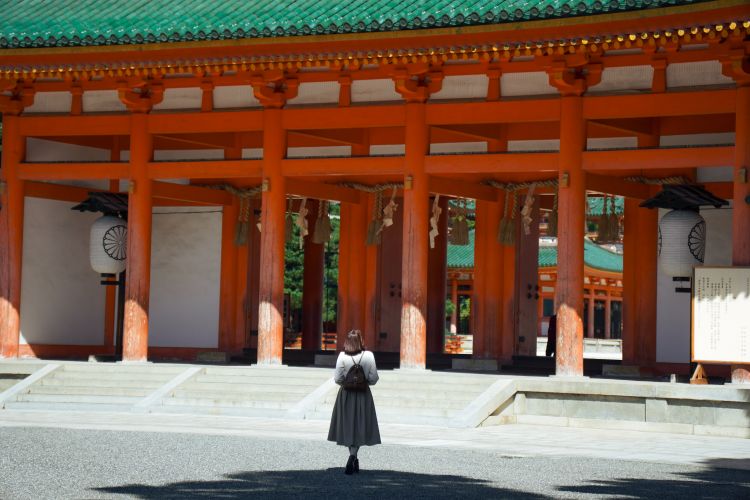
Heian Jingu Shrine’s imposing Otenmon Gate.
The ponds inside the garden were my first stop in search of Ichimonji-tanago, the striped bitterling I had set out to learn about. Drawing their water from Lake Biwa via the Lake Biwa Canal, the ponds have a filtration system that helps keep invasive species out, providing a safe sanctuary for the fish.
Alongside the walking path, I spotted various bivalve shells in the clear streams. They were my first clue that striped bitterling were nearby, as the fish lay their eggs inside the shells. The young hatch and develop inside the shells before eventually swimming out.
After exploring part of the garden, I stopped at Azumaya, a quiet cafe serving Japanese sweets made with matcha from nearby Uji City, one of Japan’s most celebrated tea-producing regions. I enjoyed a refreshing iced matcha and matcha castella cake while watching koi carp swim through the pond, but the striped bitterling remained elusive.
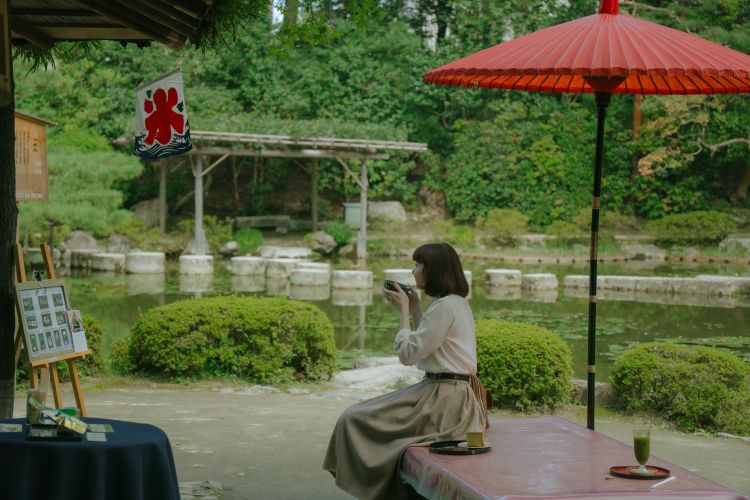
A little matcha break in the gardens of Heian Jingu Shrine.
Just as I was beginning to think I might not spot the fish after all, I finally caught sight of a school of fish that appeared to be striped bitterling swimming among massive koi and turtles.
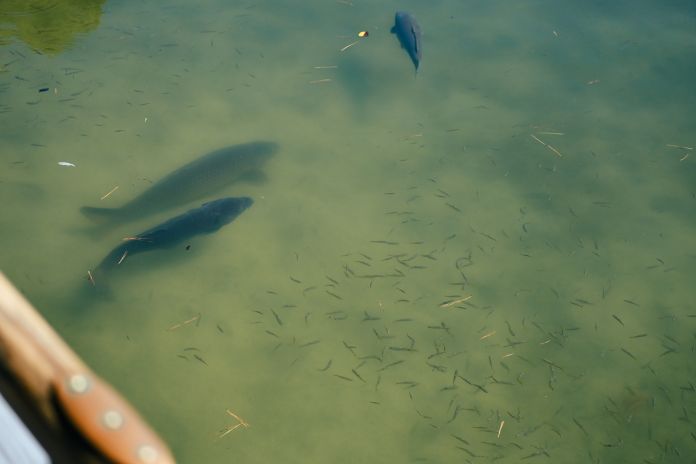
The day’s first fish sighting.
Intrigued by what might have been my first glimpse of the mysterious fish, I walked to Kyoto City Zoo to learn more about them. There, the next layer of my stamp began to subtly reveal the shape of the striped bitterling.
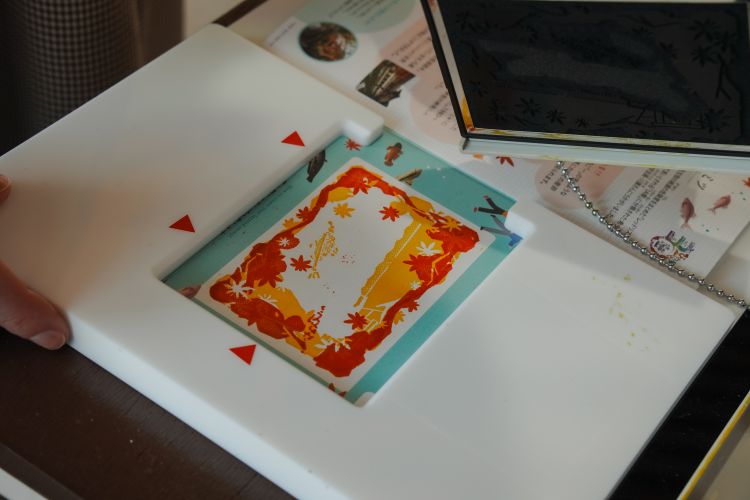
At Kyoto City Zoo, the next layer of my stamp reveals the shape of the striped bitterling.
At the zoo, I learned that the striped bitterling can no longer thrive in Lake Biwa due to a combination of factors, including invasive species and deteriorating water quality.
For about ten years, the zoo has worked with local residents to learn more about the endangered striped bitterling and breed them in captivity. These efforts have not only helped the fish reproduce more consistently, but have also raised public awareness of this precious species.
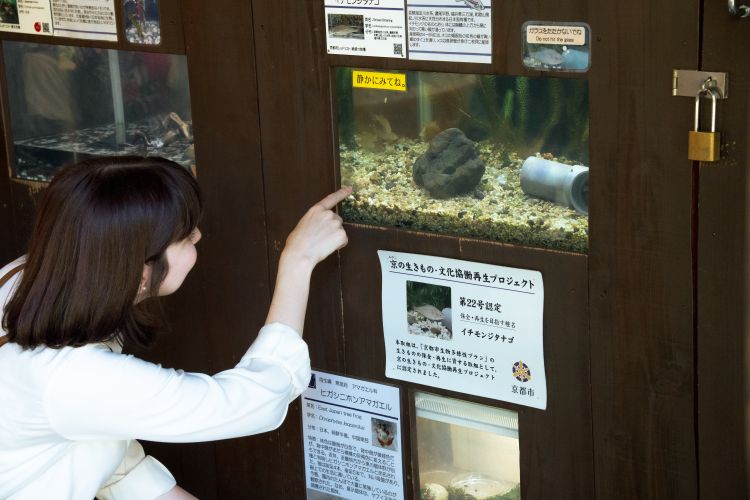
Getting a closer look at the striped bitterling at Kyoto City Zoo.
The canal that helped modernize Kyoto
After leaving the zoo, I headed just next door to the Lake Biwa Canal Museum to add the next layer to my stamp. Walking through the area, I was surprised by how much its architecture reminded me of an old European city. At the museum, I learned that many of these structures were built during the Meiji (1868–1912) and Taisho (1912–1926) periods, when Japan underwent rapid modernization amid growing Western influence.
I especially enjoyed the museum’s in-depth explanations and interactive displays, which brought the canal’s history to life. Through them, I learned that the canal supplied Kyoto with water not only for drinking, but also for transportation, irrigation, hydroelectric power generation, and fire prevention.
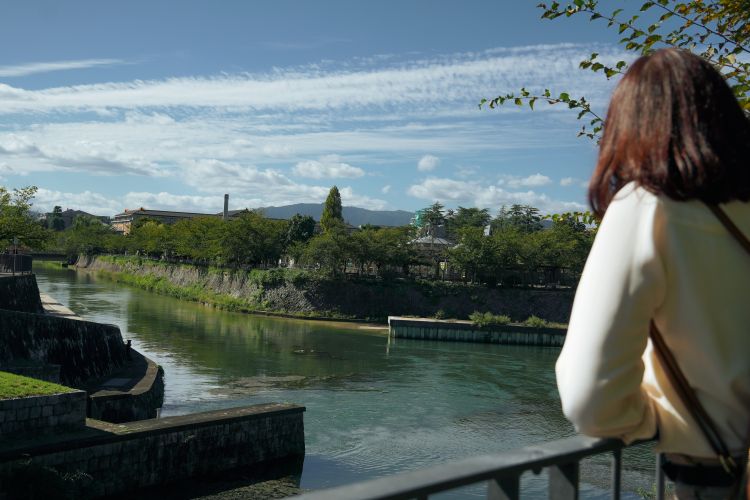
Looking out over the Lake Biwa Canal near Kyoto City Zoo.
The Lake Biwa Canal was essential to revitalizing and modernizing Kyoto after the emperor’s residence moved to Tokyo in 1869, marking the end of Kyoto’s more than 1,000 year role as the seat of Japan’s imperial court. The project required tunnels to be drilled through the mountains, an extraordinary engineering feat that employed methods used in Japan for the very first time. For the role it played and all that it symbolized, the canal came to be known as the “Canal of Hope.”
In 1895, around 300,000 people traveled along the canal on sightseeing boats. However, as other forms of transportation developed, boat traffic along the canal gradually declined until regular services were paused in 1951.
Fortunately, boat transportation returned to the canal in 2018 after a decades-long hiatus. Today, visitors can take a Lake Biwa Canal Cruise to experience these historic waterways. The canal is said to be especially beautiful during the spring cherry blossom and autumn foliage seasons.
Arriving at Lake Biwa, Japan’s Mother Lake
I walked to nearby Keage Station and took a train to Keihan-Yamashina Station to visit the next stamp location: Kyoto Yamashina Hotel Sanraku. Sandwiched between central Kyoto and Lake Biwa, Yamashina lies in a basin surrounded by mountains. The Lake Biwa Canal runs through the area, carrying water from the lake to Kyoto.
My next stop was Otsu Port, where I could take in the grandeur of Lake Biwa, known locally as “Mother Lake” for the water and natural resources it has long provided to the surrounding region.
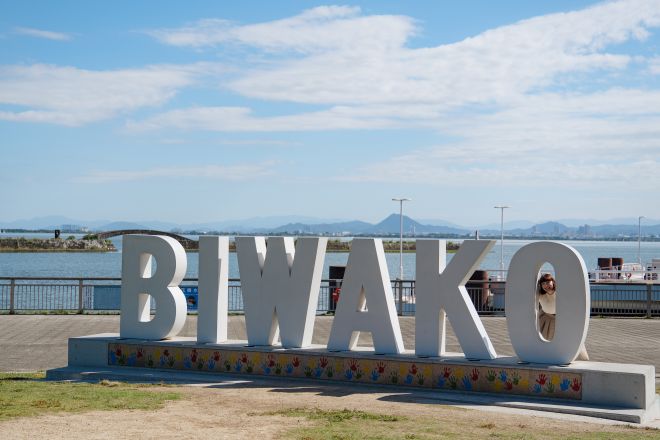
Blue as far as the eye can see at Otsu Port.
After adding another layer to my stamp at Otsu Port, I took the opportunity to walk along the lakeshore toward Nionohama Tourist Pier, where I would board the LAGO Cruise. The walk offered plenty of places to pause and admire the lake’s famously blue waters.
The LAGO Cruise took me across the lake to Kusatsu Karasuma Peninsula Port, next to the Lake Biwa Museum. As we glided across the lake, rolling waves gently spread out behind the boat.
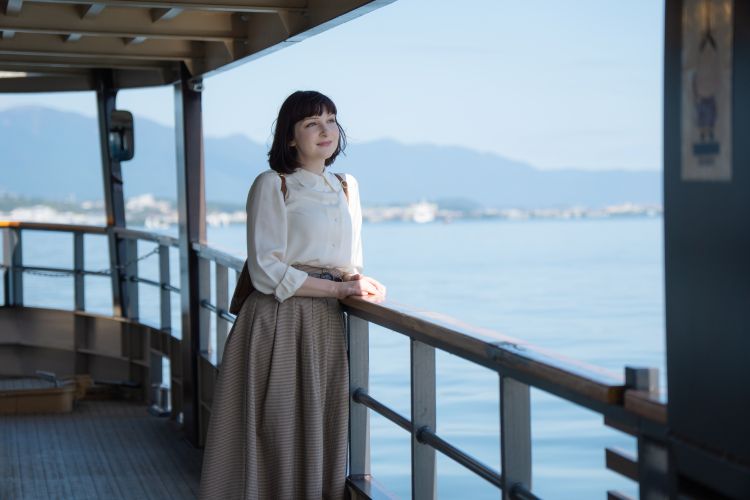
Taking in the views and enjoying the cool breeze aboard the LAGO Cruise.
Just a short walk from the port is the Lake Biwa Museum, where I added the final layer to my stamp. The finished artwork brought together the two key subjects I had spent the day learning about, but I’ll keep the final design under wraps so you can discover it for yourself—no spoilers here!
Curators at the museum are working to conserve the striped bitterling. The males, in particular, stood out thanks to their distinctive green and pink coloring. I could also peek into the room where the fish are bred and studied. After spending the day learning about these small fish, I was especially glad to see the conservation efforts firsthand.
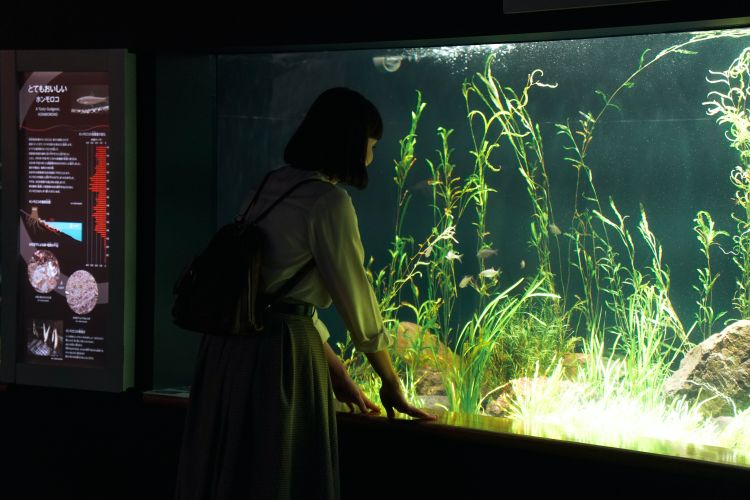
Discovering the diversity of Japan’s bitterling species.
With my journey to learn about the striped bitterling complete, I headed back to Kyoto Yamashina Hotel Sanraku one more time to receive my final prize. On the way back, I traveled by bus and train through the countryside of Shiga and Kyoto, passing rice fields heavy with golden heads of grain, nearly ready for harvest.
At the hotel, I received a packet of stickers featuring some of Lake Biwa’s aquatic life, including the striped bitterling, of course! Seeing the fish one last time was a fitting end to the journey, now in sticker form for me to take home.
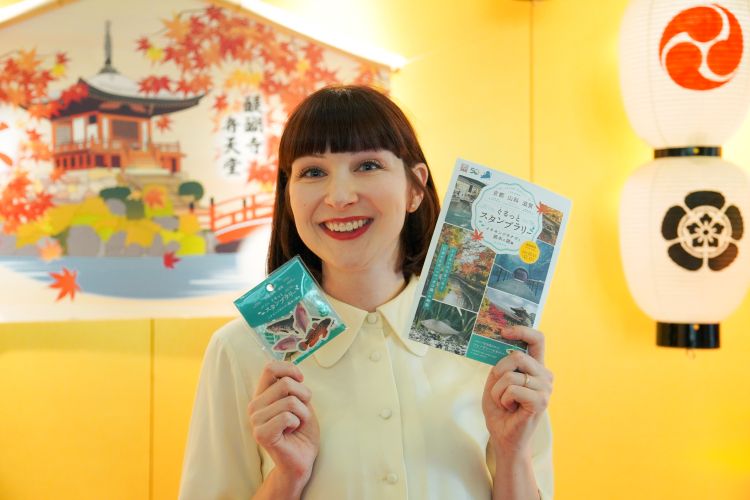
A few souvenirs from my journey.
Kyoto Yamashina Hotel Sanraku official website
Finding a new side of Kyoto along its waterways
What began as a search for a tiny fish ultimately revealed a much larger story: the deep ties between Kyoto and Lake Biwa. This relationship has shaped the wildlife, landscape, and history of the region. Following the stamp rally route reminded me that even in a city as familiar to travelers as Kyoto, there are still stories waiting to be discovered, just beyond the famous sights.
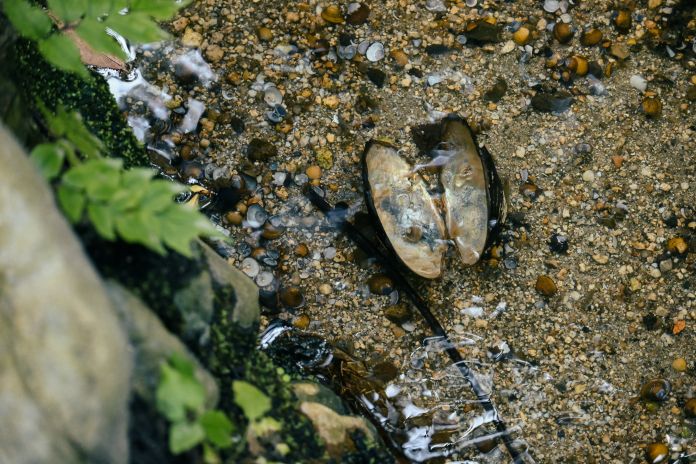
Bivalve shells in the streams that flow into Heian Jingu Shrine’s ponds.
Related articles

Article Author