Despite living just a short Shinkansen bullet train ride from Kyoto, I never spent much time exploring the city. I prefer to veer off the beaten path and seek out lesser-known places away from crowds, but was unaware that I could find just that in Kyoto.
Just five minutes by train from Kyoto Station, I set out to explore Yamashina, a quieter corner of the city that many visitors miss. Here, the crystal-clear turquoise Yamashina River winds past ancient temples, gardens, and cozy neighborhood cafes.
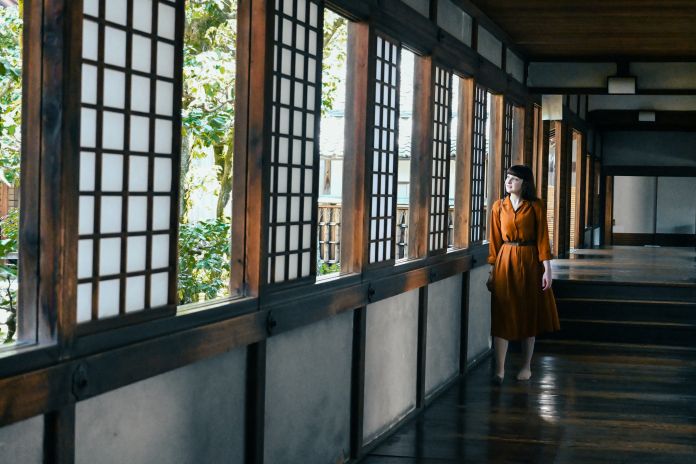
Walking through the quiet halls of Daigo-ji Temple.
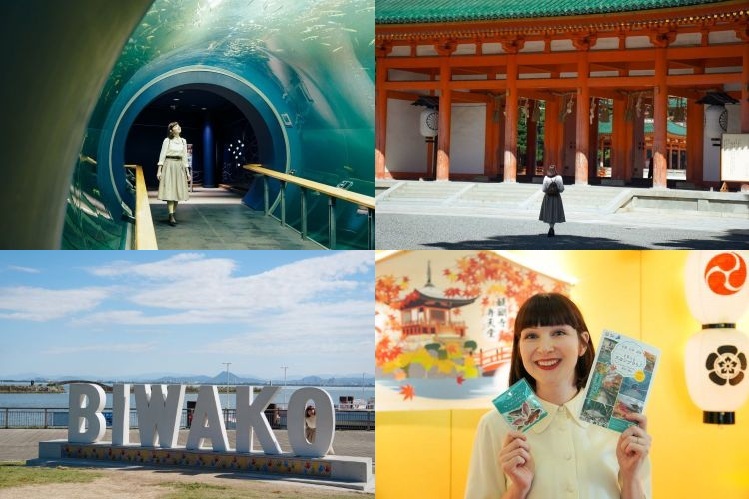
Using the Yamashina Daigo Stamp Rally as my guide, I explored three temples that each revealed a different chapter in Yamashina’s history. The stamp rally uses a technique called kasane-oshi, in which differently colored stamps, each with its own design, are layered to create a single image.
This technique draws inspiration from centuries-old traditions, such as ukiyo-e, in which multiple carved woodblocks were used to gradually build a colorful print. This stamp rally offers a playful spin on this artistic tradition.
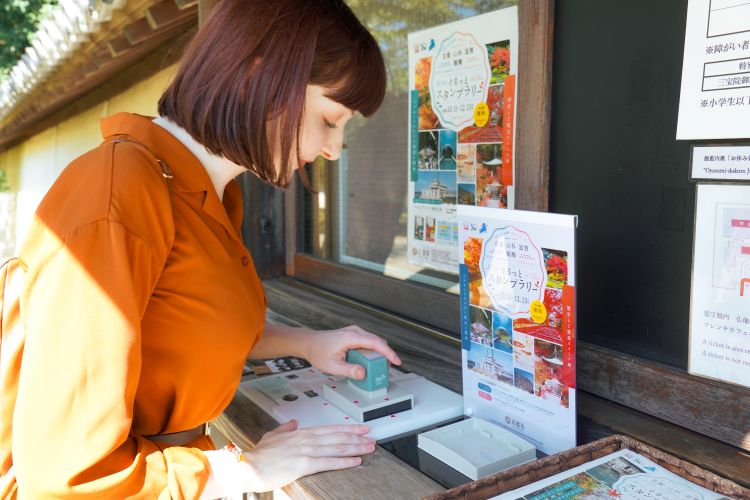
Creating a different kind of keepsake.
A quiet introduction to Yamashina
Bishamon-do Temple is tucked away in the mountains north of Yamashina, about a 15-minute walk from Yamashina Station. The route to the temple led me through a residential neighborhood, across the Yamashina Canal, and into the mountains beyond the city center.
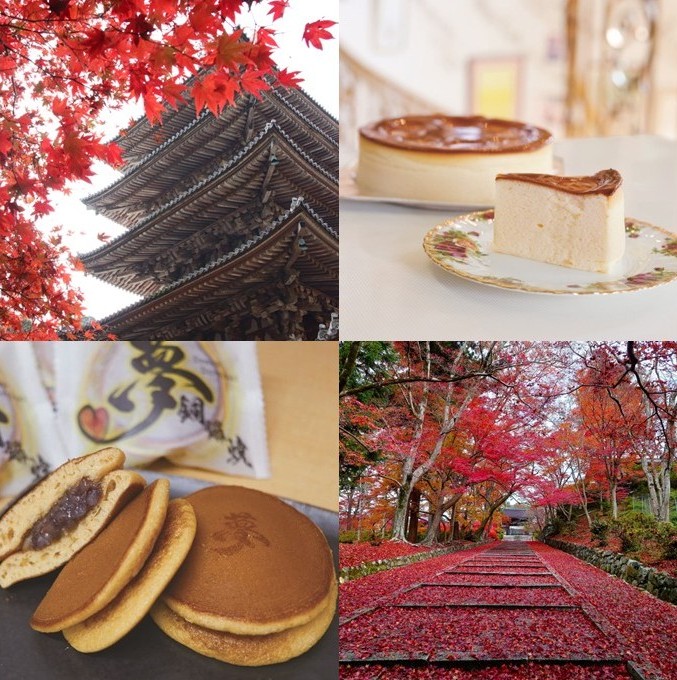
The steps leading to the temple are said to be especially stunning during autumn, when maple trees create a crimson canopy overhead. The leaves had not yet changed color at the time of my visit, but the green foliage offered a beautiful contrast to the temple’s striking red mon gate and giant chochin lantern.
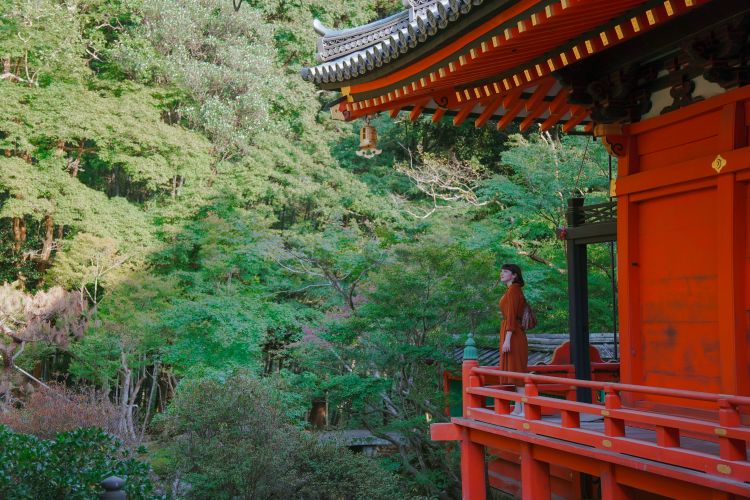
Taking in the gardens at Bishamon-do Temple, surrounded by lush green forest.
Bishamonten, the temple’s main deity, is one of Japan’s Seven Lucky Gods. The main hall where his statue is enshrined is dimly lit, with rows of glowing red lanterns softly illuminating a majestic phoenix painting on the coffered ceiling.
After completing the first stamp in red ink, appropriately reflecting the temple’s famous maple trees, I began to explore its many halls. I was particularly entranced by the tenjo-ryu dragon painting, an optical illusion on the ceiling of Reiden Hall. No matter where I stood, the dragon’s eyes seemed to follow me.
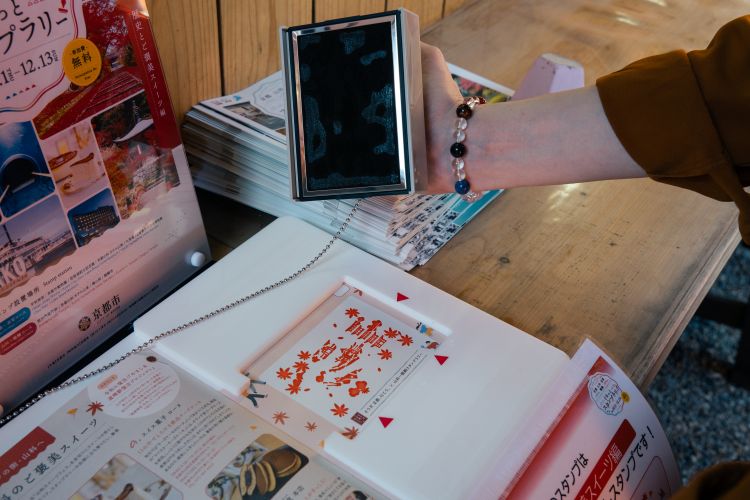
The first stop—and first stamp—of the day at Bishamon-do.
Ready for a short break, I headed back towards Yamashina Station and dropped by CAFE HATCH. The owner is part of the team of local volunteers, shop owners, and historians working to recreate Yamashina Dohare Mochi, an Edo period (1603–1868) sweet whose recipe was lost to time. I was able to grill the mochi myself over a small shichirin charcoal grill, watching it turn golden and crispy over the flames.
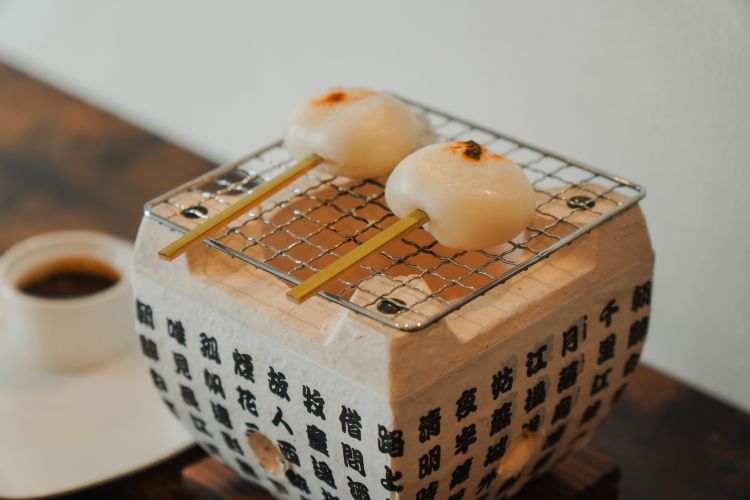
Grilling Yamashina Dohare Mochi, an Edo period teahouse treat, at CAFE HATCH.
Temples, legends, and a thousand love letters
My next stop was Zuishin-in Temple, which has long been associated with the legendary beauty and poet Ono no Komachi, who lived during the Heian period (794–1185). The temple grounds were nearly silent, with only the crunch of gravel beneath my feet.
Several places around the temple are connected to Komachi, including a mound known as the Fumizuka, where she is said to have buried a thousand love letters from noble suitors. According to legend, rather than burn the letters, she buried them out of respect for the heartfelt sentiments they carried.
The vivid fusuma sliding doors painted by local illustrator duo Daruma Shoten depict important moments in Komachi’s mysterious life. The bold imagery stood in contrast to the otherwise serene and subdued atmosphere.
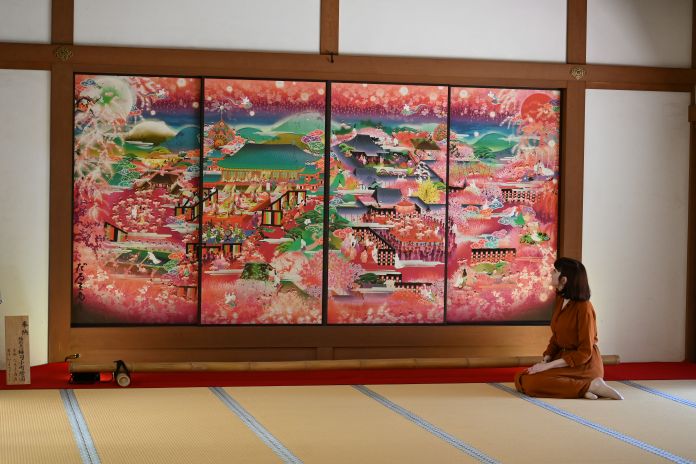
Taking in the many chapters of Ono no Komachi’s life at Zuishin-in Temple.
After adding another layer to my stamp, I couldn’t resist picking up a goshuin for my collection, too. Goshuin are seals received at temples and shrines as a record of worship, featuring handwritten calligraphy. As luck would have it, my visit fell on the first day of the month, when a special gold version is available.
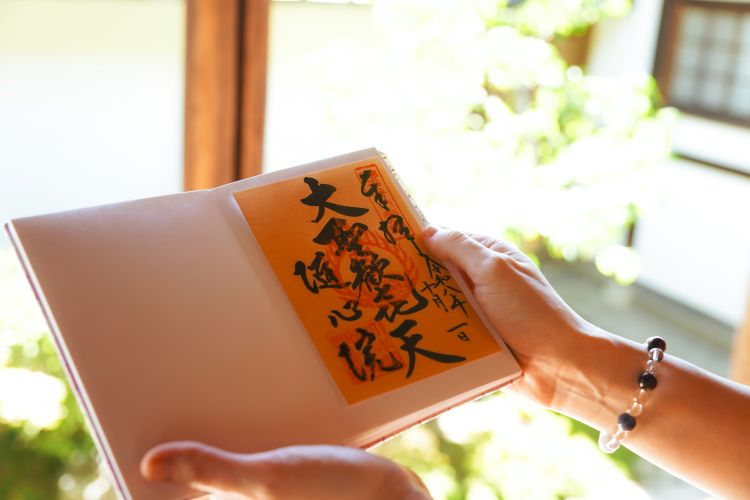
Zushin-in Temple’s special gold goshuin seal, formerly offered only on the 1st and 16th of each month (no longer available).
From Zuishin-in Temple, I took a bus to Daigo-ji Temple, a UNESCO World Heritage Site and home to Kyoto’s oldest surviving wooden building. I was unprepared for the sheer size of the grounds, which stretch deep into the mountains. It takes about a one hour hike to reach Kami Daigo, the upper section of the temple grounds. I didn’t have enough time to make the climb, but on clear days, it’s said you can see as far as Osaka.
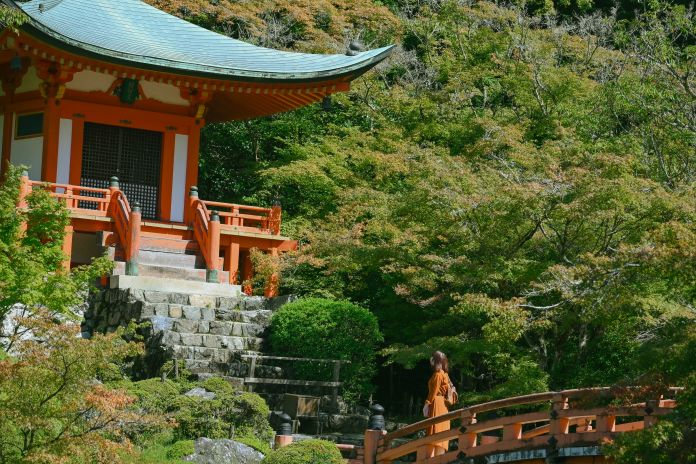
Admiring the striking red Bentendo Hall at Daigo-ji Temple.
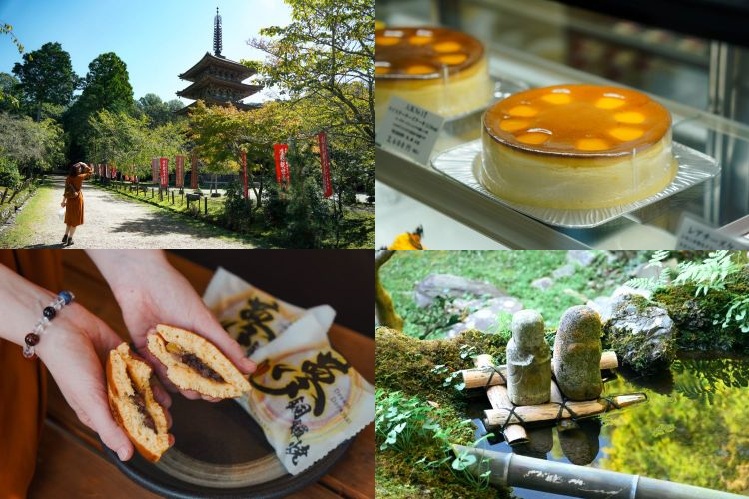
With the third layer of my stamp complete, I wandered deeper into the temple grounds. Glimpses of the five-story pagoda peeked through the green maple leaves before the towering structure finally came into view. The pagoda has stood for over 1,000 years, surviving fires, wars, and even earthquakes. I couldn’t help but feel awestruck by the centuries of history it had witnessed.
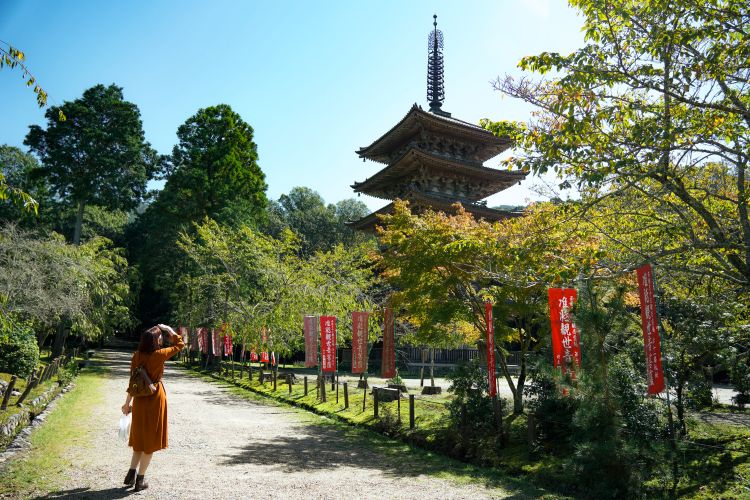
The five-story pagoda towering above the grounds of Daigo-ji Temple.
After exploring Daigo-ji, I was ready for the next sweet reward. Yorozuya Rincho Main Store is another shop helping bring Yamashina Dohare Mochi back to life. Outside, the mochi are grilled over a fire; the smoky aroma reminded me of cool autumn nights around a campfire. I arrived too late in the day to watch the award-winning Dream Dorayaki being made, but I still got to savor the delicious red bean-filled confection.
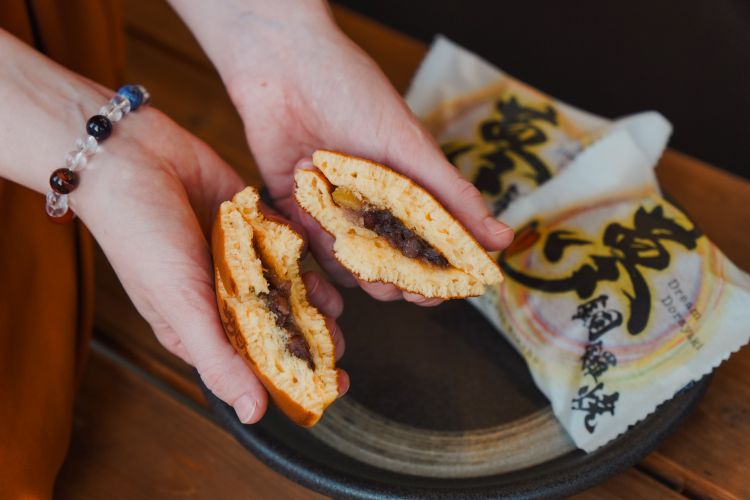
Yorozuya Rincho’s signature Dream Dorayaki, freshly made each morning.
A sweet ending to a day of exploring Yamashina
Before heading to the final two sweets shops of the day, I made a quick stop at Kyoto Yamashina Hotel Sanraku to complete my stamp. The hotel is conveniently located just across from Yamashina Station. At last, the image was complete. It brought together scenes inspired by the places I had visited along the way, and simply looking at it transported me back.
Completing the stamp earned me a voucher for eggplant sablé from nearby Switzerland Rhone’s RACTO branch, a Western-style cake shop. While walking around Yamashina, I had started to wonder why the neighborhood was covered in eggplant motifs. Cafes and restaurants displayed eggplant decorations, while I spotted everything from eggplant beer to eggplant bread for sale.
It turns out that Yamashina eggplant is one of Kyoto’s traditional vegetables, a symbol of the city’s food culture preserved through generations. Now I had a voucher for this regional souvenir, which incorporated eggplant both in its shape and dough, its delicate earthiness and subtle sweetness coming through in every bite.
Note: After completing the stamp rally, vouchers can only be picked up at Kyoto Yamashina Hotel Sanraku and redeemed for eggplant sablé at Switzerland Rhone’s RACTO branch (not the Honten main store).
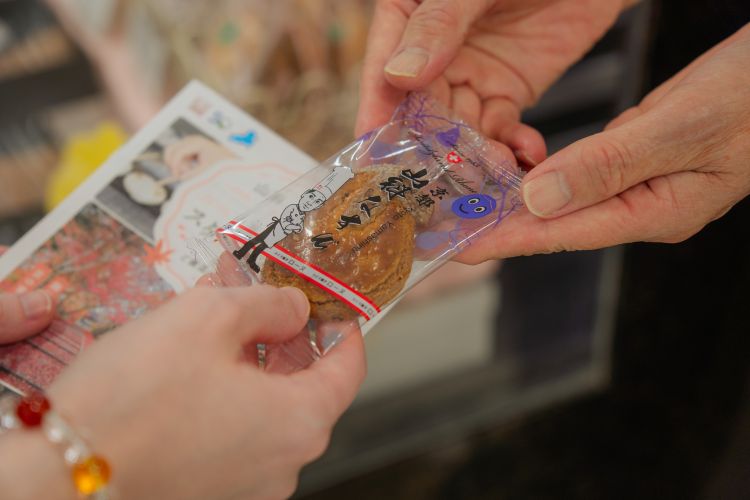
My sweet reward for completing the stamp rally: eggplant sablé.
Just a few minutes’ walk from Switzerland Rhone’s RACTO branch is the Honten main store, which looks straight out of a storybook and stands out among the surrounding traditional Japanese architecture. I had been looking forward to finally tasting the shop’s famous Meister Cheesecake all day.
The soufflé-style cheesecake is made with Dutch Gouda, which happens to be one of my favorite cheeses. Unlike any cheesecake I had eaten before, each slice was topped with a piece of pineapple and coated in a glossy layer of apricot jam. While waiting for my cake, I watched a steady stream of cars pull up as locals stopped to pick up their orders before heading home for the day.
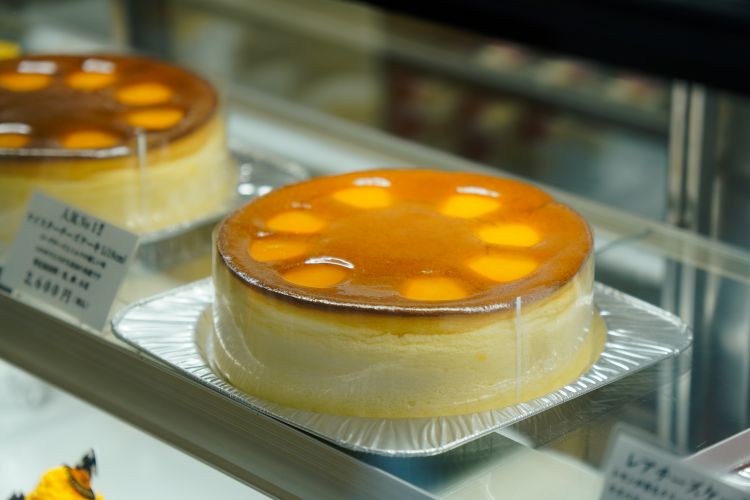
Switzerland Rhone’s Meister Cheesecake, created by one of Japan’s few certified Meisters, a prestigious national qualification for skilled craftspeople.
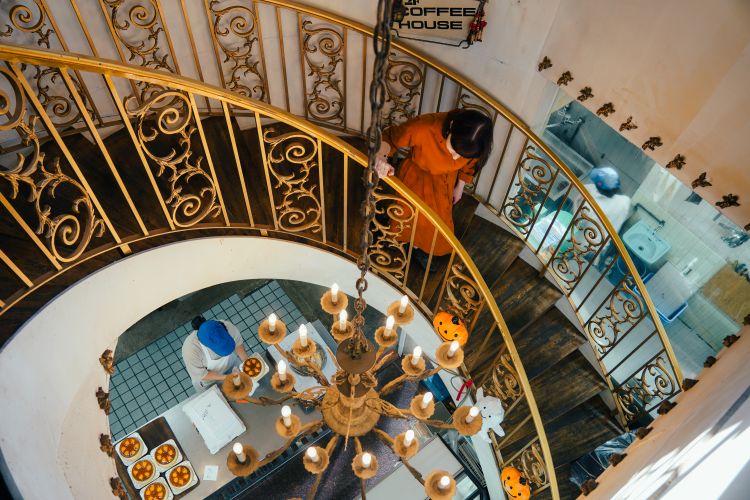
Taking a peek into Switzerland Rhone’s kitchen as the cheesecakes are being prepared.
Kyoto Yamashina Hotel Sanraku official website
Switzerland Rhone’s RACTO branch location (Google maps)
Switzerland Rhone’s main store location (Google maps)
Finding my own side of Kyoto
As my stamp came together, I was surprised to realize I was still within Kyoto. Surrounded by mountains, the small town felt worlds away from the bustling station I had left that morning. The stamp rally had not only created an image of Yamashina, but also helped me piece together the layers of its rich history. Despite having just as much culture and character as Kyoto’s better-known spots, I was surprised to learn that so few visitors make their way here.
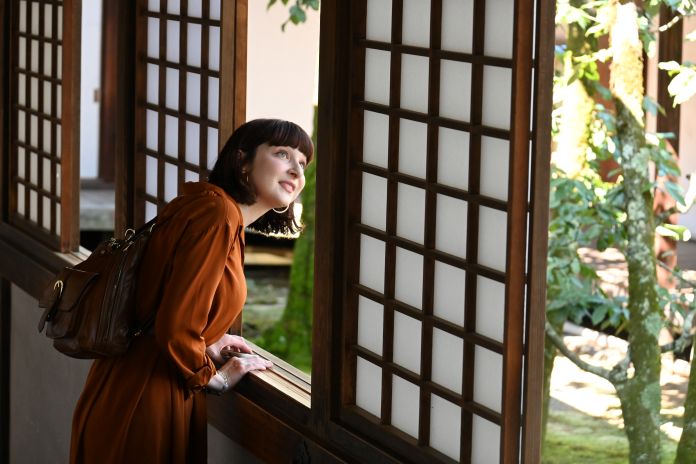
A moment of peace in the Daigo-ji Temple gardens.
Perhaps that is what I loved about Yamashina. With fewer crowds, I could take in the small details around me, from turtles and herons enjoying the Yamashina River to the whimsical eggplant decorations scattered across town. I had come looking for a quieter side of Kyoto and found something even better: places that felt like I had discovered them for myself.
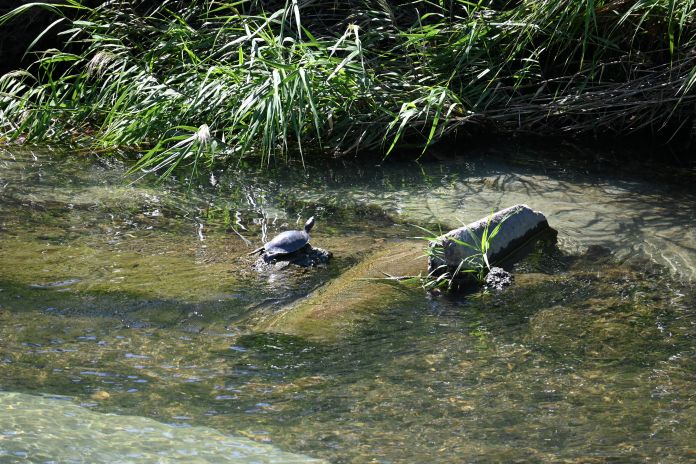
A turtle basking in the autumn sun above the clear waters of the Yamashina River.
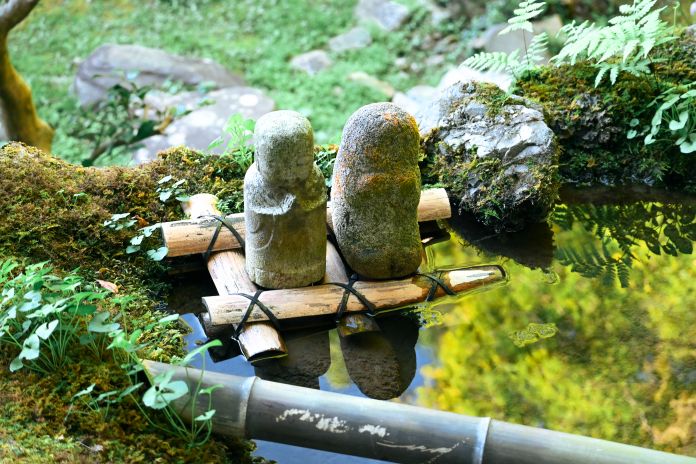
Weathered Jizo statues reflected in the pond at Bishamon-do Temple.
Related articles

Article Author