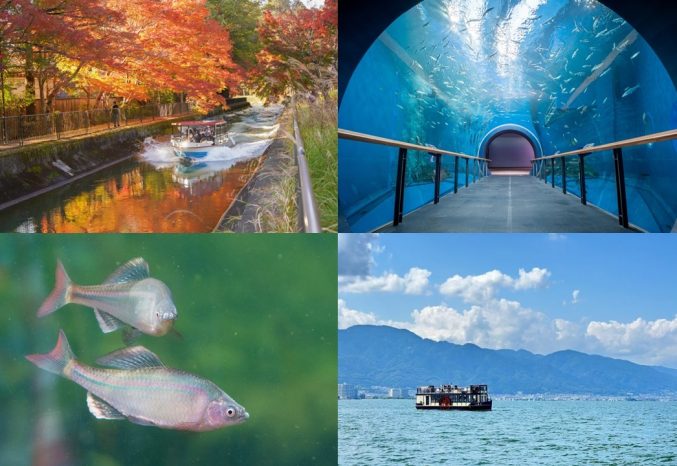
Learn about the Lake Biwa Canal and the striped bitterling fish as you journey from Yamashina in Kyoto to Otsu in Shiga!
From Kyoto to Lake Biwa: Six places connected by water
From Kyoto’s Okazaki and Yamashina areas to Shiga’s Otsu City and on to Lake Biwa — the six spots featured along this route each have their own unique charm, yet they all share the through line of water. Learn about these six locations while exploring the history of the Lake Biwa Canal, waterside scenery, and the relationship between people and wildlife.
For a limited time only: A six-stop stamp rally
The route connecting the Okazaki area of Kyoto to the Lake Biwa Museum in Shiga is full of interesting spots! Collect stamps as you go!
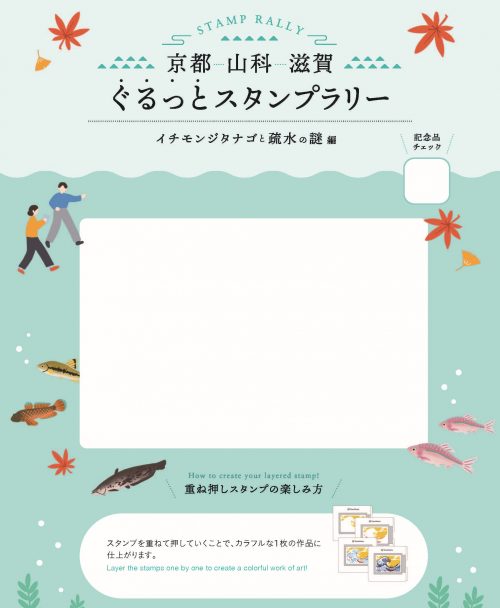
By layering the stamps, you create a single, colorful piece of art.
Complete the stamp and get fish-shaped stickers.
Stamp rally period: October 1 (Thu)–December 13 (Sun), 2026
*Download the PDF below for details on the stamp rally period, how to participate, etc:
Click here to download the stamp rally brochure (PDF)
*Please use public transportation.
*Temporary closures may occur in addition to the listed holidays.
From Kyoto to Lake Biwa: Six spots connected by water
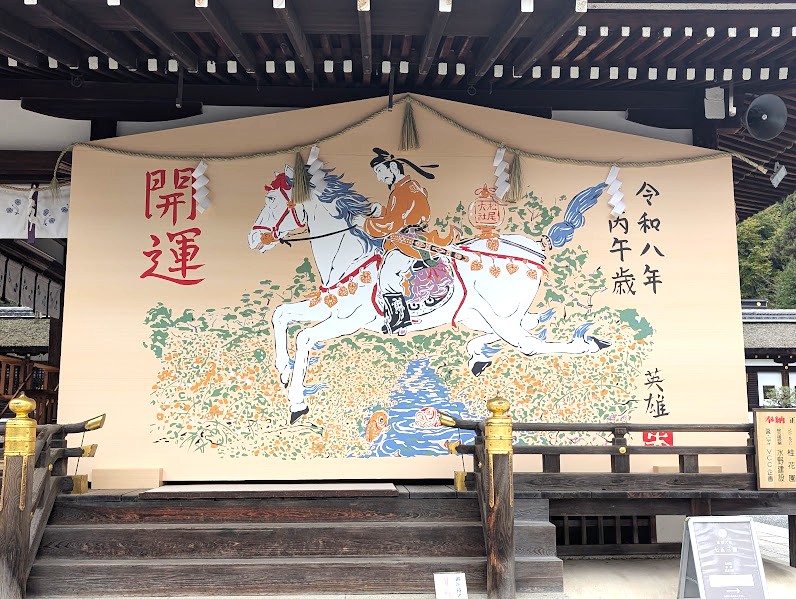
Heian Jingu Shrine
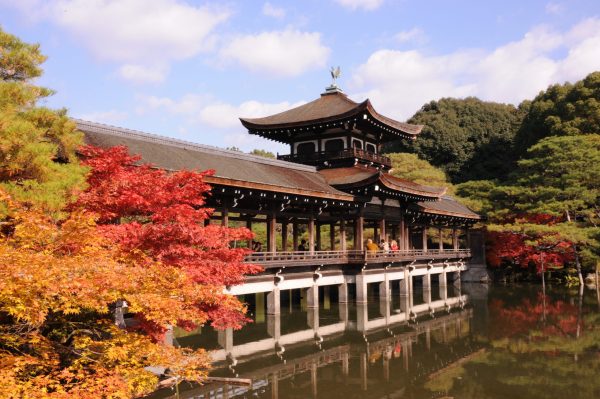
Heian Jingu Shrine celebrates Kyoto’s legacy as the ancient capital of Kyoto with ornate architecture and beautiful gardens open to the public. The shrine is a 5:8 scale replica of one of the innermost parts of Heian Kyo, the imperial capital of Japan for over 1000 years. Discover Heian Kyo and the rich cultural heritage of Kyoto while exploring Heian Jingu and its gardens.
Kyoto City Zoo
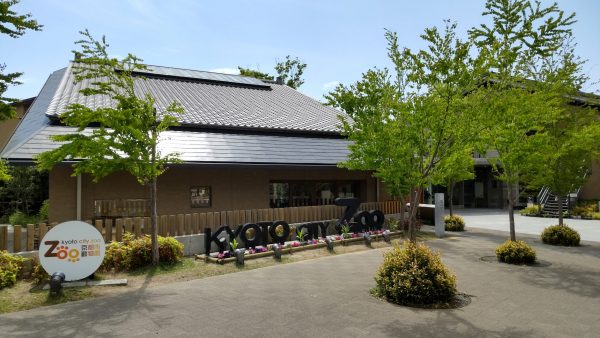
The striped bitterling is a fish native to Lake Biwa and similar aquatic ecosystems, but environmental changes have made it difficult to find, and it is now classified as critically endangered. However, some were found in the pond at the Heian Jingu Shrine Gardens near the Kyoto City Zoo, which is connected to Lake Biwa via the Lake Biwa Canal.
Currently, the zoo is attempting to breed the fish with the goal of reintroducing them into the wild.
The Lake Biwa Canal Museum
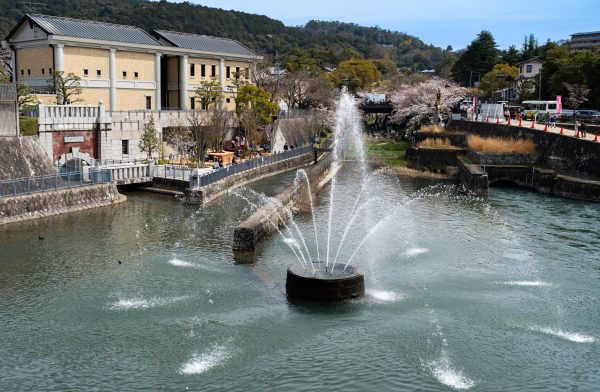
You can enjoy carefully constructed miniatures, including one of the Keage Incline that shows the specially designed trolley with a boat loaded onto it being hauled up the slope. Another diorama features the Keage and Okazaki area, and the exhibit also includes a viewing corner for a large collection of archival footage. On the outdoor terrace, a wonderful view of Okazaki Canal and the water fountain awaits.
Kyoto Yamashina Hotel Sanraku
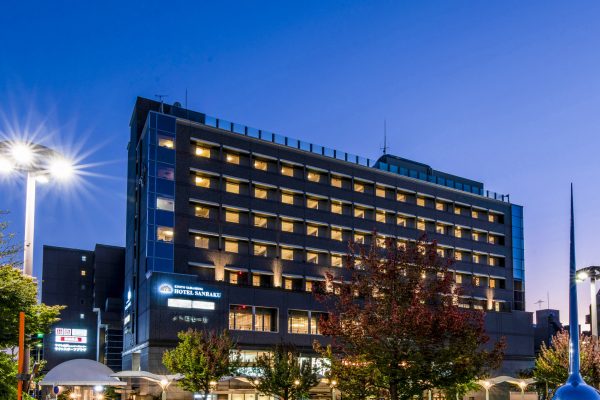
Conveniently situated just one stop (5 minutes) from Kyoto Station and a mere 2-minute walk from JR Yamashina Station
Otsu Port
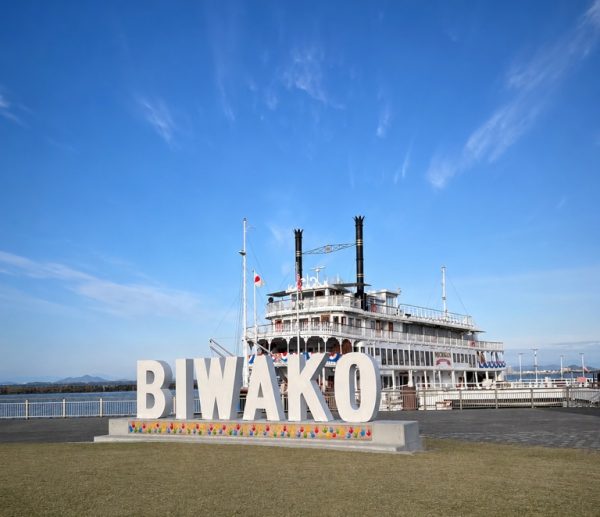
Located on the southern edge of Lake Biwa is Otsu City, the capital of Shiga Prefecture, Otsu Port has served as a major transport hub for people and goods since ancient times. During the Edo period (1603–1868), Otsu flourished as a hub for water transportation on Lake Biwa and as a key node in the network connecting Kyoto and Osaka along the Tokaido highway.
Due to developments in land transportation such as railroads in the Meiji period (1868–1912), Otsu Port fell out of use as a transport and logistics hub. Today, it is mainly a tourist destination, offering attractions such as lake cruises on large sightseeing boats.
Lake Biwa Museum
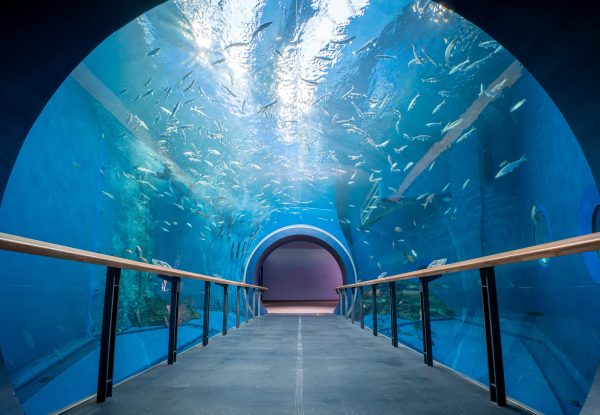
Located in central Japan, Lake Biwa is one of the world’s few ancient lakes. It is also Japan’s largest freshwater lake and has shaped the natural and cultural history of the area for a long time.
The exhibits of the Lake Biwa Museum exhibits explore the relationship between the lake and people, focusing on the changes that have occurred during Lake Biwa’s long history.
Six locations connected by the Lake Biwa Canal
On May 16, 2025, 24 Lake Biwa Canal facilities from Kyoto to Otsu were designated as Important Cultural Properties, with five of them also designated as National Treasures. Since its completion in 1890, the canal has supported the lives of Kyoto’s citizens and contributed to the development of industry and culture in various ways, including water supply for homes and facilities, irrigation, gardens, and firefighting, as well as hydroelectric power generation and transportation.
The canal also contributed to Kyoto’s revival and development following the Meiji Restoration in 1868. It has been praised as an exceptional structure, built using the finest civil engineering techniques of the mid-Meiji period, when Japan was still in the process of acquiring Western technology. It has earned high acclaim worldwide and is regarded as a pinnacle of urban infrastructure of Meiji period (1868–1912) Japan.
Tiny lives connected by water: the Lake Biwa Canal and the striped bitterling fish
Have you ever heard of the striped bitterling? It’s a freshwater fish classified as critically endangered at both the prefectural and national levels, meaning it is considered to be at high risk of extinction. Get to know this fish, which once thrived in Lake Biwa.
Its body changes with the seasons?!
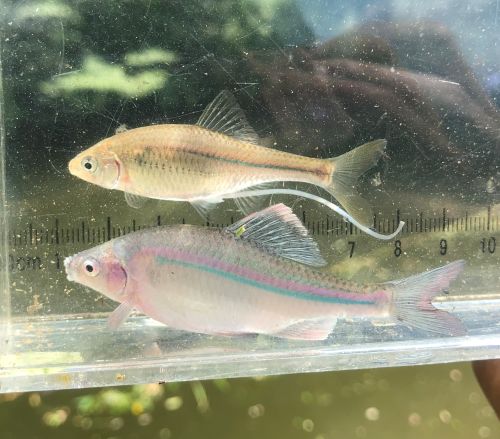
As its name suggests, the striped bitterling has a single blue stripe running along the side of its body. During its spawning season in spring and summer, the fish’s body changes. In males, the back turns green and the belly turns pink, a phenomenon called nuptial coloration. In females, a tube to lay eggs emerges from the belly.
Getting bivalves to babysit
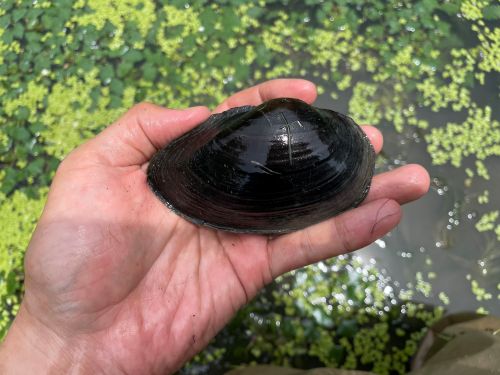
Striped bitterlings lay their eggs inside living bivalves. The eggs hatch while protected inside the bivalve’s shell, where the fry remain safely until they grow to about 1 cm and are able to swim.
Why did they disappear from Lake Biwa?
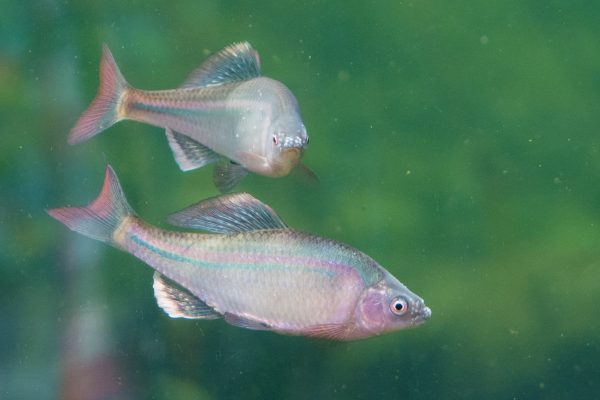
The striped bitterling used to be abundant in Lake Biwa, but it has almost disappeared due to pressure from invasive species. It was found from around 1980 to 1990 in the Shin-en Pond in the Heian Jingu Shrine Gardens in Kyoto.
Why were the fish in Kyoto?
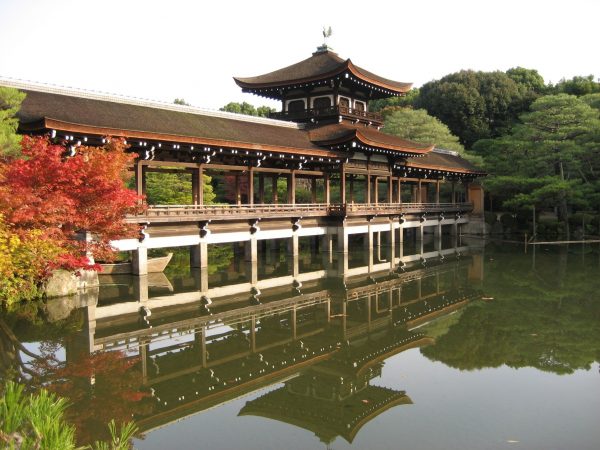
The Lake Biwa Canal, which connects Lake Biwa with Kyoto, also provides water to the pond at Heian Jingu Shrine. Thanks to a filtration system that blocked invasive species, bitterlings were able to survive there.
Relax on the water! Lake Biwa and the Lake Biwa Canal
Refreshing autumn breezes and crystal-clear skies make fall the perfect season for pleasure cruises. The Lake Biwa Canal Cruise glides along this historic and scenic waterway, while the LAGO Cruise offers views of the lofty mountains and townscapes from Lake Biwa in neighboring Shiga Prefecture.
The Lake Biwa Canal Cruise
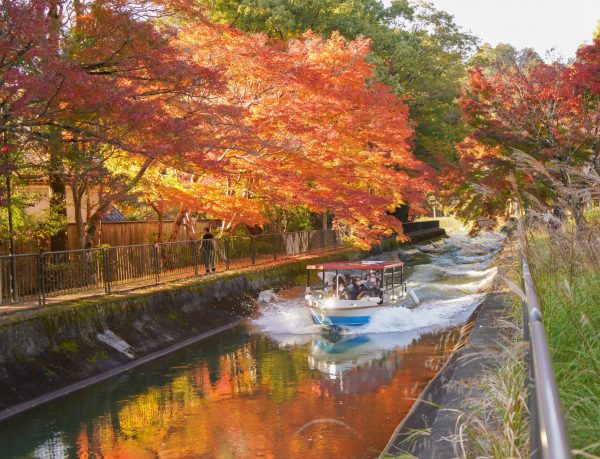
The Lake Biwa Canal connects Kyoto with Otsu Port in Shiga Prefecture. Designated as a National Historic Site, this waterway is dotted with landmarks such as the First Tunnel, designated as a National Treasure, and the Otsu Lock Gate, designated as an Important Cultural Property. Taking a boat is the perfect way to view these historic structures up close, which were cutting-edge feats of engineering in their day.
LAGO Cruise
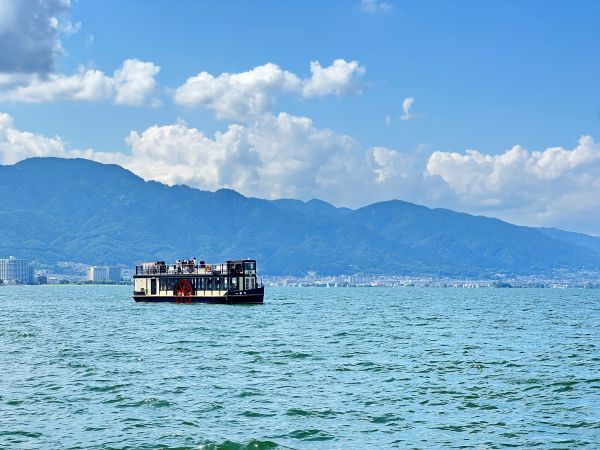
A scenic cruise connecting towns along the shores of Lake Biwa, LAGO Cruise’s two vessels — the retro paddle steamer Ichiban-maru and the tranquil houseboat Shiki — link Otsu Port, Nionohama Tourist Pier, Kusatsu Karasuma Peninsula Port, and Ogoto Onsen Port. The boats provide a unique sense of expansiveness that you just can’t get when traveling by car or bus.
We also recommend this route!
Three temples and sweets galore — autumn stamp rally in Yamashina
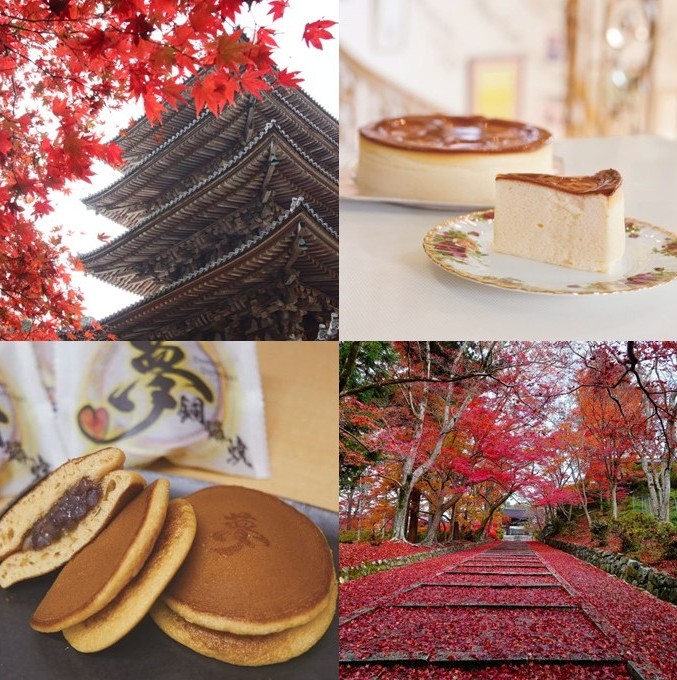
Located between Kyoto and Otsu, Yamashina flourished as the gateway to Kyoto along the old Tokaido highway that linked Kyoto with Edo (now Tokyo). Starting from Yamashina Station and following a route that connects to the old highway, you’ll find historic sites like Bishamon-do Temple (renowned for its autumn foliage), Zuishin-in Temple (associated with the poet Ono no Komachi), and Daigo-ji Temple (a famous flower-viewing spot cherished by lord Toyotomi Hideyoshi). Why not explore these hidden gems of Kyoto, which have long been havens for travelers, while enjoying some local sweets?
Contact: Stamp Rally Office
Email: info@yamashina-kyoto-shiga-stamprally.com
Hours: Weekdays from 9:00–17:00 (Closed weekends and public holidays)
*Depending on your inquiry, it may take some time to respond. Thank you for your patience.
Stamp Rally to Discover History and Sweets in Eastern Kyoto’s Yamashina and Daigo Areas