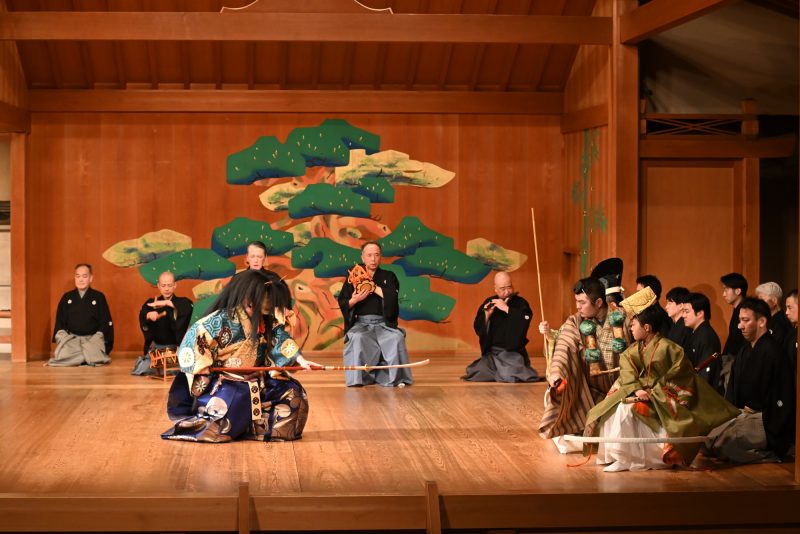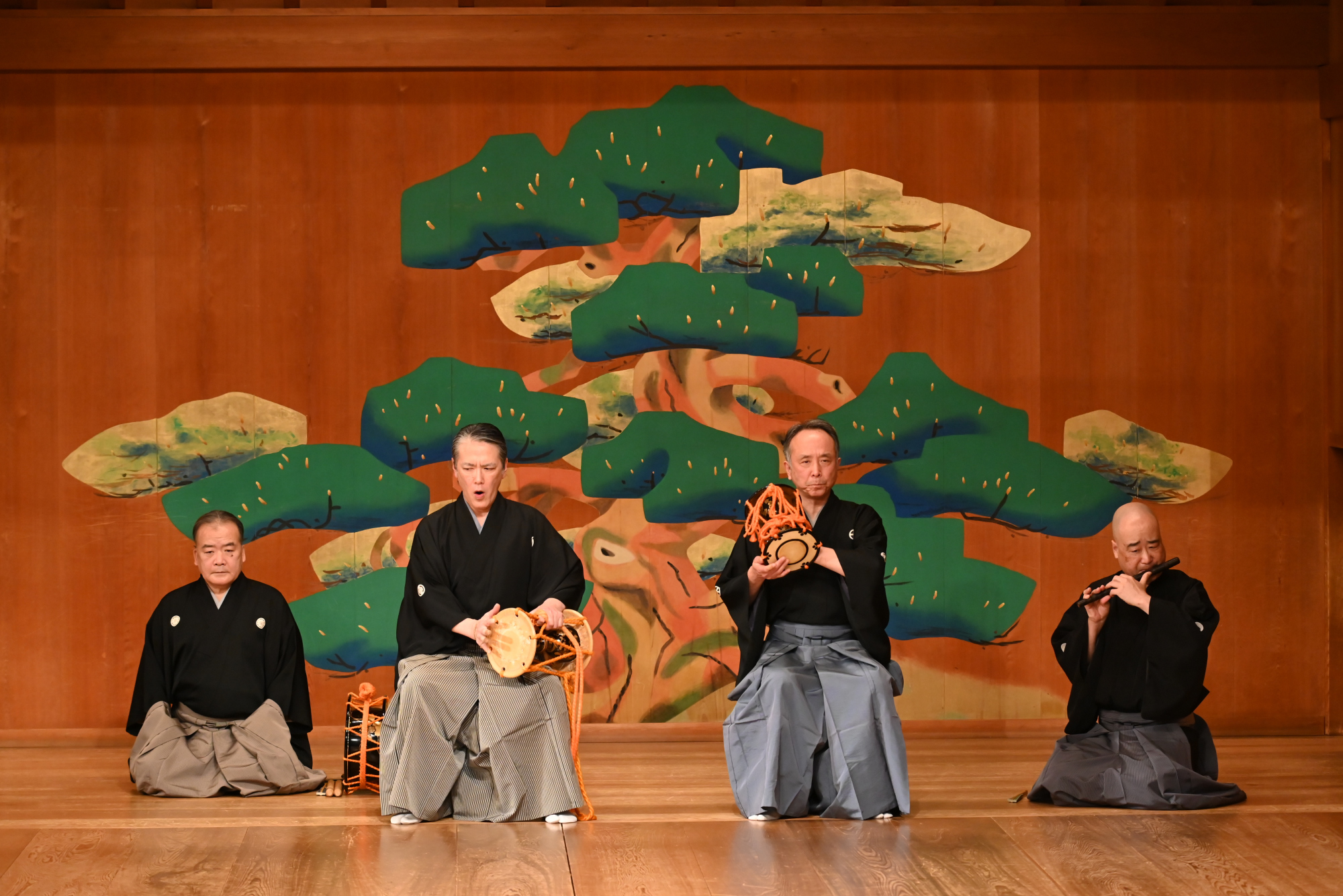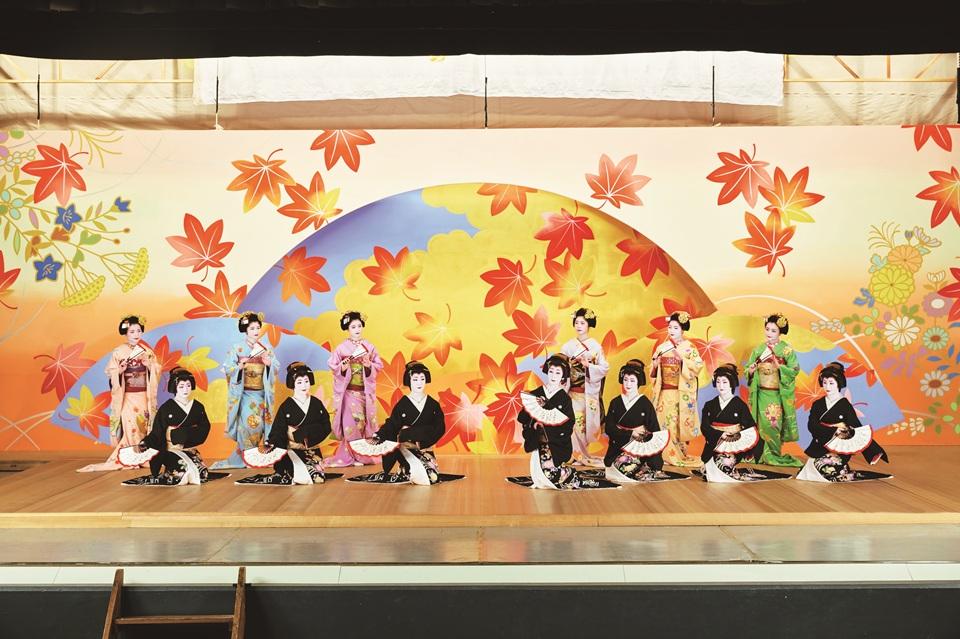
In Japan, Chushu no Meigetsu or “the harvest moon of mid-autumn,” has traditionally been believed to be the most beautiful of the year. Many temples and shrines host moon-viewing events and ceremonies to honor the moon around this evening by organizing various performances dedicated to the deities such as gagaku court music, kyogen comedy plays and kagura dances.
This year that night falls on September 25.
In this article
- Kodai-ji Temple Autumn Night Moon Viewing Tea Ceremony
- The Former Saga Imperial Palace Daikaku-ji Temple Moon Viewing Event
- Shimogamo-jinja Shrine Harvest Moon Music Festival
- Kamigamo-jinja Shrine
- Hirano-jinja Shrine Harvest Moon Festival
- Chishaku-in Temple Moon Viewing Party and Traditional Performance
- Yasaka-jinja Shrine Moon Viewing Musical Performance
- Matsunoo-taisha Shrine Moon Viewing Festival
- Shinsen-en Garden Moon Viewing Event
- Shiramine-jingu Shrine Lantern Festival
Kodai-ji Temple Autumn Night Moon Viewing Tea Ceremony
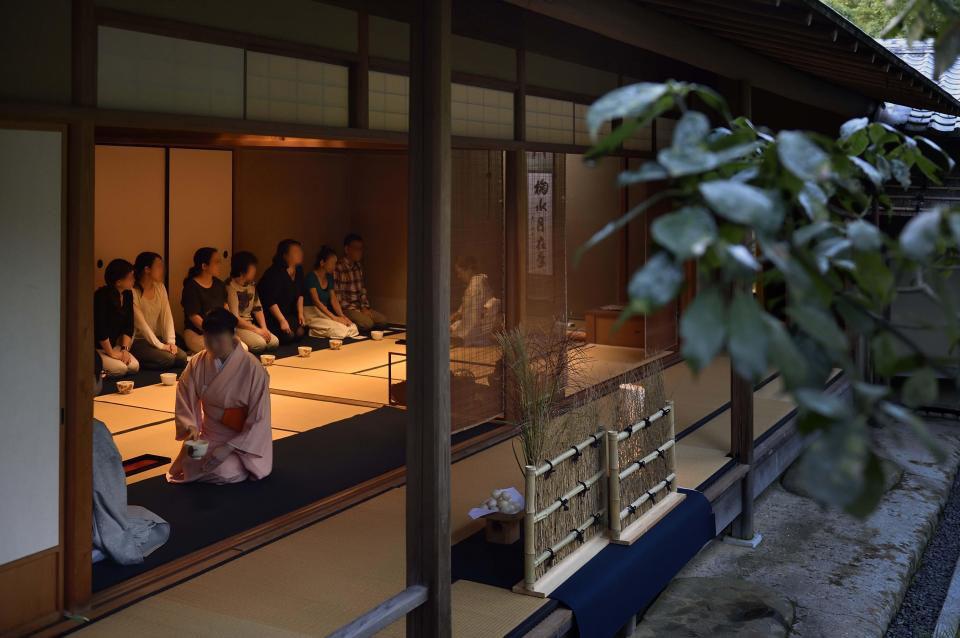
Venue: Kodai-ji Temple
Date: Fridays, Saturdays and Sundays from September 4 (Fri) to 20 (Sun), 2026
Time: Reception between 5:00 PM and 6:00 PM *Reservations required.
Light tea ceremony and a guided tour of the illuminated garden (in Japanese). Visitors of the Kodaiji Hashiba Restaurant You can also enjoy tasting dim sum dumplings at the “Kodaiji Hashiba Restaurant. (Reservations required by 4 PM the day before)
The Former Saga Imperial Palace Daikaku-ji Temple Moon Viewing Event

Venue: The Former Saga Imperial Palace Daikaku-ji Temple
Date: September 25 (Fri) – 27 (Sun), 2026
Time: 5:30 PM to 9 PM (Last admission at 8:30 PM) *Day and night shift system.
Osawa Pond at Daikaku-ji Temple is one of Japan’s three great moon viewing spots, along with Sarusawa Pond and Ishiyama-dera Temple (Otsu City, Shiga Prefecture). It is said that in the past, Emperor Saga (around 9th Century) boarded the boat on Osawa Pond to admire the harvest moon together with aristocrats and scholars. An altar for moon viewing is set up and Buddhist service is held under the moonlight between 7 and 7:30 PM.
*Please check the Daikaku-ji Temple website for details.
Shimogamo-jinja Shrine Harvest Moon Music Festival
Venue: Shimogamo-jinja Shrine
Date: September 25 (Fri), 2026
Time: From 5:30 PM – 9:00 PM
Moon-viewing tea ceremony: 1,000 yen
Admission without tea ceremony: Free
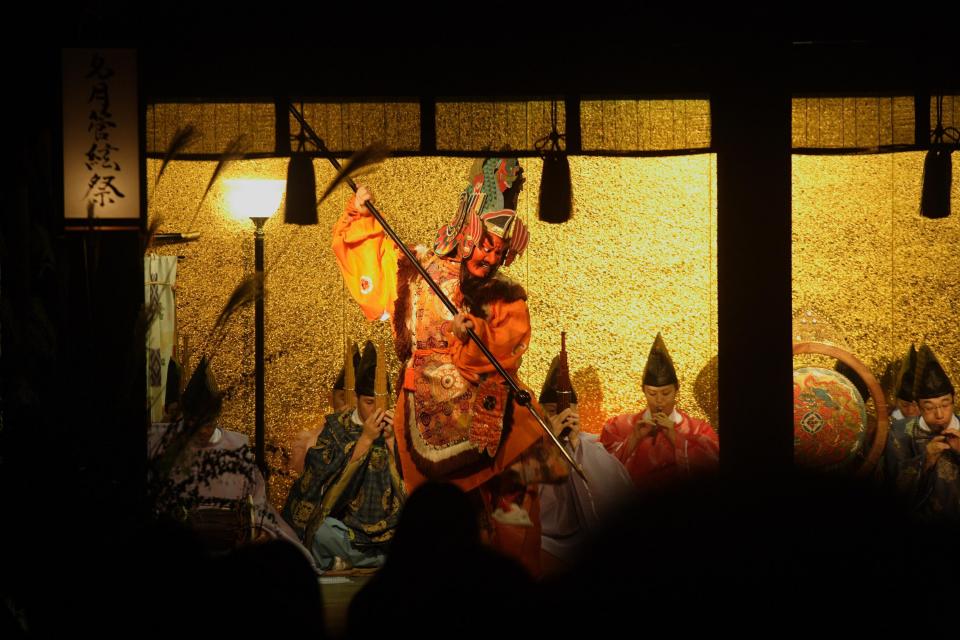
An ancient event revived by the Shimogamo Kogaku-kai (Shimogamo Ancient Music Association) in 1963. After the ritual, performances of bugaku dance, kangen music, aristocratic Heian era dance, koto, shakuhachi and biwa music are offered on the shrine grounds. Tea ceremony will also be organized for interested visitors (participation fee required).
Kamigamo-jinja Shrine
Venue: Kamigamo-jinja Shrine
Date: September 25 (Fri), 2026
Time: From 4:30 PM
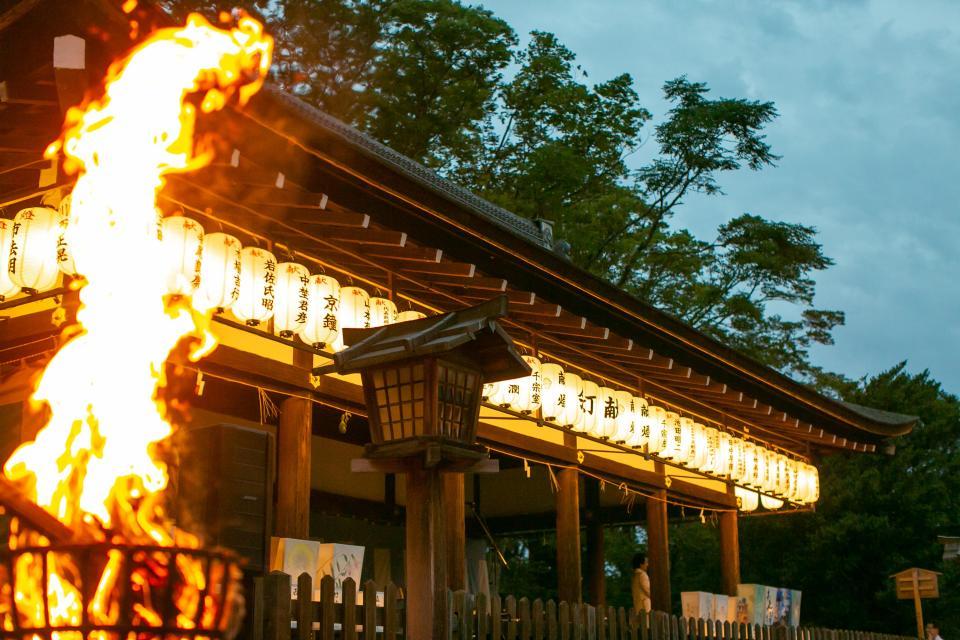
The Kamigamo Moon Viewing Festival is held on the shrine grounds of the Kamigamo-jinja shrine, a World Heritage Site, on the fifteenth night of the full moon. Following the ritual, various performances dedicated to deities, such as kagura dance and taiko drum performances are held. Moon-viewing dango dumplings are served.
Hirano-jinja Shrine Harvest Moon Festival
Venue: Hirano-jinja Shrine
Date: Semptember 25 (Fri), 2026
Time: From 6:30 PM
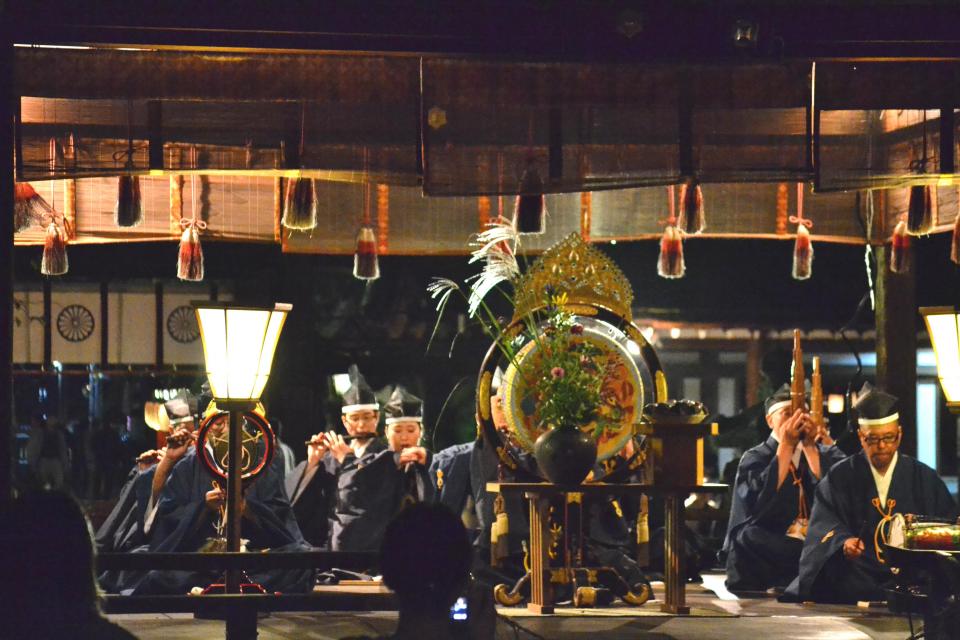
An elegant harvest moon festival held in the mid-autumn. This historic shrine was originally established in Heijo-kyo (currently Nara), but was moved to its current location when the capital was relocated to Heian-kyo (currently Kyoto). The Harvest Moon Festival consists of a Shinto ritual followed by folk songs, dances and gagaku (ancient Japanese court music) performances, as well as the offering of matcha green tea (for a fee).
Performances:
From 7:00 PM – Koto performance
From 7:25 PM – Shakuhachi performance
From 8:00 PM – Gagaku (traditional Japanese court music) performance
*From 7:00 PM – Matcha green tea ceremony (fee required)
Chishaku-in Temple Moon Viewing Party and Traditional Performance
Venue: Chishaku-in Temple
Date: September 25 (Fri), 2026
Time: 5:00 PM – 8:30 PM
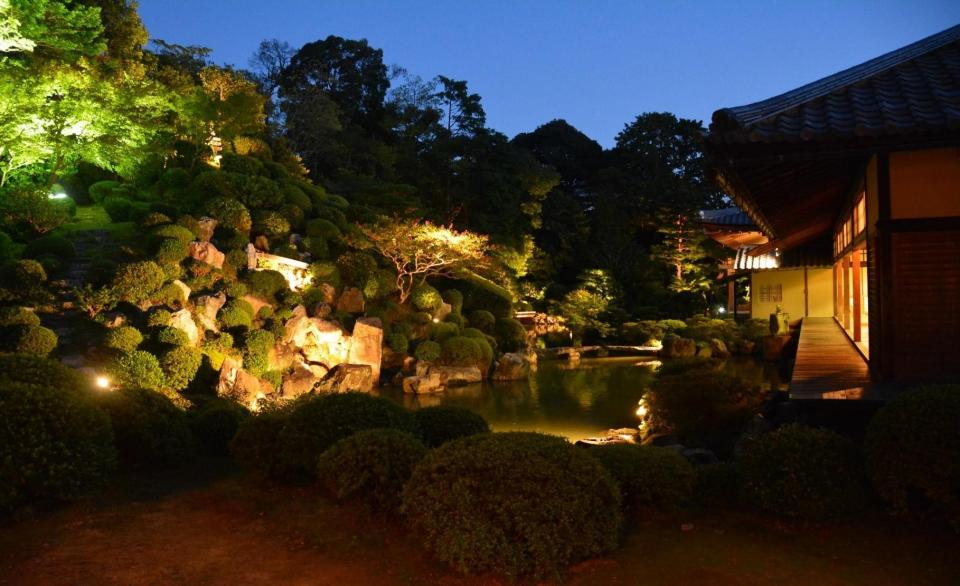
A special event showcasing traditional performances held under the moonlight at Chishaku-in Temple. Chishaku-in’s famous garden will be illuminated to create an ephemeral atmosphere. The Shinden Hall, decorated with fusuma paintings by Insho Domoto will be open to the public for a special exhibition, and limited edition goshuin stamped cards will be distributed.
(Festival program):
Part 1 – 5:40 PM: Buddhist chanting performance and meditation experience
Part 2 – 6:55 PM: Indian classical music concert
Chishaku-in Temple official website (event article in Japanese)
Yasaka-jinja Shrine Moon Viewing Musical Performance
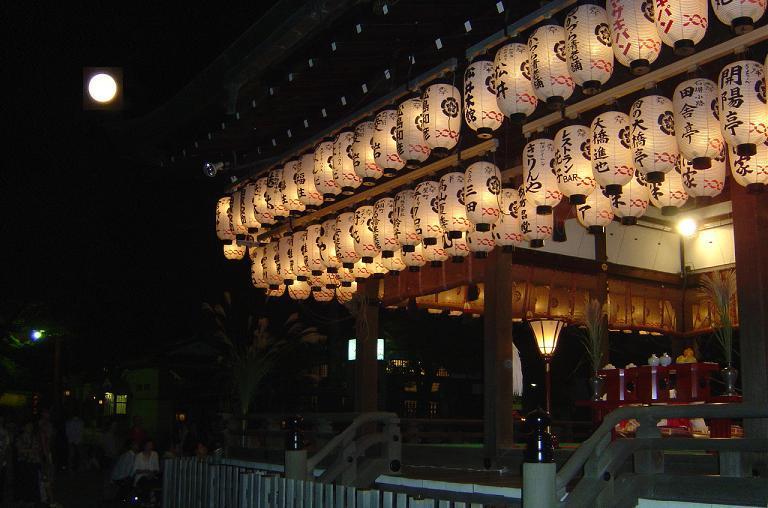
Venue: Yasaka-jinja Shrine
Date: September 25 (Fri), 2026
Time: 7:00 PM
Yasaka-jinja Shrine, affectionately known as “Gion-san,” is a shrine dedicated to gods of traditional performing arts. Every year on the night of the harvest moon, bugaku music, koto, and taiko drums are played in its halls. Waka poetry is recited, and the event begins under the soft light of lanterns.
Matsunoo-taisha Shrine Moon Viewing Festival
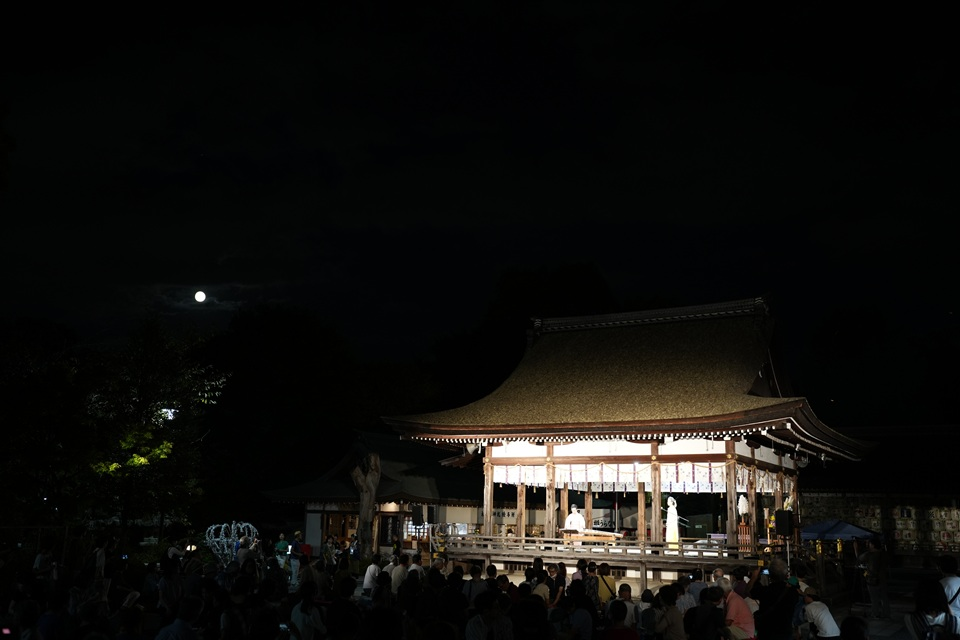
Venue: Matsunoo-taisha Shrine
Date: September 25 (Fri) , 2026
Time: 5:00 PM–8:30 PM
Admission fee: 1,000 yen *Admissions are open from 5:00 PM to 8:30 PM.
Every year, on the night of the harvest moon, after the ceremony at 5:15 PM, there are events such as shakuhachi performance, and a haiku poetry competition. Free moon-viewing manju (sweet bun) and sake from a wooden barrel will be served.
Shinsen-en Garden Moon Viewing Event
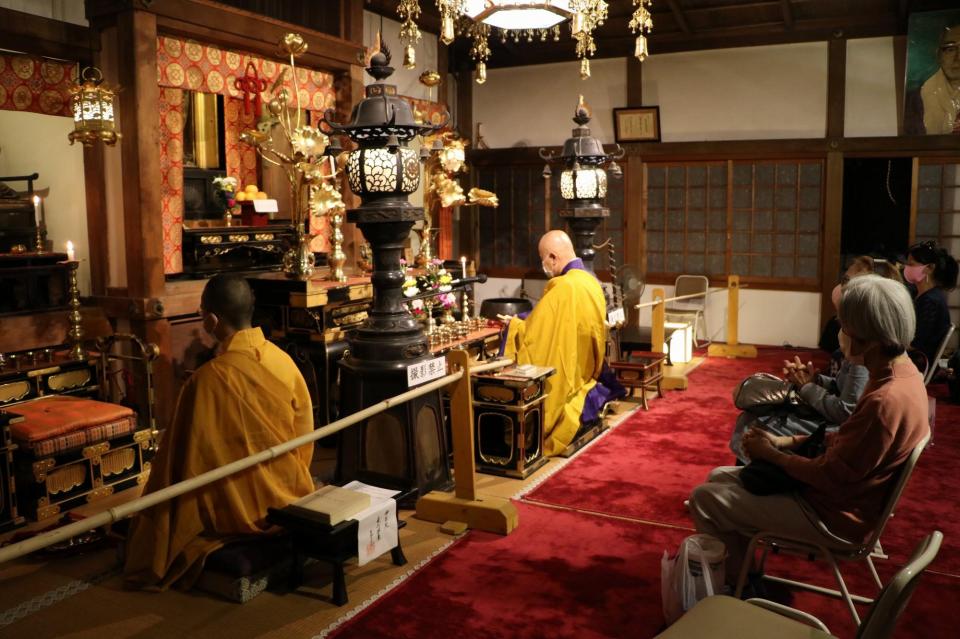
Venue: Shinsen-en Garden
Date: September 26 (Sat), 2026
Time: From 5:00 PM
During the moon viewing event, a special goshuin stamp book will be given out, and an outdoor tea ceremony will be held from 5:00 PM (admission fee: 700 yen). The moon viewing ceremony will be held in the main hall from 6 PM and a religious musical performance will be held from 7 PM. The garden will also be open to the public.
Shiramine-jingu Shrine Lantern Festival
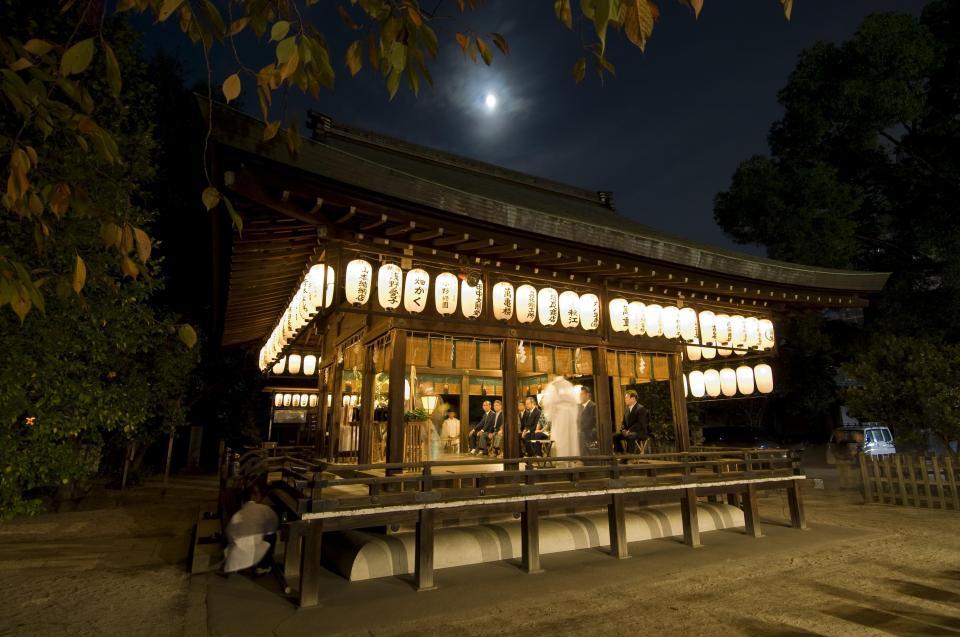
Venue: Shiramine-jingu Shrine
Date: October 25 (Sun), 2026
Time: 5:00 PM
*Free admission
This elegant moon-viewing event is held in honor of Emperor Sutoku (1119–1163), who excelled in orchestral music and waka poetry. An altar is set up amid lantern light and offerings of the Seven Autumn Herbs, pampas grass, and moon-viewing dumplings are placed to give thanks for the divine blessings, while participants gaze up at and admire the full moon.
This year, the Ritsumeikan University College of Arts and Sciences’ Traditional Japanese Music Club will present a commemorative performance.