In Kyoto, there are three artisans who are shaping the future with traditional techniques:
- Yamamoto continues to preserve the original flavor of neri yokan (Japanese sweet made of red bean paste, agar and sugar).
- Nishimura is transforming “Kyoto Kanoko Shibori” into a new fashion.
- Nakamura is spreading his technique to the public through metalworking workshops.
In this article, we introduce you to their passion and new challenges they take on while preserving tradition.
Takahiro Yamamoto, Japanese Confectionery Maker Bridging Past and Future
Kyoto is home to many Japanese confectionery shops. Among them, “Surugaya” stands out for its long history.
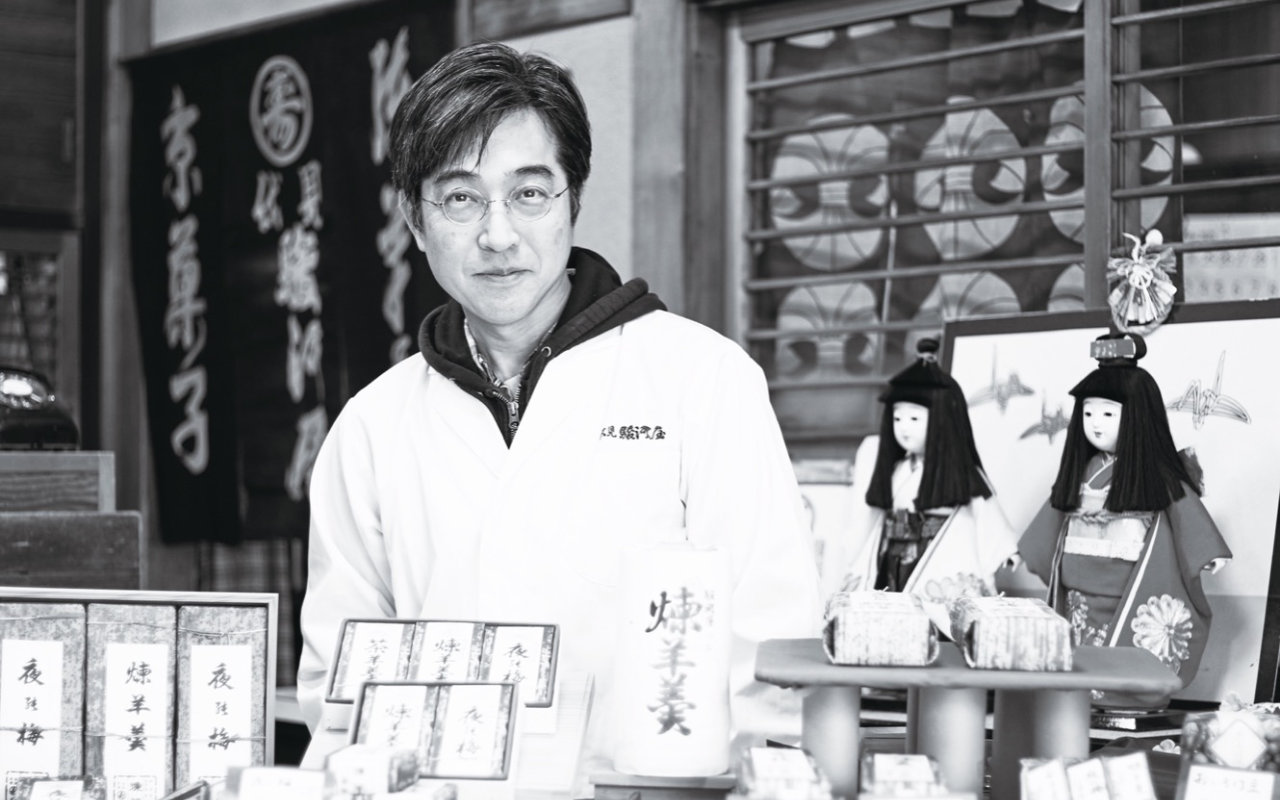
Its branch store called “Fushimi Surugaya Honten” still operates today on Aburakake-dori Street in Fushimi Ward of Kyoto. It is run by Takahiro Yamamoto, the 11th-generation head. He is currently 55 years old.
We visited his shop for our interview.
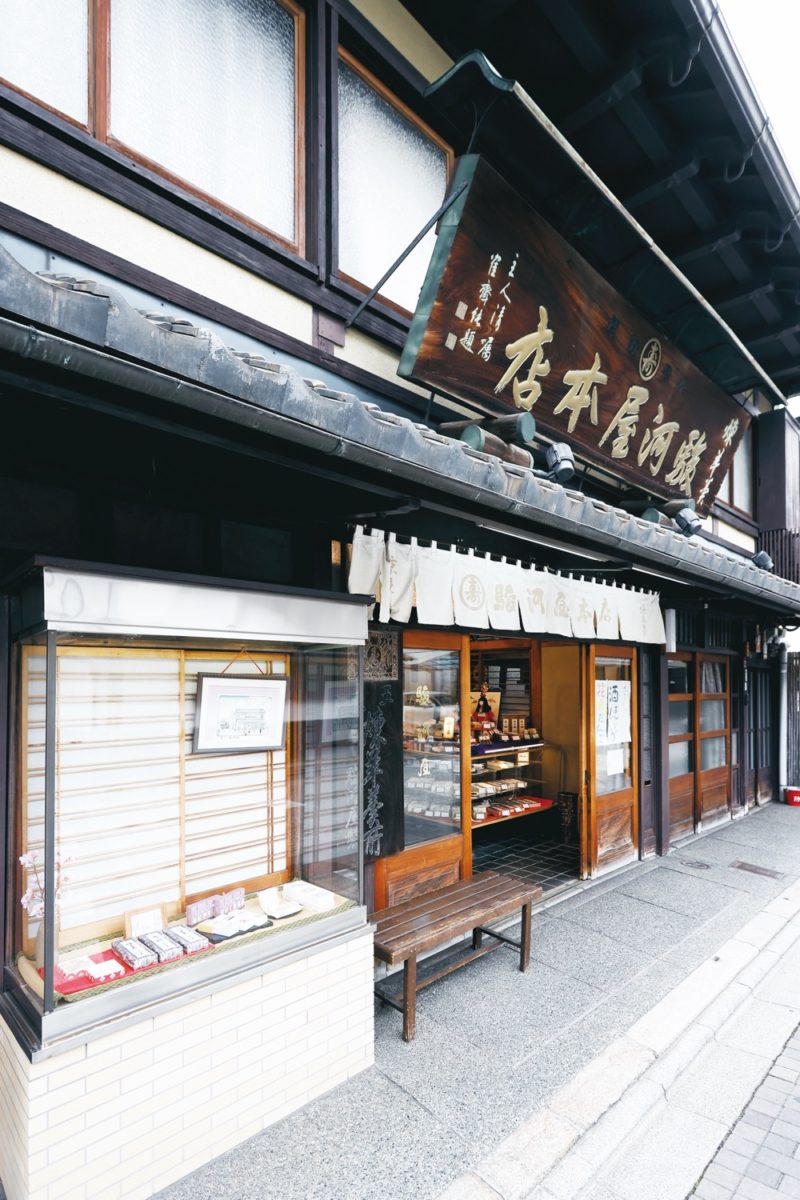
The traditional exterior of the shop. It is located next to the Takeda-kaido Street where the first streetcar in Japan ran.
His growth as a craftsman under his father’s rigorous training
The family home of Yamamoto’s mother was the Fushimi Surugaya Honten. His father was a Japanese confectioner who trained there, which is how the two met and married. He later went independent, and opened his own shop – ”Kashiya Yamamoto.” Afterwards, their eldest son, Takahiro Yamamoto, was born.
“I have helped out with the Japanese confectionery business from a very young age,” says Yamamoto.
His father was a true craftsman. Yamamoto’s dexterity allowed him to quickly improve his sweet-making skills. After graduating from high school, he began working at a different Japanese confectionery shop. Thanks to his father’s guidance, he had already acquired highly advanced techniques.
His high skill caused issues however, as the workplace emphasized hierarchy based on age and time spent working there. The young, skilled Yamamoto resented the restrictions put on him and eventually returned home at the age of 20, much to the chagrin of his father.
“I was rebellious at the time,” Yamamoto says.
His father encouraged him to enter a big Japanese confectionary contest in order to prove himself. Desperate to do just that, Yamamoto worked hard and finally won first place at the age of 23. For the first and last time in his life, his late father praised him saying, “You did well.”
The role of Japanese sweets
At the age of 33, Yamamoto learned that Fushimi Surugaya Honten was in danger of closing due to the lack of a successor. He could not find a suitable candidate among any of his relatives.
Yamamoto’s late grandmother, with whom he was very close to, had also asked him to help out if anything happened to the store. After much deliberation, Yamamoto decided to take over Fushimi Surugaya Honten while continuing to work at Kashiya Yamamoto.
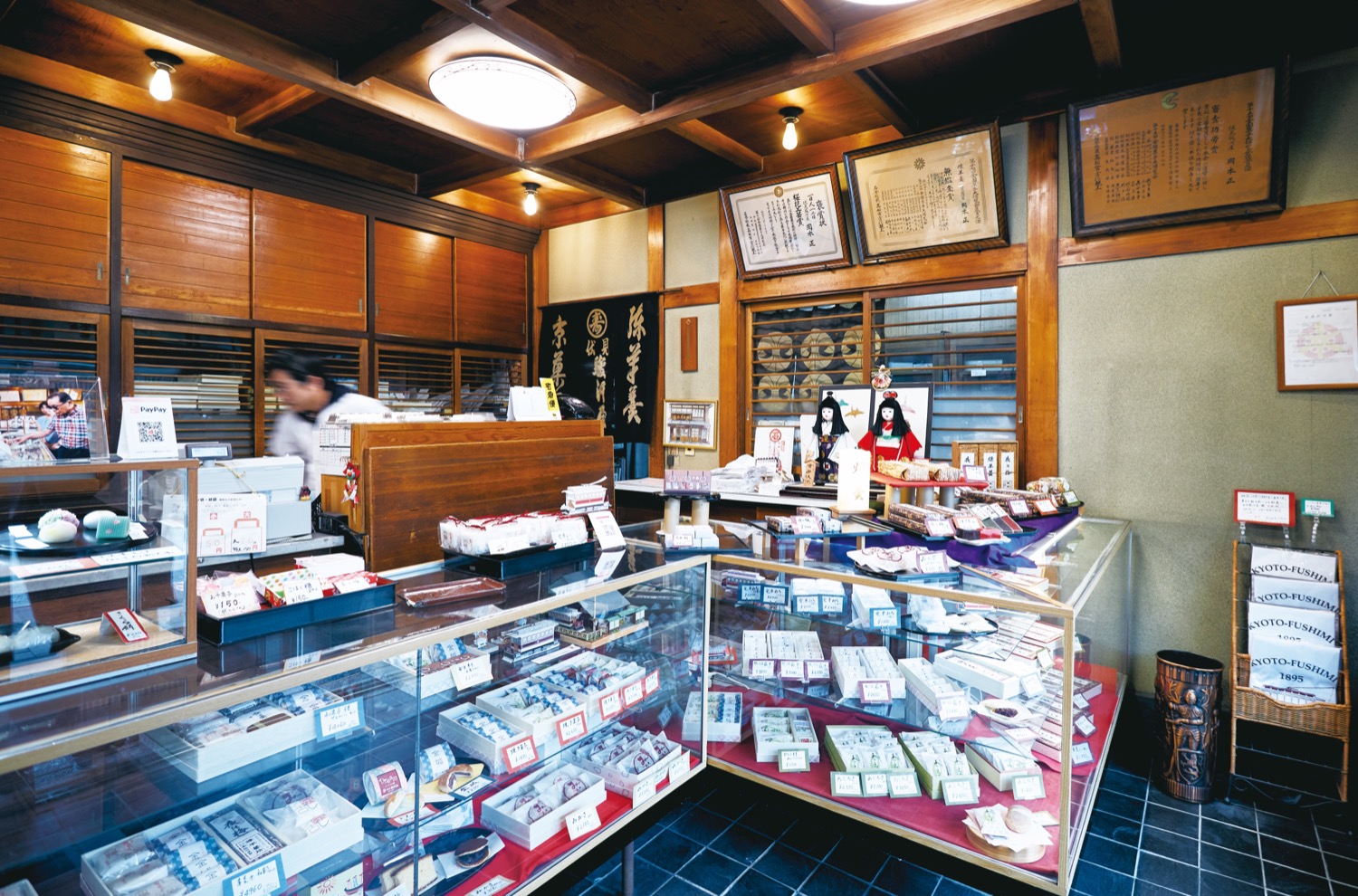
The store stocks many other products besides yokan
Yamamoto can make most Japanese sweets, but when he took over Fushimi Surugaya Honten, he focused most of his energy on making neri yokan, a type of thick, jelly-like dessert made with azuki red bean paste.
Should it be machine-made or handmade? Should you add the red beans or starch syrup first? Even slight differences in the production process can change the taste of the yokan, so he tried and tested various methods.
By practicing this “traditional skill that must be preserved at all cost,” he deeply reflected on the role of Japanese sweets.
“What the Japanese sweets industry needs today isn’t just innovation,” Yamamoto says. “We need to preserve what is being forgotten.”
As the current head of a long-established shop, passing on Japan’s cherished art of traditional confectionary-making is his mission. He channels this devotion into perfecting his craft of the neri yokan.
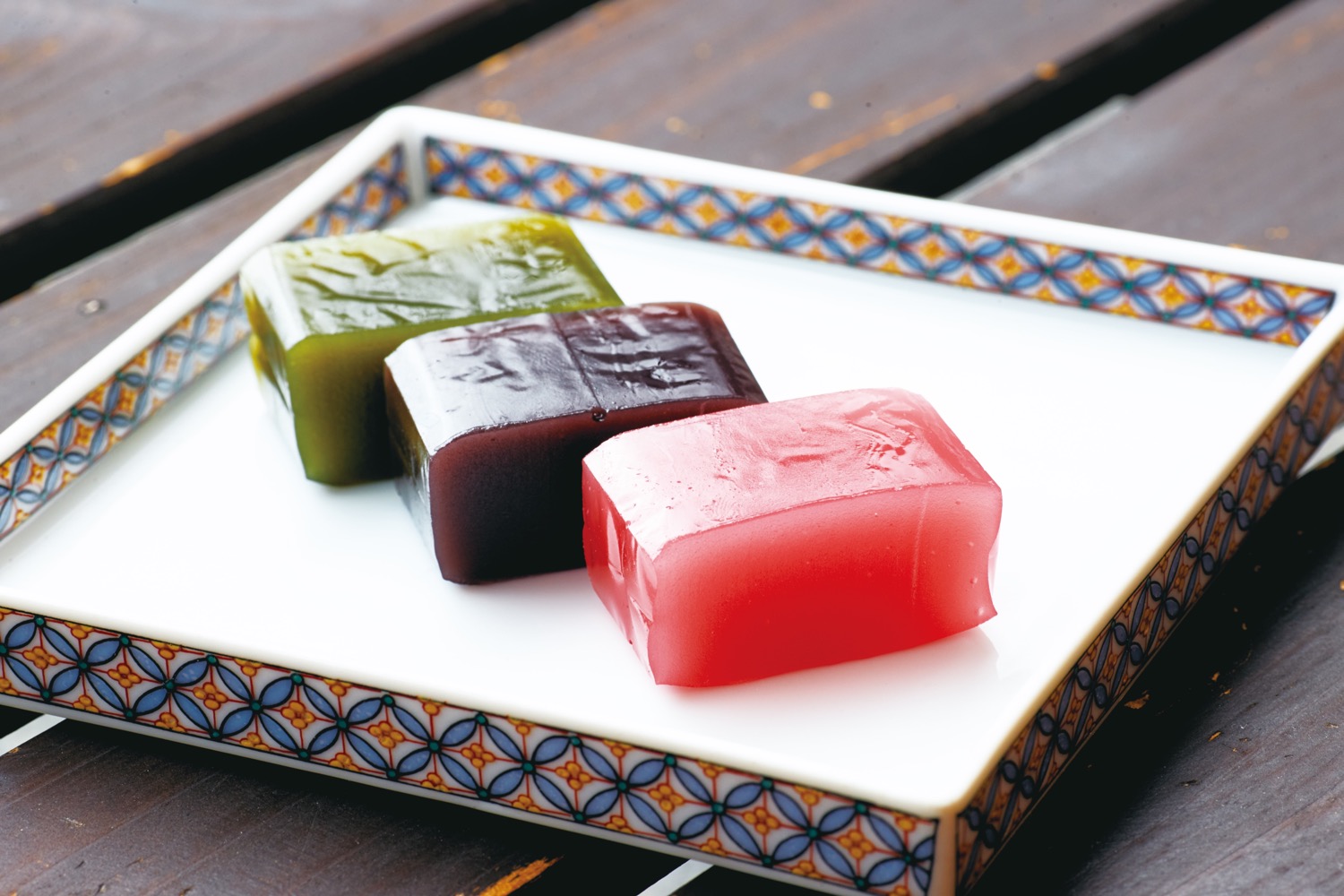
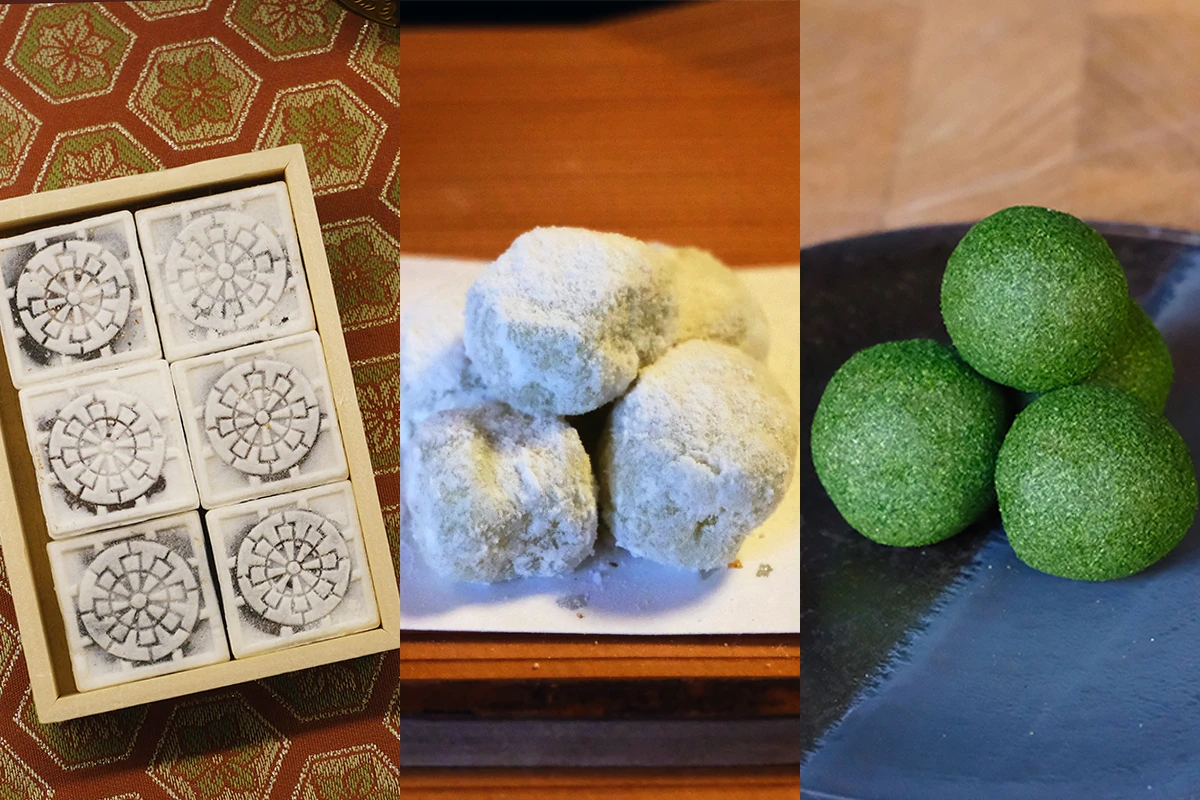
“We offer bite-sized yokan, but since everyone’s mouth is different, it tastes best when you cut it to your preferred thickness,” says Yamamoto. The selection includes the signature neri yokan with fragrant white azuki beans, “Yoru no Ume” featuring large azuki beans arranged like plum blossoms, and the aromatic “Cha” – literally translated to “tea.” Each confection starts at 756 yen.
Fushimi Surugaya Honten
Address: 174 Shimoabukake-cho, Fushimi Ward, Kyoto City
*Information is current as of the time of this interview.
Keiji Nishimura, Master of Kyoto’s Traditional Handmade Tie-Dyeing Technique
Obiage, which decorates the obi belt of a kimono, comes in a variety of textures. One of them is created with the shibori (tie-dyeing) technique, which results in a characteristic multi-textured puckered fabric.
One of the patterns created with the shibori technique is called “kanoko” – literally meaning “fawn.” Its name comes from its spotted appearance, which is thought to resemble the white spots on a fawn’s back. The traditional technique of “kanoko shibori” has been practiced for over 1,000 years.
Keiji Nishimura of the “Shibori Studio Nishimura” is the third generation owner of his workshop and a craftsman who carries on this tradition.
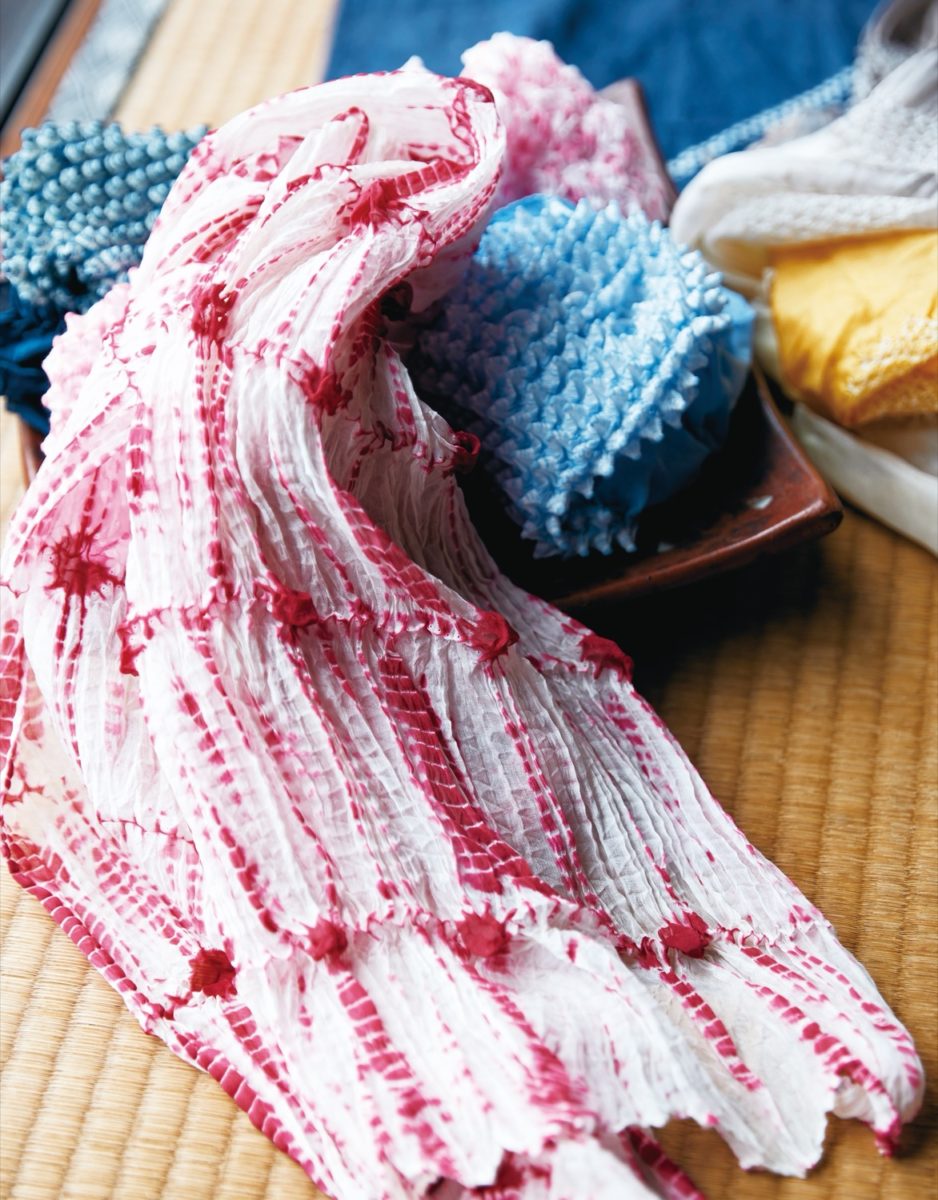
Kyoto kanoko shibori pattern on silk fabric. In contrast to the smooth texture of yuzen dyeing, this puckered and cute look is the unique charm of this technique.
The rigorous tying and dyeing process required to make beautiful traditional crafts
The most distinctive feature of kyo-kanoko shibori is the tie-dyeing technique known as hitta-shibori. It is applied by tying and tightening the fabric with thread, creating areas that will not be dyed. Wrinkles and tight knots are also created to give the fabric a three-dimensional appearance.
Nishimura showed us how the fabric looks before the dyeing process starts, and we were amazed at its appearance. It was densely packed with raised shibori stitches, each about 3 mm in size, causing the entire material to shrink like hard rubber.
“The artisans tie each stitch one by one with cotton thread. It takes more than a year to tie one tan (fabric needed to make one kimono) of material,” says Nishimura.
One tan is approximately 36 cm wide and 14 m long. Making it is a daunting task.
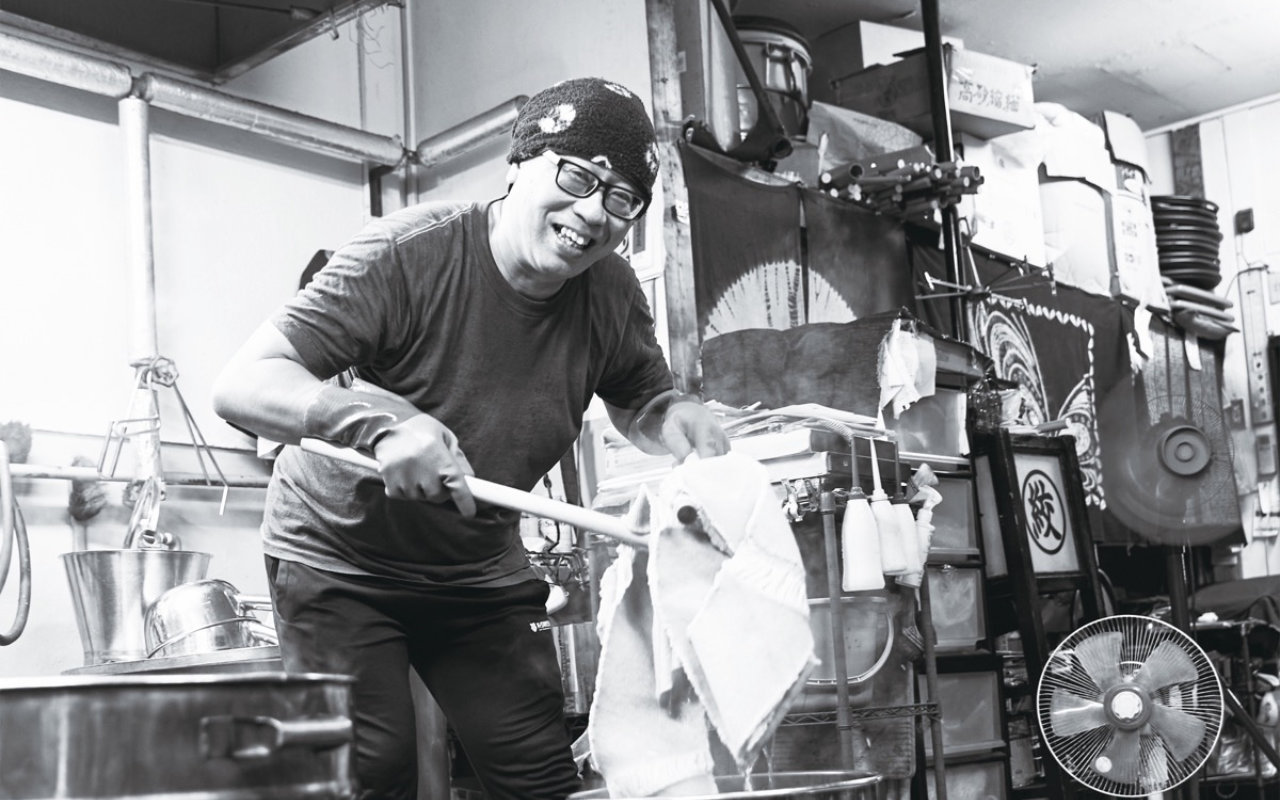
Nishimura’s job is to dye the fabric after the craftsmen finish tying it.
Nishimura says, “In shibori tie-dyeing, the most difficult part is untying the tied fabric. We dye up to dozens of tan of fabric every day. Untying the threads is hard work, difficult to do unless you’re a strong man.”
Furthermore, if the temperature is low, the fabric is more likely to tear. For this reason, the workshop keeps a boiler running even in summer.
“It’s like being in a steam bath every day,” Nishimura says matter-of-factly.
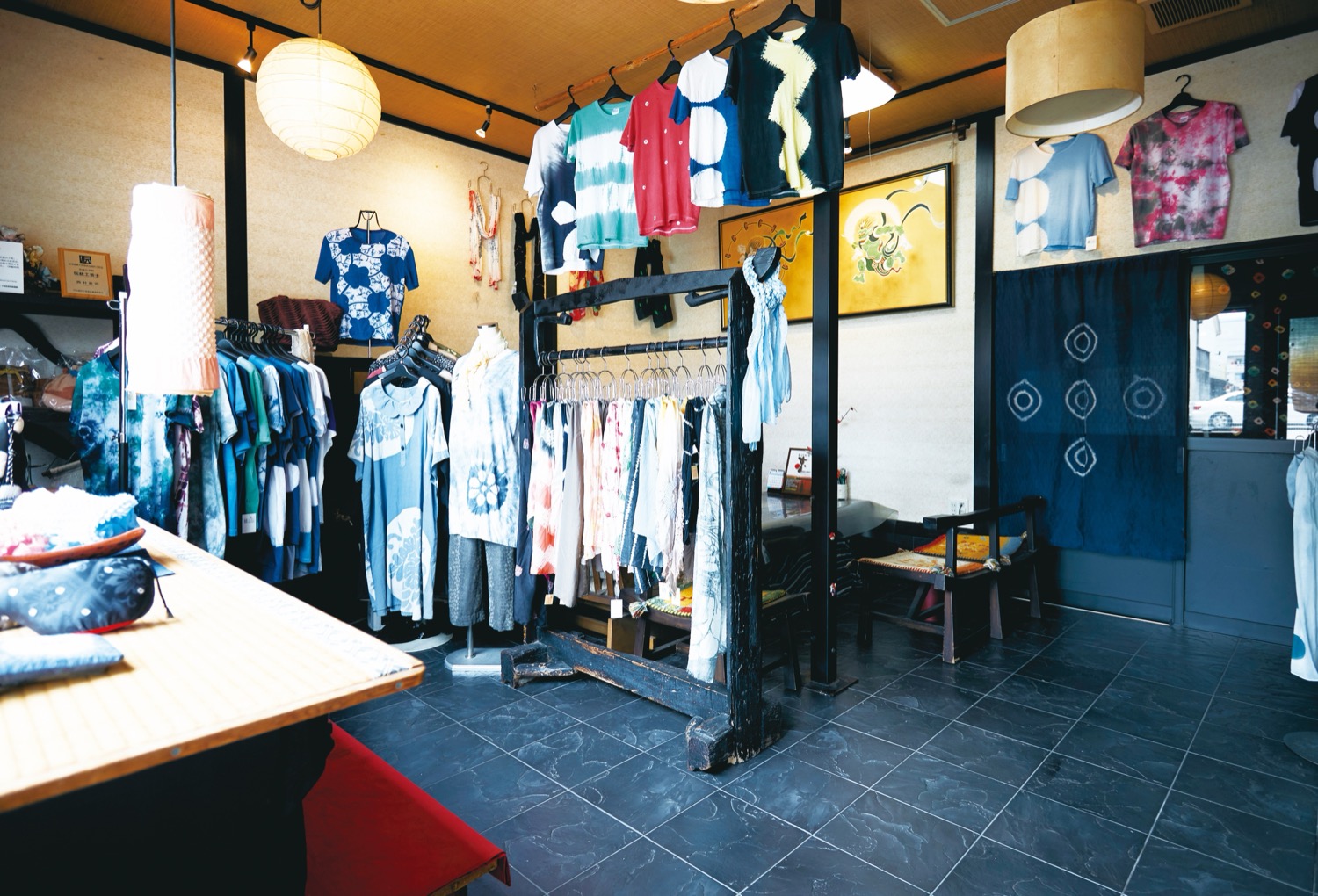
A few years ago, the workshop was renovated and an apparel shop was opened. Visitors can also try their hand at tie-dyeing under the guidance of Nishimura. His unique technique has attracted the attention of high fashion brands.
The purely handmade craft of kyo-kanoko shibori in an age of machines.
The Shibori Studio Nishimura was founded in the early Showa period (late 1920s). Keiji Nishimura, the third generation owner, began helping out with the family business while he was in high school. However, after graduating from university, he got a job at a pharmaceutical company.
The reason he ended up returning home was because his father begged him to come back due to how short-staffed the workshop was. And so, at the age of 25, he became a tie-dye craftsman.
32 years have passed since then. “Crafting every piece is a serious challenge,” he says with a serious look on his face.
As mentioned above, kukuri craftsmen (artisans who tie the fabric) spend an enormous amount of time working with the threads. If Nishimura makes a mistake in the dyeing process, all the hard work could be wasted.
There are days when the color doesn’t turn out the way I imagined, and I feel frustrated. Even after decades of experience, I only get results that I’m truly satisfied with maybe once a year.
Nishimura is strict with himself as an artisan. While machine dyeing has become more common recently, all kyo-kanoko shibori is done by hand. He pays attention to all factors, such as the strength of the knot and the weather of the day.
In this day and age when dyeing can be done by machines, I find the entirely handmade aspect of kyo-kanoko shibori amazing.
He continues to dye the fabric today, thinking of all the artisans involved in the entire process. Nishimura’s drive comes from his love for the job.
“I wish that more and more people come to know and cherish this form of dyeing.”
Kyo-kanoko shibori is a work of art created by hand. After learning about the work that goes into creating it, the white speckled pattern on the fabric started appearing even more endearing to us.
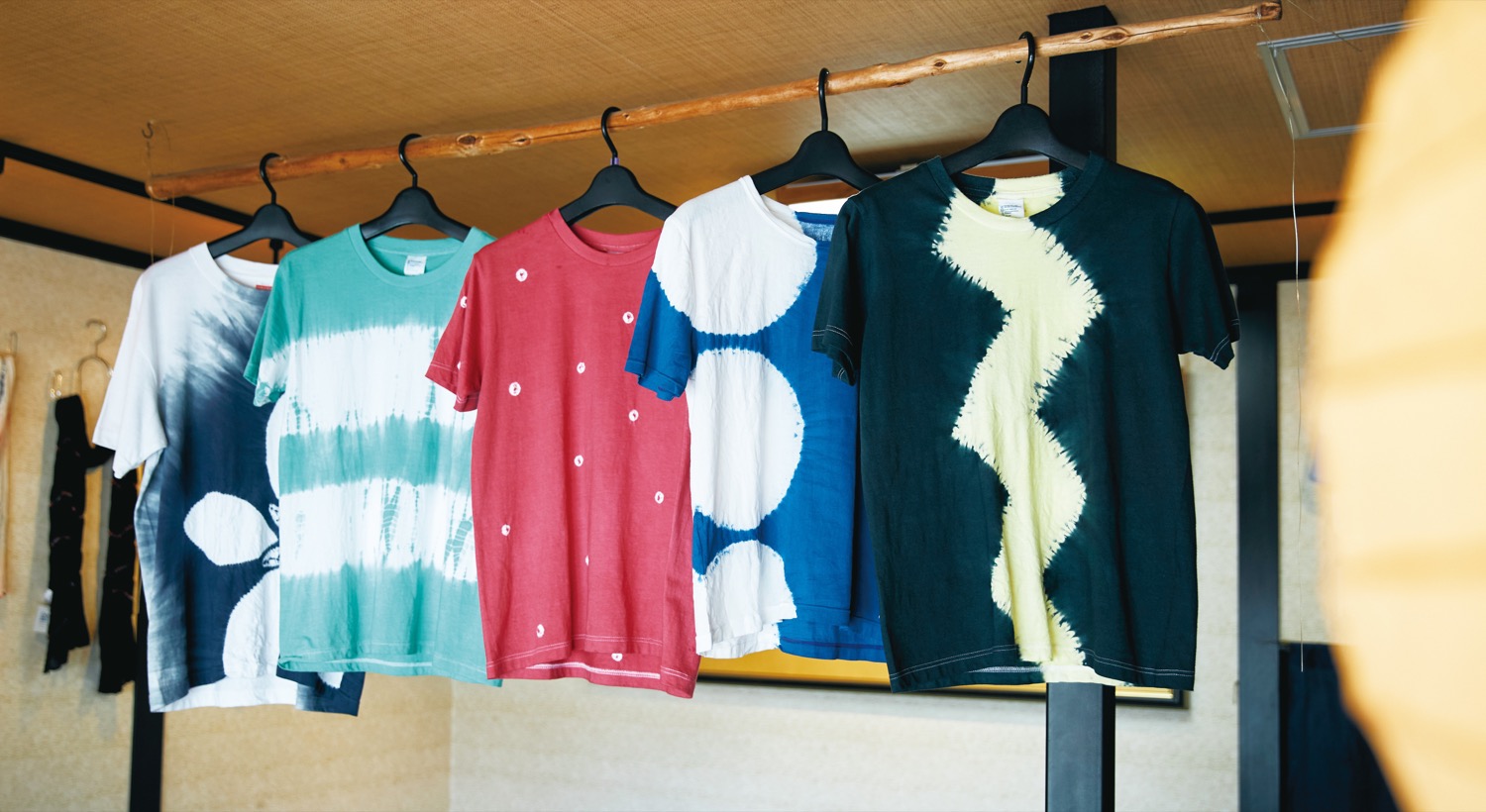
The designs, too, were conceived by Nishimura. The store offers a selection of T-shirts and accessories that allow you to casually wear historic traditional crafts.
Nishimura Shibori Studio
Address: 392 Kamigojo-cho, Omiya Matsubara-sagaru, Shimogyo-ku, Kyoto City
Tsuibu Nakamura, Metalworker Crafting Timeless Jewelry
It takes three hours for a small metal plate to be shaped into a beautiful ring. Once it’s polished to a shine and placed on the ring finger, it becomes a one-of-a-kind engagement ring.
The workshop at the craft studio “Tsuchimai” is gaining popularity because its participants can create their own ring that will last a lifetime. Its popularity has led to the opening of a new store in Omotesando, Tokyo.
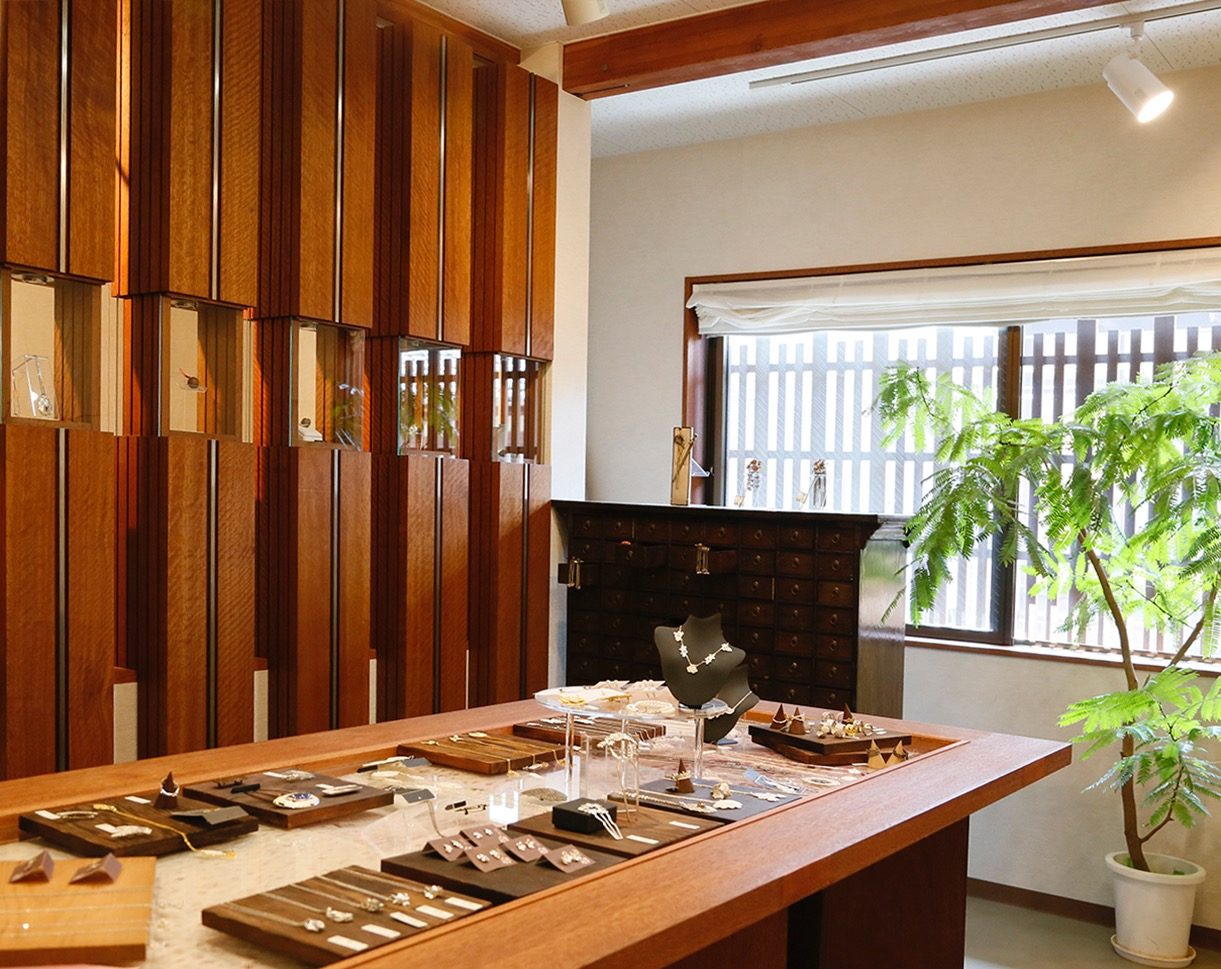
The first floor is the workshop, and the second floor displays metalwork such as accessories.
The key to success was "simplicity": Why a traditional craftsman started a hands-on workshop
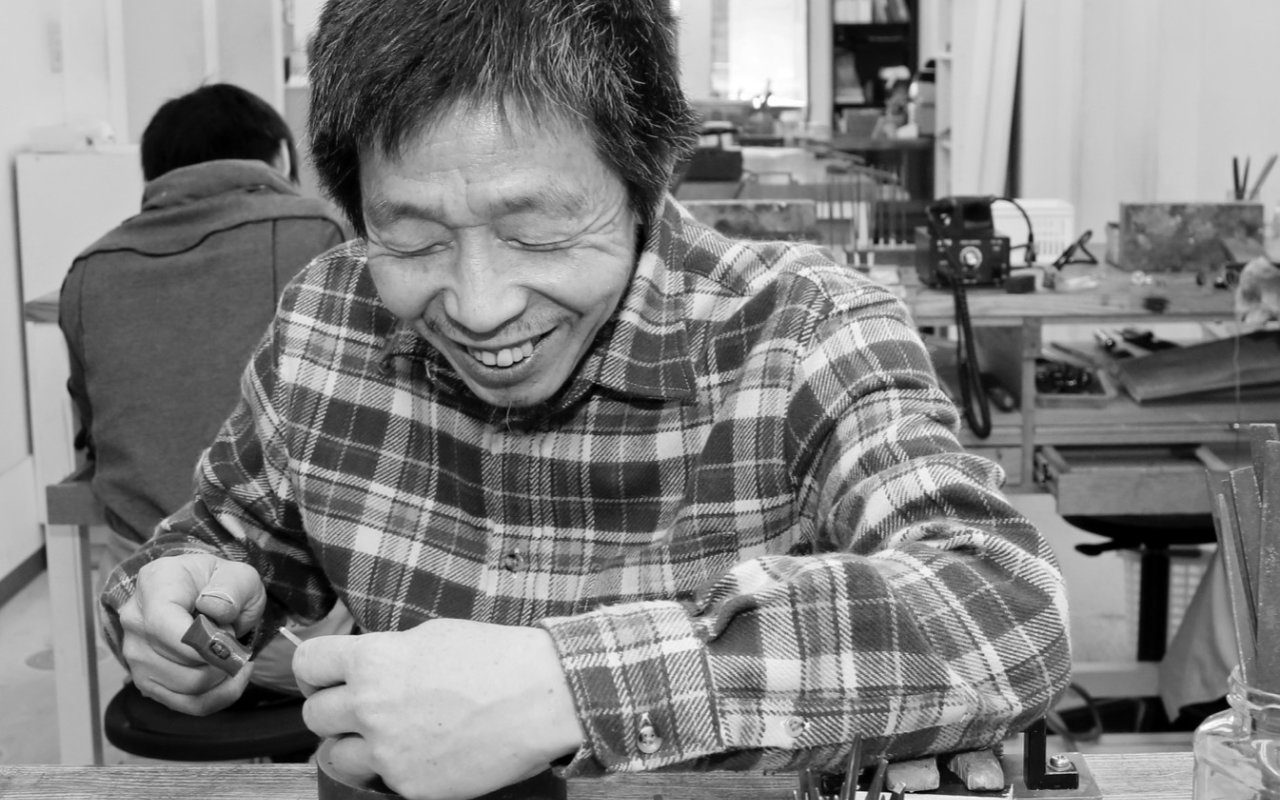
The person who started the ring-making experience class is Tsuibu Nakamura, a metalwork craftsman. Nakamura was born into a family called Chikueido, a metalworking workshop that has been in business for seven generations since the Edo period (over 200 years ago). He is the middle of three brothers, all of whom are also metalwork artisans.
“I wanted to be a painter, so I studied Japanese painting at an art high school. My brothers started their training as artisans at the age of 15, but I began this job at 21. It was a fairly late start,” says Nakamura.
In his twenties, he worked hard at his family’s business—Chikueido—making tea ceremony utensils and other traditional crafts.
My father and brothers are typical craftsmen. They have high skills, but they’re also very proud, and not very good at business. When I was around 25, I started to worry, ‘Will I be able to make a living just from traditional crafts?’ so I started studying jewelry making as well.
Then, in his 30s, he went independent and set up a workshop right next to Chikueido. He started a metal engraving class, and after a while, he also started offering hands-on classes.
One of my students who has been attending the workshop for two years told me, ‘The first silver ring I made was the most fun.’ As a craftsman, I want the ring to be made using advanced techniques, like setting stones or adding intricate patterns. Yet my student found making a simple ring to be the most engaging.
From that time on, the one-day workshops he’d started on a trial basis began to attract more customers. Nakamura decided to make these classes the main focus of his business.
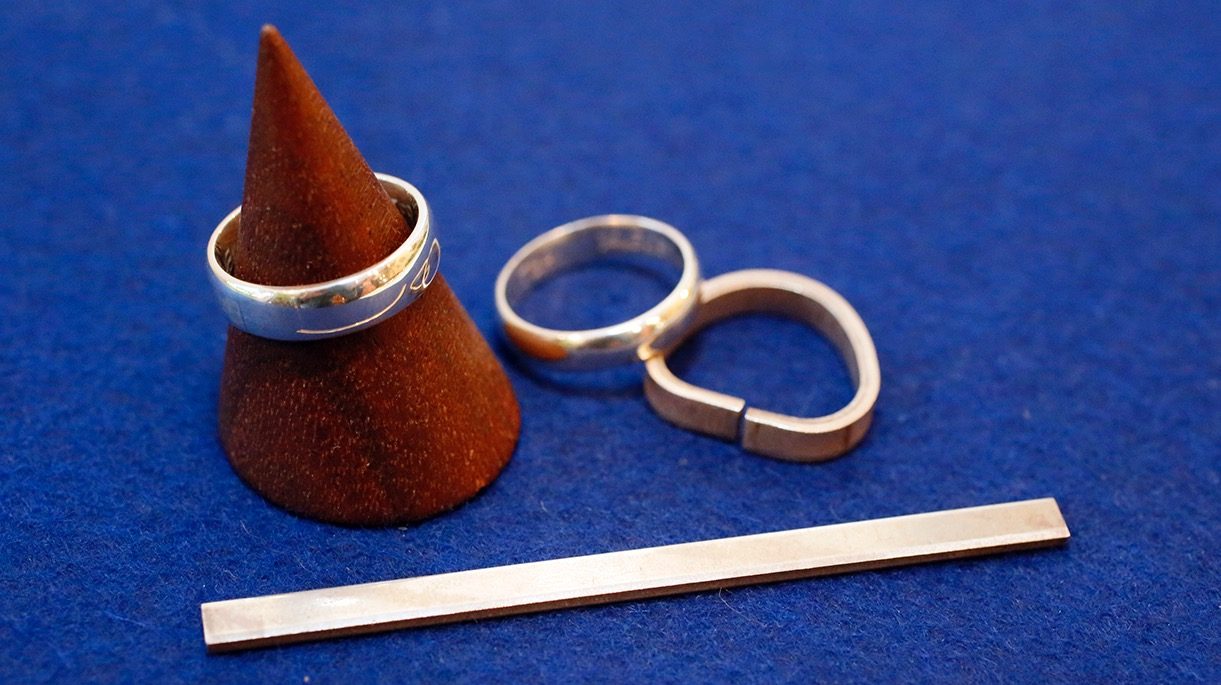
Rings made in a hands-on workshop. Their prices vary depending on the material, be it silver, platinum, or 18k gold. The finished product on the left can be made in three hours. Nakamura laughs, “Some men even come back to make new rings every time they have a new girlfriend.
Inheriting the history and passing on the skills of the metalworking
Nakamura says, “But what I really want to do is traditional metalwork (metal engraving). The ring-making classes are a way for me to earn a living while continuing to pursue the craft I love.”
Looking around the workshop, his apprentices are engrossed in their creations.
If I can make a living from metalwork, it will serve as an example for my apprentices. Ultimately, I believe this will help pass on metalwork techniques to future generations.
Nakamura also receives requests to recreate excavated cultural artifacts.
Without manual labor, the old manufacturing process cannot be replicated. Of course, precise machine processing is important, but at the same time, I feel someone must continue to preserve the traditional handcrafting methods.
Nakamura adds, “The appeal of metal lies in its long history.”
Since ancient times, farming tools and weapons have been made from metal. Copper and silver last for thousands of years, and gold lasts forever. Metal is difficult to work with, but it possesses special properties not found in other materials.”
Metals are responsible for the conveniences we enjoy today. Human civilization has always existed alongside them.
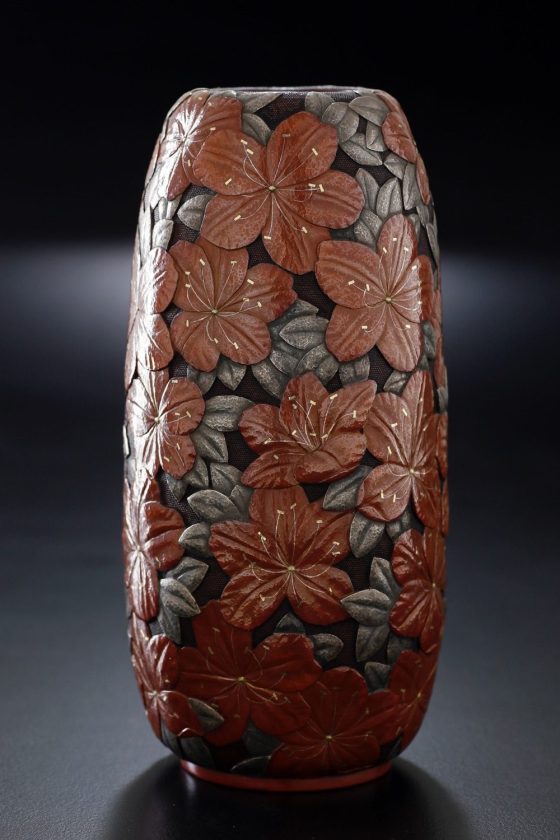
Nakamura’s work features three-dimensional carved floral patterns. He says, “I’m trying to express natural shapes in metal. They are fascinating.”
Tsuibu Kyoto Studio (formerly Tsuibu)
Address: 617 Tachibanacho, Fuyacho Higashiiru, Oshikoji-dori, Nakagyo-ku, Kyoto City, Kyoto Prefecture
Official website (Japanese only)
*Information is current as of the time of this interview.