The category of traditional Japanese music that developed from the Nara period (710-794) is called Hogaku. It contains an enormous range of musical genres, many relying on variant forms of the same instruments. Hogaku is played with traditional Japanese instruments such as hand drums called tsuzumi and bamboo flutes.
Later, the Edo period (1603-1868) saw the arrival of the shamisen, a stringed instrument, which played a major influence on the further development of Hogaku. Today, Japanese traditional music includes somber religious chants, stately court orchestras, dynamic play accompaniment, lively festival music, and distinctive romantic, narrative, and seasonal songs.
In this article
Different styles of Hogaku
Hogaku does not merely mean instrumental music but signifies a musical form that developed along with Nohgaku, Kabuki and puppet plays. It is thus an essential element for all kinds of traditional Japanese stage entertainment.
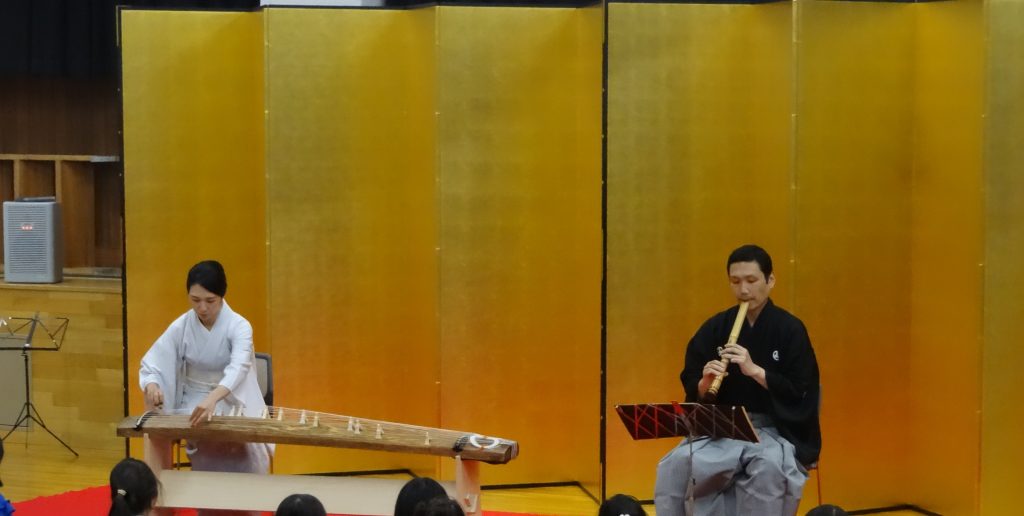
Hogaku concert
Gagaku
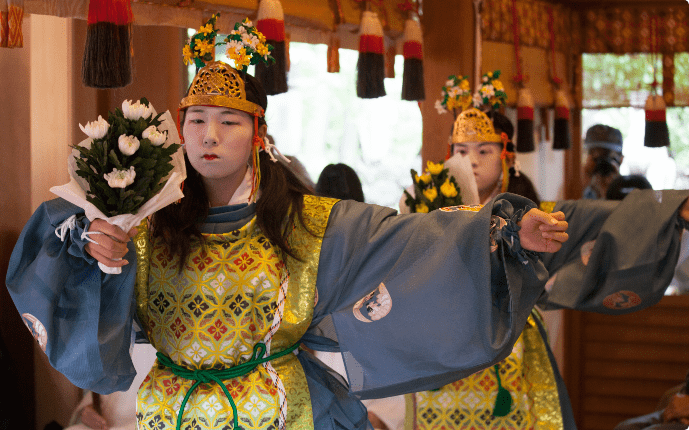
Gagaku, with a history of well over a thousand years, has a particularly deep connection with Japanese culture such as the Imperial court, aristocracy, temples and shrines. It covers many different elements such as ancient Japanese songs and dances, the dances and musical instruments brought from China and the Korean Peninsula, and a singing technique called Uta-mono, developed during the Heian period. Gagaku’s otherworldly music is still performed within the Imperial Palace household and old temples, often with the precise, masked Bugaku dance.
There are three types of Gagaku ensembles: Kangen (many instruments), Maigaku (music and dance) and Kayo (vocals). These ensembles include three groups of instruments: wind, string and percussion. Gagaku is often called the world’s oldest orchestral form.
Noh
Noh is an elegant masked dramatic form that developed under Kan’ami and Zeami from the 14th to 15th century. Together with kyogen comedies, the genre is known as Nohgaku.
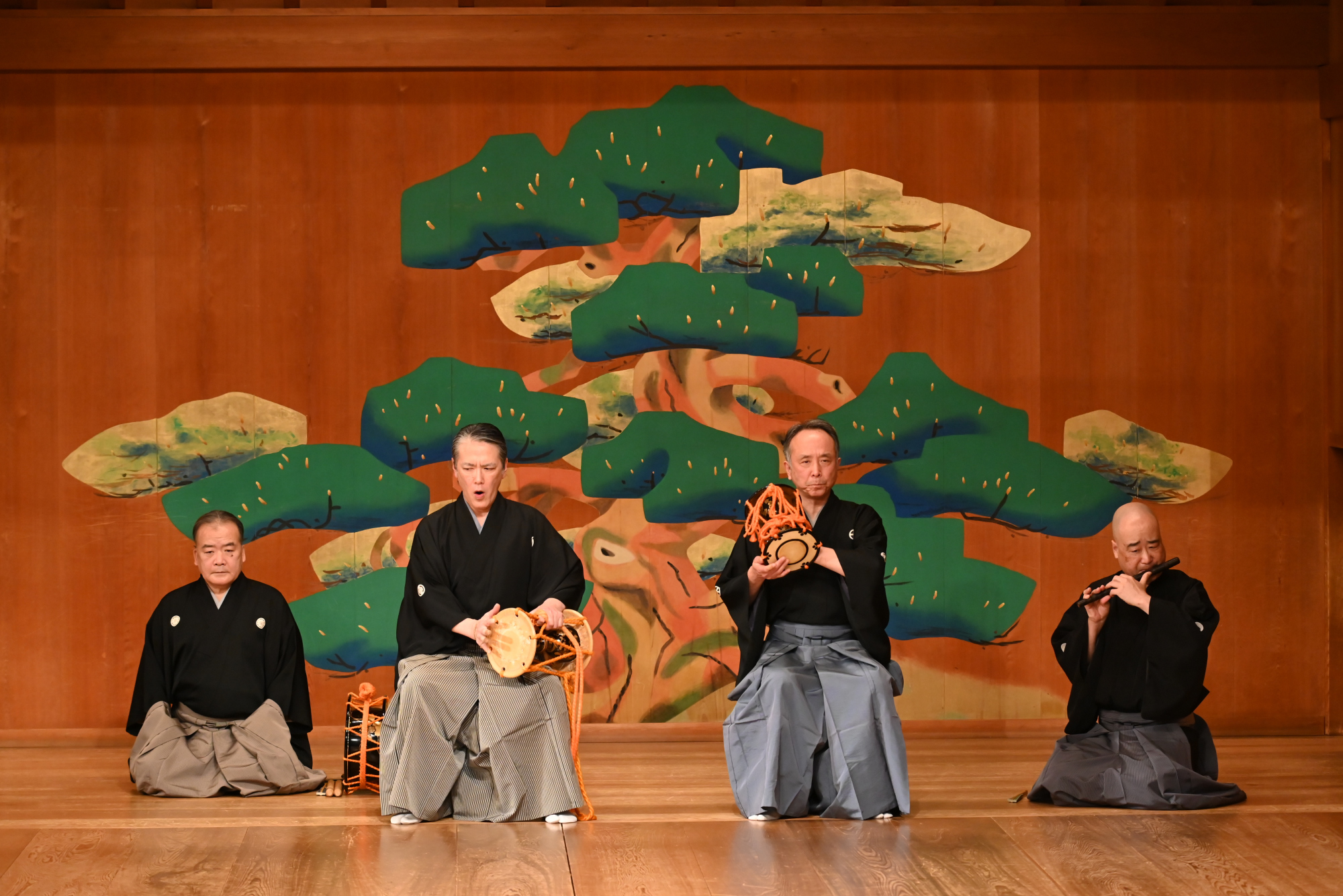
The performers can be classified into the roles of lead actors (Shite-kata), accompanying actors (Waki-kata), comic actors (Kyogen-kata), and musicians (hayashi-kata). The Jiutai, sung by the Shite-kata, consists of eight performers. Similar to the Gregorian chant, this chorus sings plainchant, known as utai, without harmony. The hayashi-kata is responsible for playing the nokan (bamboo transverse flute), kotsuzumi (small hand drum), otsuzumi (large hand drum), and taiko (stick drum).
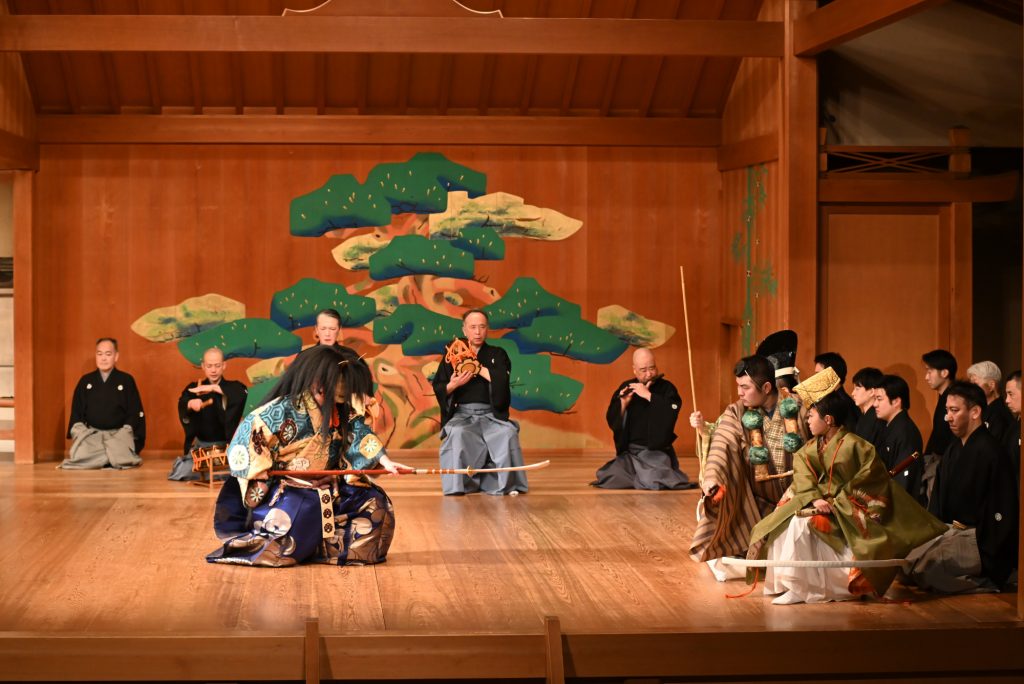
Noh hayashi ensemble
Kyogen
Kyogen are short comedies performed on the same stage as Noh. Performers often sing while performing short dances, called komai, to lyrical ballads and drinking songs, called ko-utai.
Buddhist Music
One representative Buddhist musical style is called Shomyo, in which Buddhist monks chant together at ceremonial occasions.
Buddhism and its music were brought from China to Japan, where it developed its own unique form.
(Utai-mono)
A singing style which emphasizes melody and lyricism.
・ Jiuta
Jiuta, born around the 16th century, is the oldest music played on the shamisen.
Jiuta literally means “songs of the homeland.” It has been passed on primarily in the Kamigata (Kansai) region. Melodies played on the shamisen, koto (Japanese harp) or kokyu (string instrument) accompany the singing.
・Nagauta
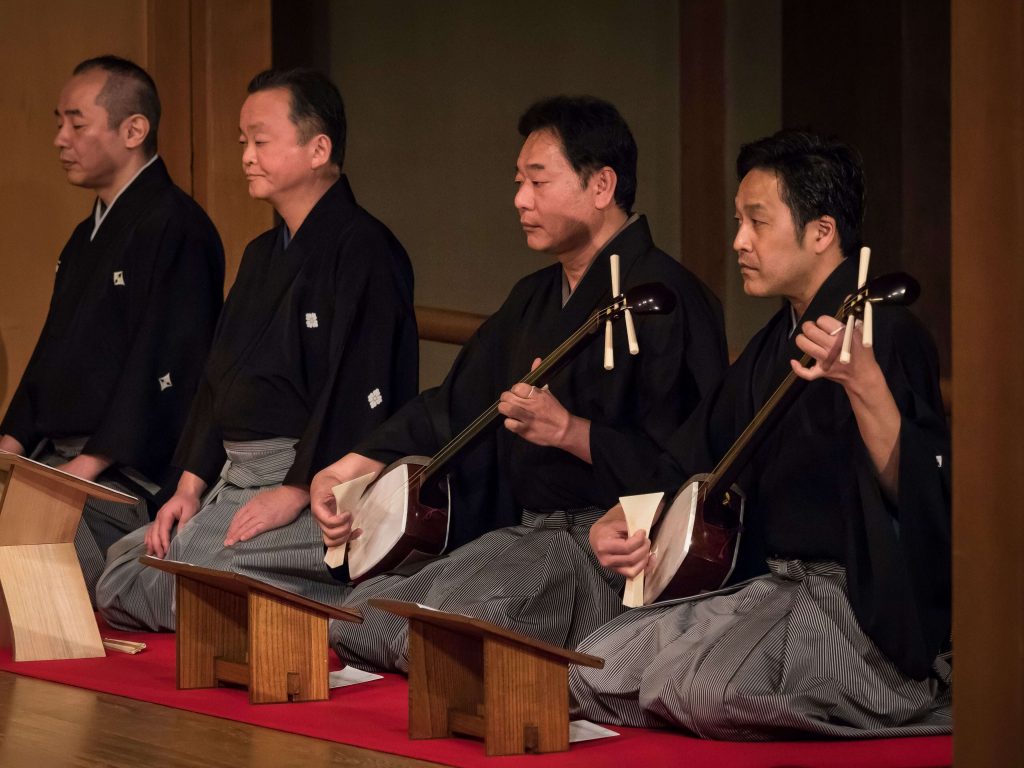
Nagauta, played mainly on the shamisen, emerged in the early 18th century in Edo (present-day Tokyo) as music for Kabuki.
Unlike Gidayu-bushi and Tokiwazu-bushi, Nagauta is performed onstage together with hayashi (music by nokan, kotsuzumi, otsuzumi and taiko). In addition to onstage accompaniment of dance in Kabuki today, Nagauta is performed in the kuromisu, a small area covered by a black lattice bamboo blind to the left side of the stage (as seen from the audience). Kuromisu music has the vital role of creating sound effects and atmosphere for scenes and characters.
(Katari-mono)
While Jiuta and Nagauta are melodic singing, the Tokiwazu-bushi and Gidayu-bushi shamisen forms below are expressive narrative styles emphasizing lyrics and stories over purely musical accompaniment.
・ Gidayu-bushi
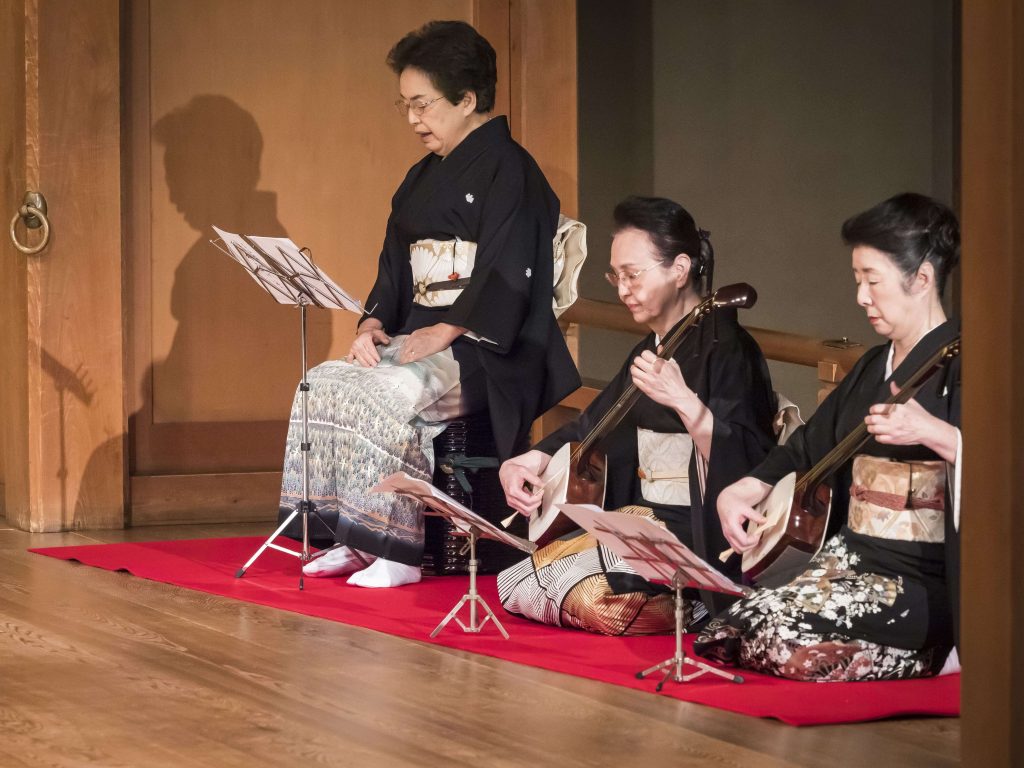
Gidayu-bushi originated in Osaka, developed by Takemoto Gidayu as an accompaniment to puppet plays.
A tayu chanter and shamisen player perform a dynamic musical accompanying narrative to the exaggerated gestures of the onstage performers. Today, Gidayu-bushi is performed by specialists from the Bunraku three-person-operated puppet theater and Kabuki theater.
・ Tokiwazu-bushi
Tokiwazu-bushi was developed in Edo (present-day Tokyo) by Tokiwaza Mojitayu, originally from Kyoto, to accompany Edo Kabuki.
Like Gidayu-bushi, it features a singer and shamisen player. Tokiwazu-bushi is especially calm and stately, played to accompany Kabuki and Nihon Buyo (Japanese dance).
Traditional Japanese Musical Instruments
Koto
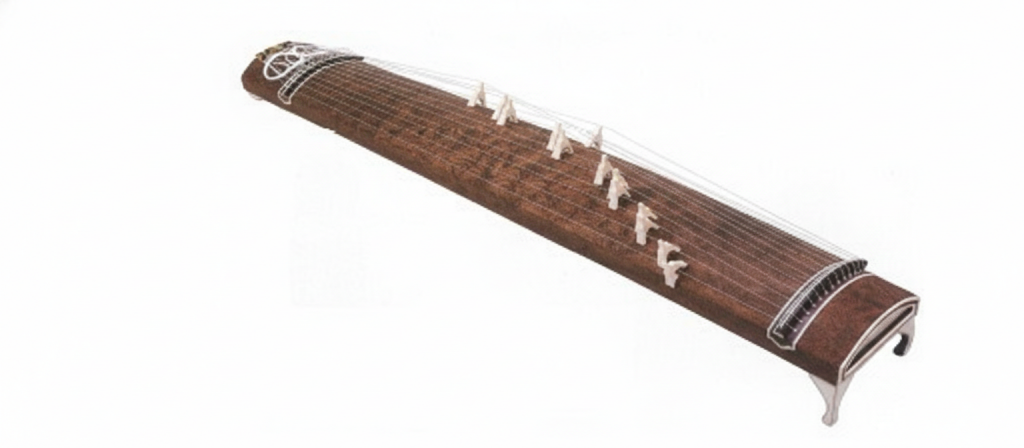
The koto is a traditional Japanese harp. It usually has 13 strings and small bridges called koto-bashira set at specific locations along the body that determine the pitch of each string. The player uses the fingers of both hands to play the koto.
It is said that the koto was first brought to Japan from China in the Nara period (710-794).
You will often hear the elegant sound of the koto in classical Japanese gardens and high-class Japanese restaurants, creating a soothing atmosphere.
Shamisen
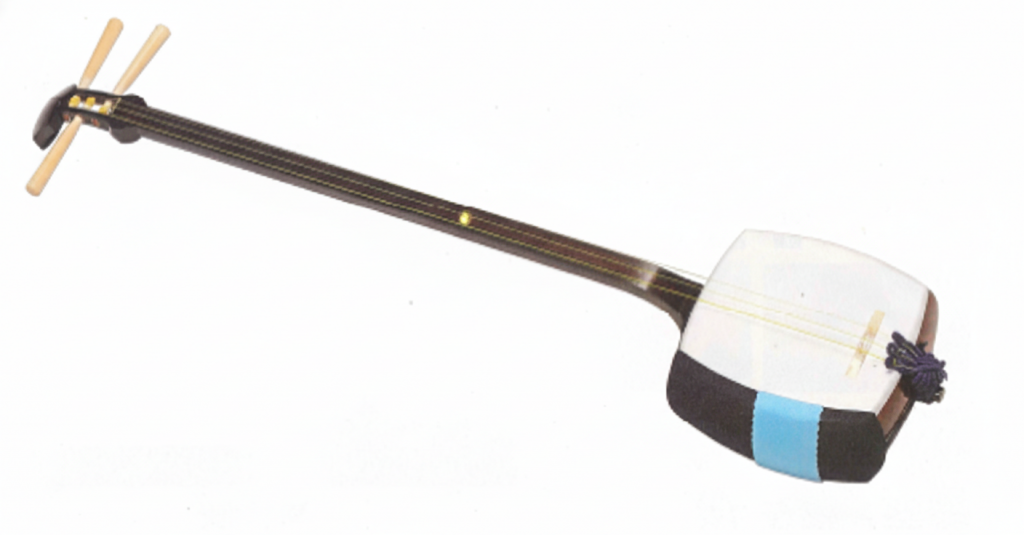
The shamisen is said to have developed from a similar snakeskin instrument, the jamisen, which arrived from the Ryukyu Kingdom (present-day Okinawa) during the late Muromachi period (1336-1573).
The player plucks the strings with a plectrum. The tone and sound vary depending on the subtle differences of materials used for the body and skin, as well as the thickness of the neck and strings. Because it has strings and yet is plucked, the shamisen has proved to be an invaluable element of dance and theater, capable of both melody and percussion.
Kokyu
The kokyu is similar to the shamisen but is smaller in size. As with a violin, the player draws a bow over the strings, the only bowed instrument amongst traditional Japanese instruments. This sound creates the feeling of exotic, ancient Chinese culture.
Biwa
The biwa is a stringed instrument brought over from China. The player uses a plectrum to pluck the strings. The solo biwa is often used to add musical accompaniment to storytelling.
Shaped like a lute or the Japanese biwa fruit, it is plucked like the shamisen, producing a percussive sound suitable for narrative accompaniment.
Nokan
The nokan is a bamboo transverse flute used for the music of Nohgaku and Kabuki. One of the interior parts of the instrument is called nodo, or throat. By making the nodo thinner, the instrument produces an imbalanced sound that intentionally breaks the ordinary melody and scale. Quite a strong exhalation is required to create a clear, high tone.
Shakuhachi
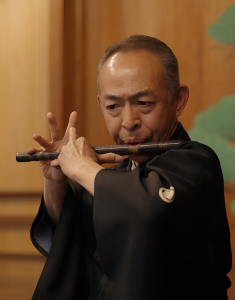
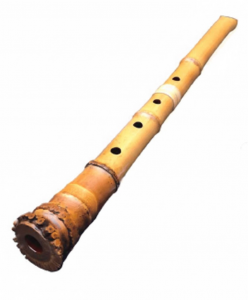
The shakuhachi is a very simple instrument made from bamboo. The player blows this vertical flute to produce a sound. The position of the chin can change the tone, and the movement of the head can add a subtle vibration to the sound.
The tone differs depending on the length of the instrument: a shorter one produces a higher tone while a longer one provides a lower tone.
The penetrating sound of the shakuhachi has become famous from television and movies as the sound of Japanese zen or samurai mystery.
Kotsuzumi
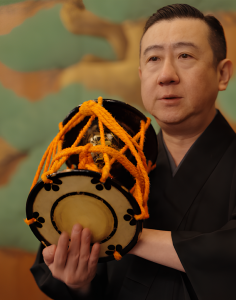
The kotsuzumi is a small drum. It is held in the left hand, placed on the right shoulder and struck with the right hand.
Various sounds can be created using different techniques. For example, by adjusting the shirabe-o (linen braided cords which tie the two leather heads on the front and back), and by altering the number of fingers to beat the drum-head and where they strike on the head.
Players give energetic calls such as “Yaa” and “Haa” at certain times, called kakegoe. This is a rare example of a “talking drum,” usually found in West Africa, where a drum-head of stretched skin is adjusted by squeezing the ropes during the performance.
Noh kotsuzumi
Taiko
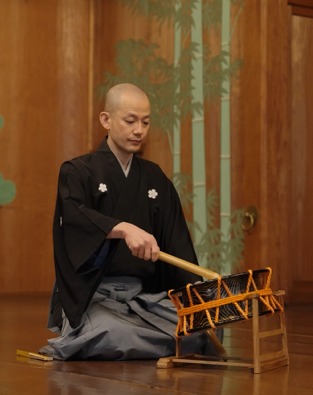
The taiko drum is placed on the floor and the leather skin is hit with two wooden sticks. The drums produce an echoing sound, “dum dum dum,” which provides a solid rhythm and atmosphere. As with kotsuzumi, musicians play the drums while letting out energetic kakegoe calls.
The frequent tours of the Kodo troupe of Sado Island and Ondekoza drummers and taiko groups throughout the world employ large festival versions of this loud and versatile drum.
Noh taiko