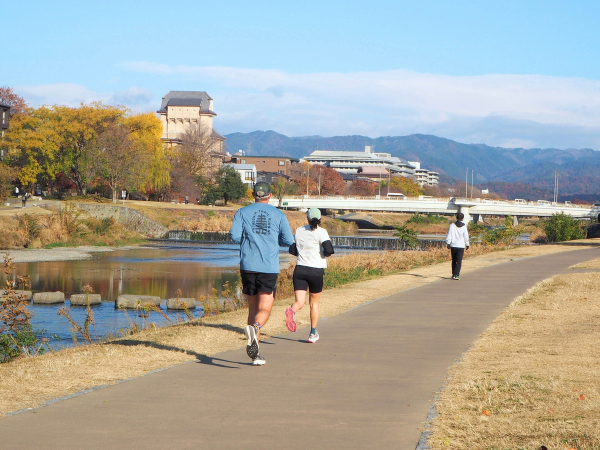
Caminar es, por supuesto, una forma clásica de explorar la ciudad. Al buscar libros sobre Kioto, a menudo se ven títulos como "Rutas de senderismo por Kioto" o "Paseando por Kioto". Sin embargo, Kioto también es un lugar maravilloso para correr. Aquí tienes tres razones principales:
Razón 1: Pocas colinas empinadas
Kioto se asienta en una cuenca rodeada de montañas por tres de sus lados, lo que significa que el centro de la ciudad es relativamente llano. Con la excepción de algunas zonas montañosas al este y al norte, hay muy pocas pendientes pronunciadas, lo que facilita y facilita el correr.
Razón 2: Historia, vida urbana y naturaleza, todo en uno
Desde templos y santuarios declarados Patrimonio de la Humanidad hasta el entorno natural del río Kamo, y desde distritos comerciales hasta barrios residenciales, Kioto reúne múltiples facetas en un área compacta. Recorrer la ciudad permite experimentar su historia, cultura y tradiciones vivas a la vez. Sentir el relieve de la ciudad directamente es parte de su atractivo.
Razón 3: Fácil navegación, menos giros equivocados
El centro de Kioto se distribuye en cuadrícula, a menudo descrito como un "tablero de ajedrez". Esto se remonta a la construcción de la capital del período Heian (794), que utilizaba un sistema de planificación basado en cuadrícula, al estilo chino de la época. Con un buen sentido de la orientación, es fácil evitar perderse. Además, con relativamente pocos edificios altos, los puntos de referencia son fáciles de localizar: el monte Daimonji al este, la Torre de Kioto al sur; son útiles señales visuales que facilitan la orientación, especialmente para los visitantes.
Kioto es una ciudad fantástica para caminar, pero correr también lo es.

Termina una carrera matutina y disfruta del desayuno, o combina la carrera con visitas turísticas. La ciudad también alberga numerosos baños públicos tradicionales, perfectos para relajar los músculos cansados después. Una sesión de sauna es otra excelente manera de refrescarse y relajarse.
Aquí hemos seleccionado cinco recorridos cortos (de 2 a 6 km) que son fáciles de disfrutar incluso durante las pausas de tu viaje. Cada recorrido comienza cerca de una estación convenientemente ubicada.
Aquí se presentarán
- Ruta Kinukake-no-Michi: recorre tres sitios declarados Patrimonio de la Humanidad
- Ruta de la estación de Kioto: de la arquitectura moderna a algunos de los templos más grandes de Japón
- Ruta Kitayama y Nakaragi-no-Michi: del barrio del santuario al río Kamo
- La Ruta del Filósofo: Un recorrido por los lugares emblemáticos de Higashiyama
- Curso sobre el castillo de Nijo y el paseo marítimo de Horikawa
Ruta Kinukake-no-Michi: recorre tres sitios declarados Patrimonio de la Humanidad
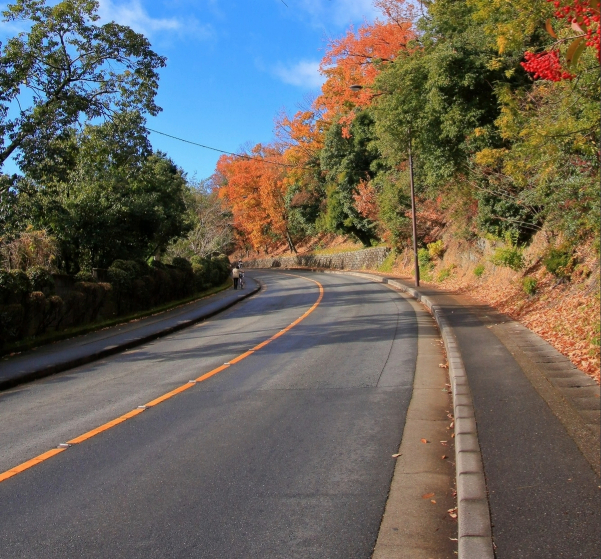
Aprox. 2,5 km / unos 15 minutos
Suave subida
Nuestra primera recomendación comienza en la estación Omuro Ninna-ji de la línea Randen, en dirección norte-noroeste desde la estación de Kioto. La ruta pasa por tres templos budistas declarados Patrimonio de la Humanidad: el templo Ninna-ji y el templo Ryōan-ji, y termina cerca del templo Kinkaku-ji, a lo largo de la pintoresca carretera Kinukake-no-Michi.
Desde la estación Omuro Ninna-ji, entre en Kinukake-no-Michi y siga la carretera. Tras una gran curva en S hacia el noreste, verá la entrada al templo Ryōan-ji a su izquierda. Pronto, la Universidad Ritsumeikan aparece a la derecha y el Museo de Bellas Artes Insho Domoto de la Prefectura de Kioto a la izquierda, lo que indica que el templo Kinkaku-ji está cerca.
La ruta es sencilla, pero continúa con una suave subida, por lo que se recomienda un ritmo tranquilo. Las aceras son estrechas y, durante la temporada alta de turismo, puede haber más gente caminando o esperando el autobús, pero por favor, corra con precaución y evite salirse de las aceras.
El nombre de la calle Kinukake-no-Michi (literalmente, la calle “envuelta en tela”) proviene del monte Kinugasa, una modesta colina de 201 metros ubicada aproximadamente entre el templo Ryōan-ji y el museo Domoto (vea si puede encontrarla).
(Resumen de ruta)
Estación Omuro Ninna-ji → Templo Ninna-ji → Templo Ryōan-ji → Museo Insho-Domoto de la Prefectura de Kioto → Templo Kinkaku-ji
Aprox. 2,5 km (unos 15 minutos a 6 min/km)
Ruta de la estación de Kioto: de la arquitectura moderna a algunos de los templos más grandes de Japón
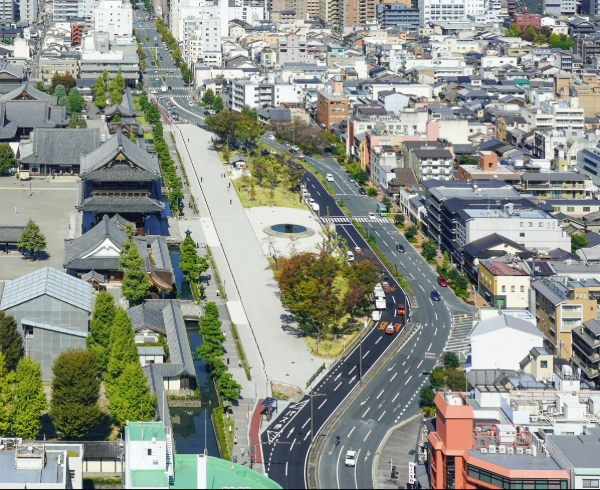
Curvas sutiles en la calle Karasuma
Aprox. 2,7 km / unos 17 minutos
Este recorrido comienza en la estación de Kioto, la principal puerta de entrada a la ciudad. Desde la estación, pasa por dos de los templos budistas más grandes: Higashi Hongan-ji y Nishi Hongan-ji, y luego regresa a la estación de Kioto.
Aunque la zona que rodea la estación de Kioto está repleta de edificios de oficinas y grandes instalaciones comerciales, pronto encontrará la impresionante Puerta Goeido del templo Higashi Hongan-ji. La explanada se ha remodelado para convertirla en una espaciosa plaza con aceras más anchas y baños públicos limpios. Continúe hacia el oeste por la calle Shinhanaya-cho hasta la calle Horikawa, donde podrá contemplar el templo Nishi Hongan-ji, otro sitio declarado Patrimonio de la Humanidad.
Un punto de interés en esta ruta es el conjunto de "calles con curvas". Si bien las carreteras de Kioto son generalmente rectas, tanto la calle Karasuma, cerca del templo Higashi Hongan-ji, como la calle Horikawa, cerca del templo Nishi Hongan-ji, presentan una ligera curva hacia el este. Esto se remonta a los proyectos de ampliación de carreteras del periodo Meiji (1868-1912), cuando se desviaron las calles para evitar las zonas de templos y construir líneas de tranvía. El cambio es sutil en los mapas, pero perceptible en el lugar.
(Resumen de ruta)
Estación de Kioto → Templo Higashi Hongan-ji → Templo Nishi Hongan-ji → Estación de Kioto
Aprox. 2,7 km (unos 17 minutos a 6 min/km)
★ Baños públicos cercanos
Ruta Kitayama y Nakaragi-no-Michi: del barrio del santuario al río Kamo
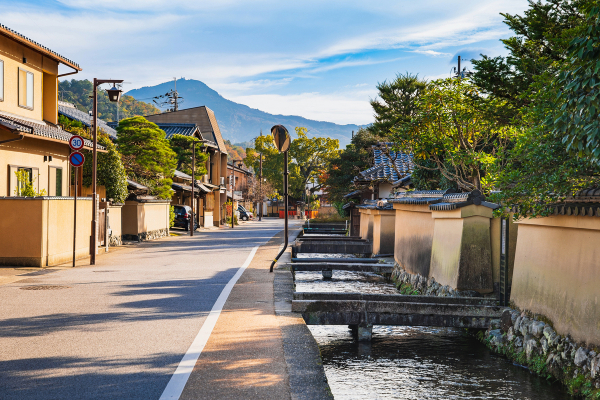
El tranquilo arroyo Myojin-gawa que atraviesa el histórico distrito del santuario.
Aprox. 4,5 km / unos 27 minutos
Escápate del bullicio de la ciudad en la zona de Kitayama. Comienza en la estación de Kitayama (Salida 1), a unos 15 minutos en metro desde la estación de Kioto. La ruta pasa por el barrio tradicional cerca del santuario Kamigamo-jinja, donde vivieron los sacerdotes del santuario sintoísta, sigue el río Kamo y termina en la estación de Kitaōji.
La primera mitad serpentea por tranquilas calles residenciales, así que tenga cuidado con los coches en las carreteras más estrechas. Tras pasar el Santuario de Ota, famoso por sus lirios, la carretera se abre y revela el evocador barrio de los sacerdotes del santuario (Shake-machi), perteneciente al clero del Santuario Kamigamo-jinja.
La zona de Shake-machi conserva bien su antiguo paisaje, incluyendo el cuidado paisaje ribereño de Myojin-gawa, con pequeños puentes, puertas y bancos que lo convierten en un lugar ideal para descansar. Continúe pasando el santuario Kamigamo-jinja y siga hacia el sur a lo largo del río Kamo, hasta llegar a Nakaragi-no-Michi, conocido por sus cerezos llorones.
Tenga en cuenta que el cercano Jardín Botánico de Kioto, que recientemente celebró su centenario, forma parte del recorrido del Maratón de Kioto, pero no está abierto para correr con regularidad.
(Resumen de ruta)
Estación Kitayama → Distrito del santuario Kamigamo-jinja → Santuario Kamigamo-jinja → Río Kamo → Estación Kitaoji
Aprox. 4,5 km (unos 27 minutos a 6 min/km)
La Ruta del Filósofo: Un recorrido por los lugares emblemáticos de Higashiyama
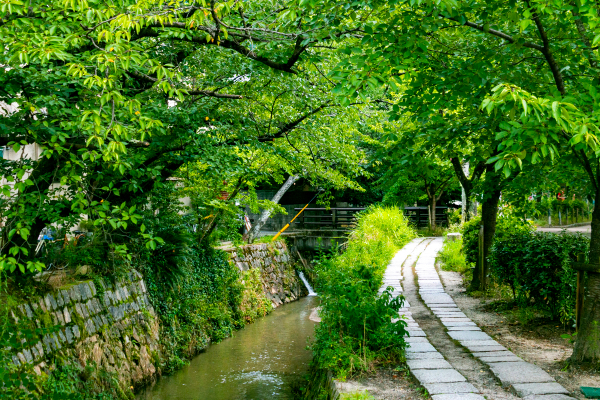
El Camino del Filósofo tiene una gran variedad de flores y árboles que lo hacen hermoso durante todo el año.
Aprox. 5,8 km / unos 35 minutos
Suave subida
Esta ruta une algunos de los sitios más famosos del este de Kioto, incluido el Templo Nanzen-ji, el Templo Eikan-dō y el Camino del Filósofo.
Comience en la salida 1 de la estación de Higashiyama, en dirección a las 2 en punto desde la estación de Kioto. Luego, diríjase hacia el este por el canal del lago Biwa desde Jingū-michi y diríjase hacia los templos Nanzen-ji y Eikan-do. La ruta asciende suavemente cerca de los templos Nanzen-ji y luego se aplana a lo largo del Sendero del Filósofo. Continúe hacia el oeste por la calle Imadegawa y finalice en la estación Demachiyanagi. El monte Daimonji, donde se encienden hogueras con la forma de 大 (dai) durante un ritual de verano para despedir a los espíritus ancestrales (Gozan Okuribi), es visible en días despejados.
El sendero, que lleva el nombre del filósofo Nishida Kitaro (1870-1945), quien solía pasear por aquí en contemplación, está bordeado de una gran variedad de flores y fauna. Algunos senderos ribereños reutilizan piedras de antiguas vías de tranvía, pero el tráfico peatonal puede ser intenso; utilice las calles secundarias siempre que sea posible.
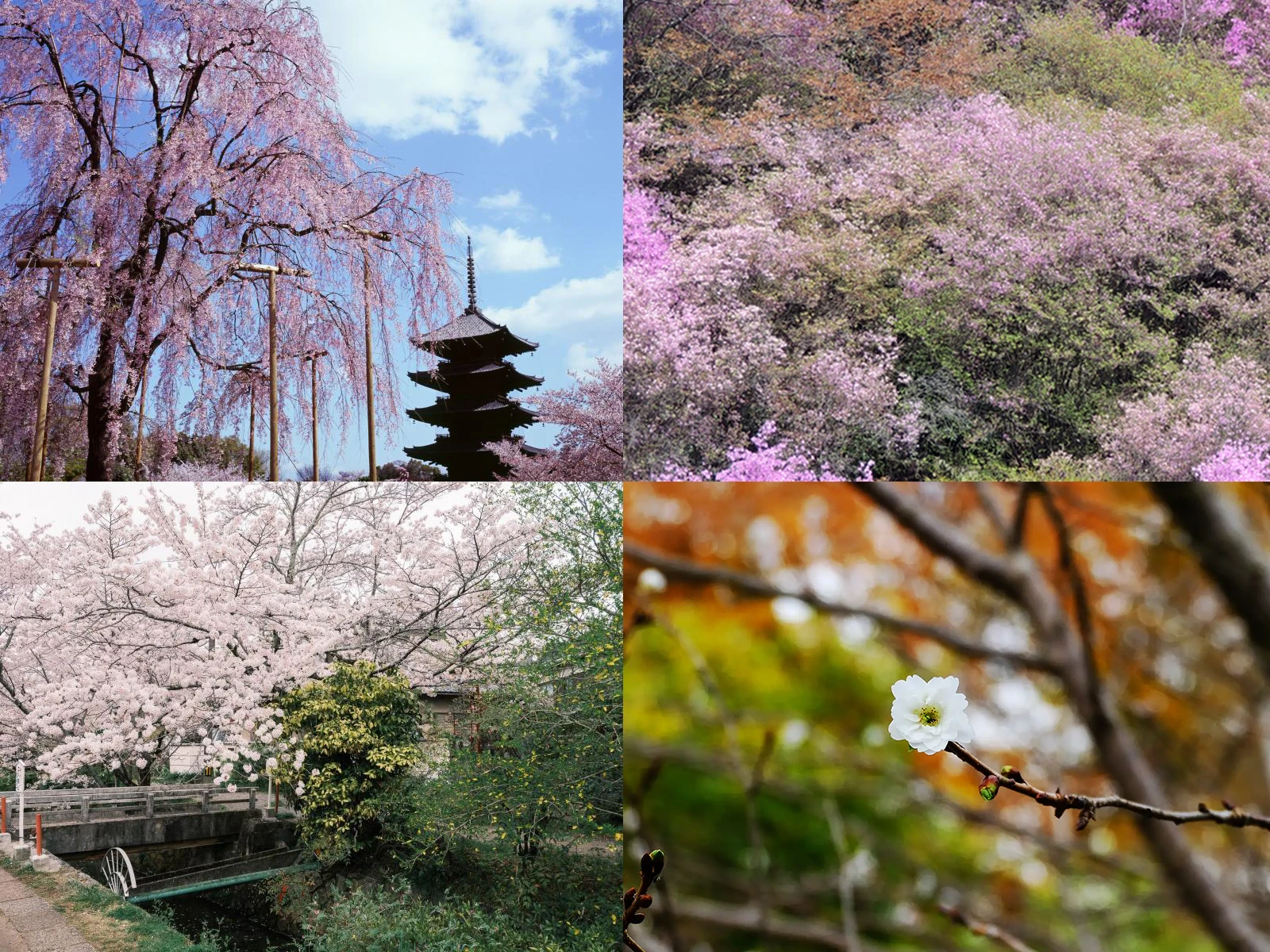
Algunos cerezos fueron donados por el pintor Hashimoto Kansetsu y se conocen como Kansetsu-zakura. La primavera es hermosa, pero hay mucha gente; las primeras horas de la mañana son ideales para correr.
(Resumen de ruta)
Estación Higashiyama → Templo Nanzen-ji → Camino del Filósofo → Hyakumanben → Estación Demachiyanagi
Aprox. 5,8 km (unos 35 minutos a 6 min/km)
★ Baños públicos cercanos
Curso sobre el castillo de Nijo y el paseo marítimo de Horikawa
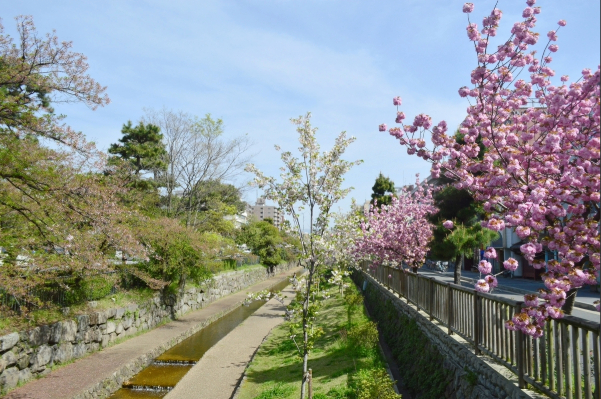
Carrera fluvial sin coches
Aprox. 5,9 km / unos 35 minutos
El recorrido final rodea el Castillo Nijo, donde concluyó el shogunato Tokugawa, marcando el fin del período Edo (1603-1867). Comience en la salida 1 de la estación Nijojo-mae, en dirección a las 11 en punto desde la estación de Kioto.
Comienza con un circuito de aproximadamente 2 km alrededor del foso exterior del castillo. Sus amplias aceras y la ausencia de semáforos lo convierten en uno de los favoritos entre los corredores locales. Ten cuidado con el tráfico peatonal alrededor de la Puerta Higashi-Otemon, por donde los visitantes acceden al castillo. El sendero abierto se define por el impactante contraste de brillantes muros blancos, murallas de piedra ordenadas y pinos perennes. Si el tiempo y la energía lo permiten, también puedes dar varias vueltas.
Tras calentar, baje de la calle Horikawa hasta el Paseo Horikawa, un canal restaurado, construido originalmente durante el período Heian (794-1185). Antiguamente vital para el transporte de madera y el teñido de Yuzen, la vía fluvial se reactivó en 2009, creando el agradable sendero actual para correr.
Entre los puntos destacados se incluyen siete puentes a lo largo de la ruta, algunas propiedades culturales designadas e Ichijo Modoribashi, un puente famoso en el folclore como puente al otro mundo y por una historia de una demonio.
(Resumen de ruta)
Estación Nijojo-mae → Castillo Nijo → Paseo Horikawa → Estación Nijojo-mae
Aprox. 5,9 km (unos 35 minutos a 6 min/km)
★ Baños públicos cercanos
Con esto concluyen nuestras cinco rutas de carrera.
Kioto tiene una larga trayectoria como sede de eventos de atletismo y ha visto a más corredores en sus calles en los últimos años. Es conocida como la cuna del primer ekiden (carrera de relevos de larga distancia) de Japón. Además, desde 2012, el Maratón de Kioto se celebra cada febrero, atrayendo a unos 16.000 corredores cada año.
Correr te permite recorrer más distancia en menos tiempo, lo que facilita combinarlo con el turismo. ¿Por qué no descubrir una nueva faceta de Kioto, una que podrías perderte en un itinerario turístico típico?
Notas de seguridad
- Preste mucha atención a los vehículos y peatones para evitar accidentes.
- Por favor sea considerado para que todos puedan compartir las aceras y caminos cómodamente.
Maratón de Kioto (Inscripción de corredores: julio-septiembre)
La inscripción para corredores abre cada julio. También se aceptan voluntarios, y el reclutamiento suele realizarse entre septiembre y octubre.
15 de febrero de 2026 (domingo)
8:55 Inicio de la carrera en silla de ruedas
9:00 Salida de maratón y Ekiden en pareja
15:00 Finalización
Páginas de referencia para correr en Kioto

Autor del artículo