The Nishijin Area, stretching from Kitano Tenmangū Shrine on the west to the Kyoto Imperial Palace on the east, is not well-known among tourists coming to this city.
Until the 1980s, this area was full of textile manufacturers producing a particular type of fabric named after the area (Nishijin-Ori), and was bustling with customers and tourists alike. As the general population moved away from traditional kimonos to modern clothing, so did the manufacturers and tourists, leaving the area filled mostly with apartments today.
This history left behind one of the highest concentrations of wagashi (traditional sweets) stores in Kyoto, as they used to supply sweets for kimono merchants, tea houses, shrines, and temples in and around the area.
In this article I will introduce three traditional confectioners, all easily accessible by hopping on the city bus, while explaining the history of the Nishijin Area. If you have a sweet tooth and are getting tired of the crowds at the major tourist spots in Kyoto, this article is for you.
Oimatsu’s “Gosho-Guruma”
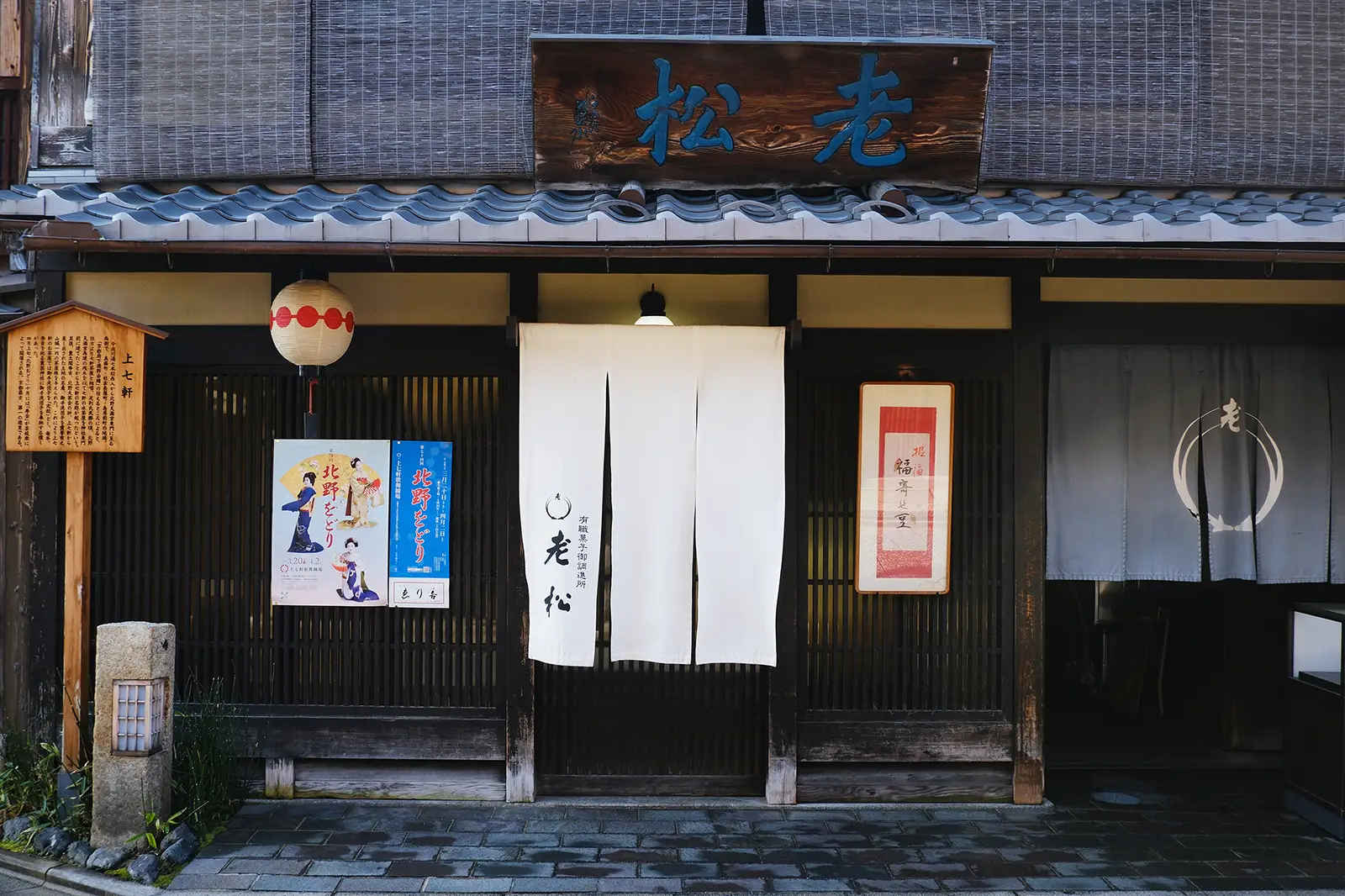
The first store, Oimatsu, is surrounded by two landmarks: Kitano Tenmangū Shrine, the head shrine of thousands of Tenmangū shrines across Japan; and Kamishichiken, the oldest hanamachi (geiko district) in Kyoto. Naturally, when you have religious ceremonies and guests coming to see the geiko performances, you need a steady supply of sweets, and that’s where Oimatsu came in.
Established in 1908, they specialize in delicate sweets designed to match the season and theme of the occasion they will be served in. The traditional storefront blends in with the surrounding picturesque district, with paper fans and wooden confectionery molds lining the yellowish wall inside.
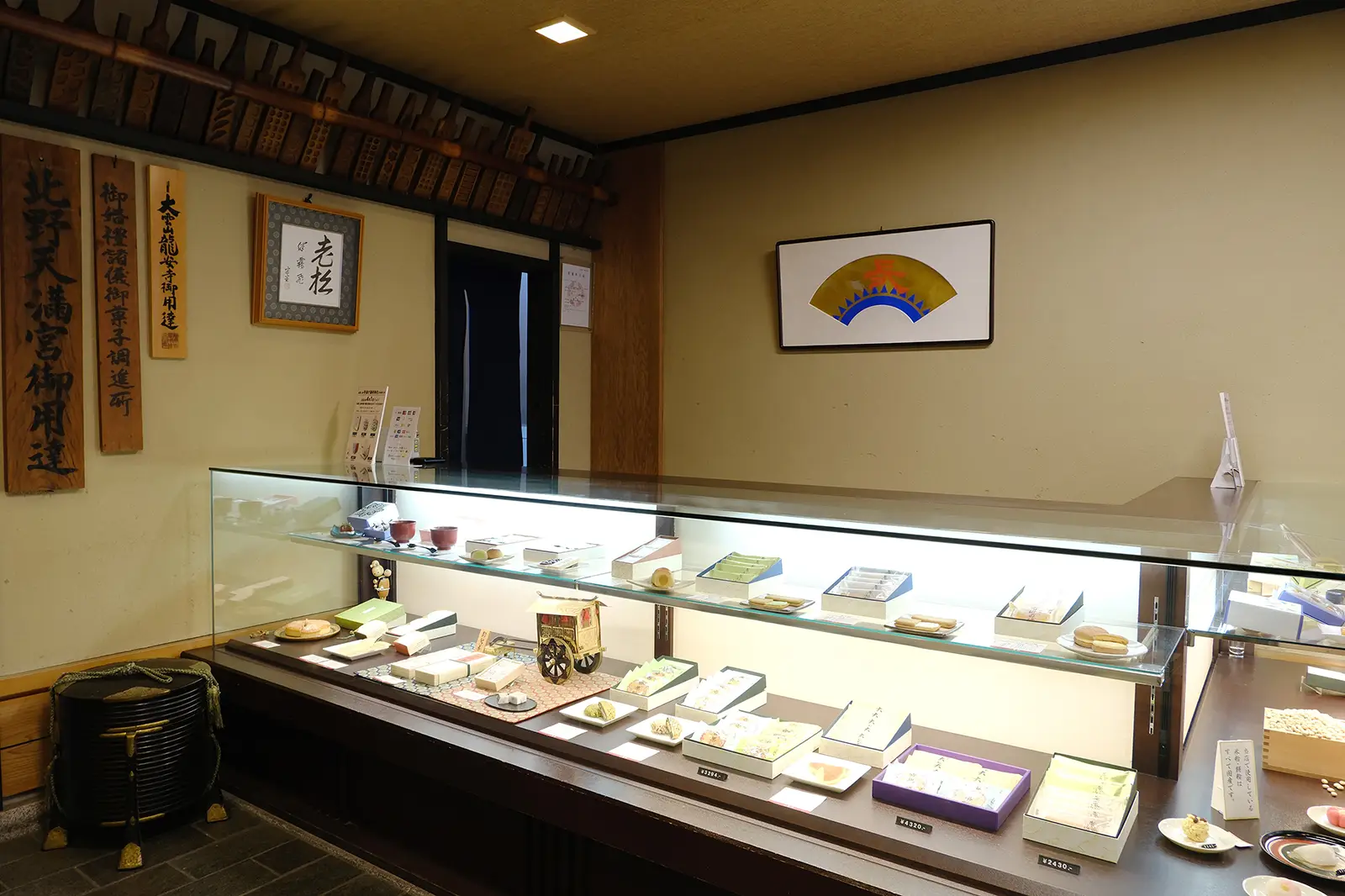
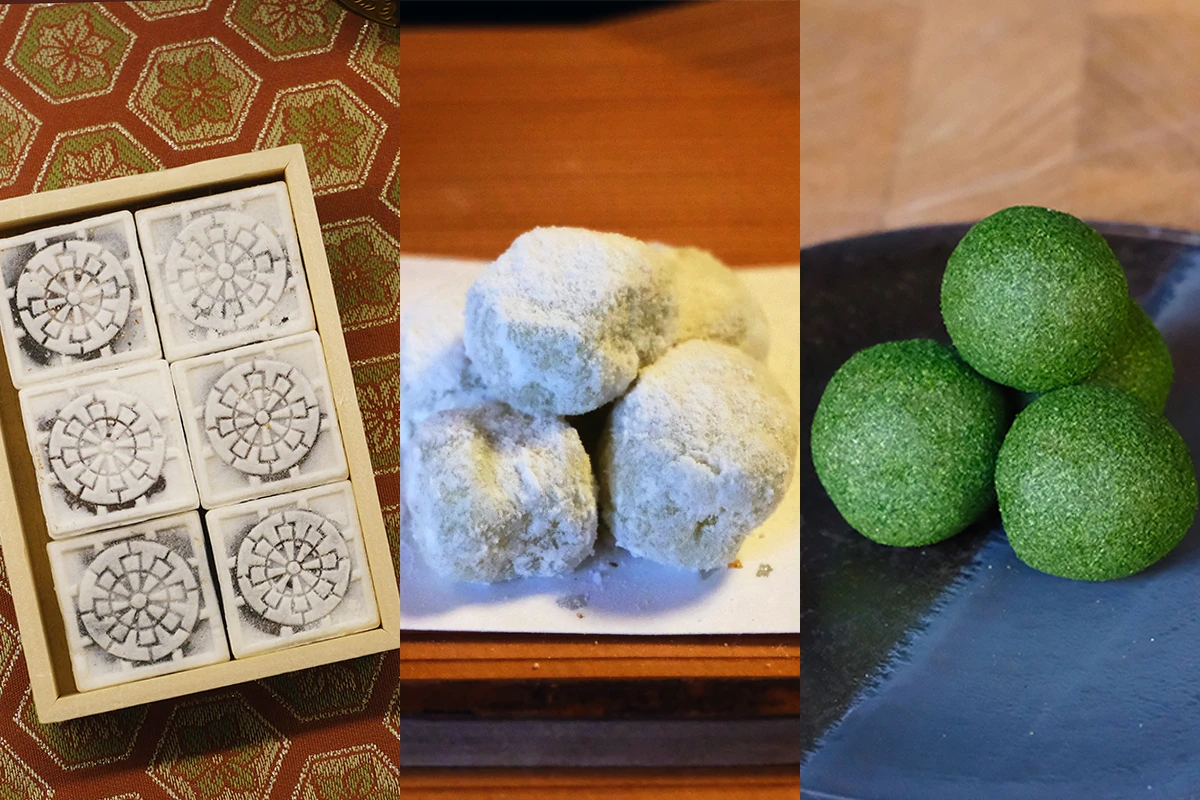
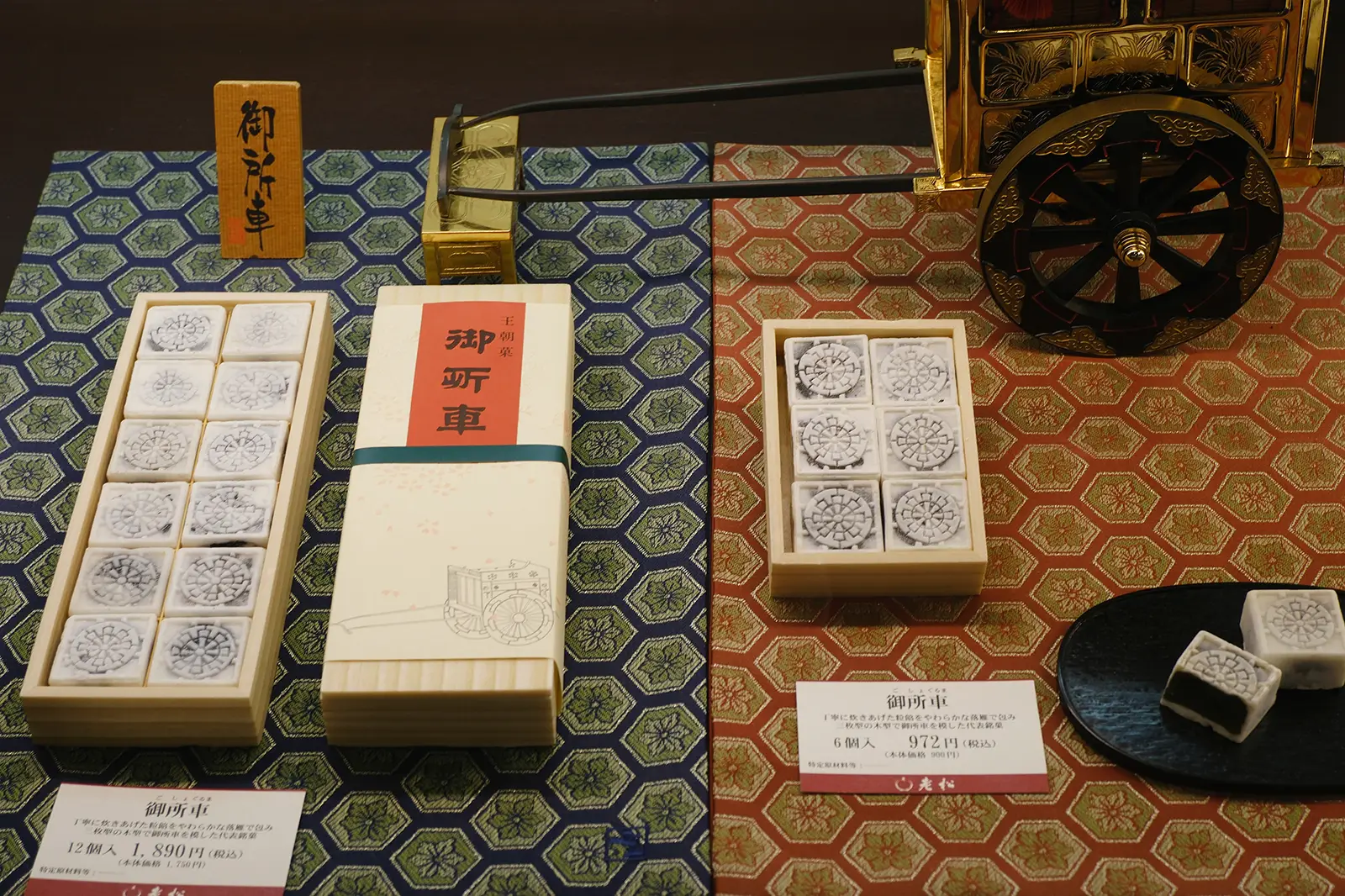
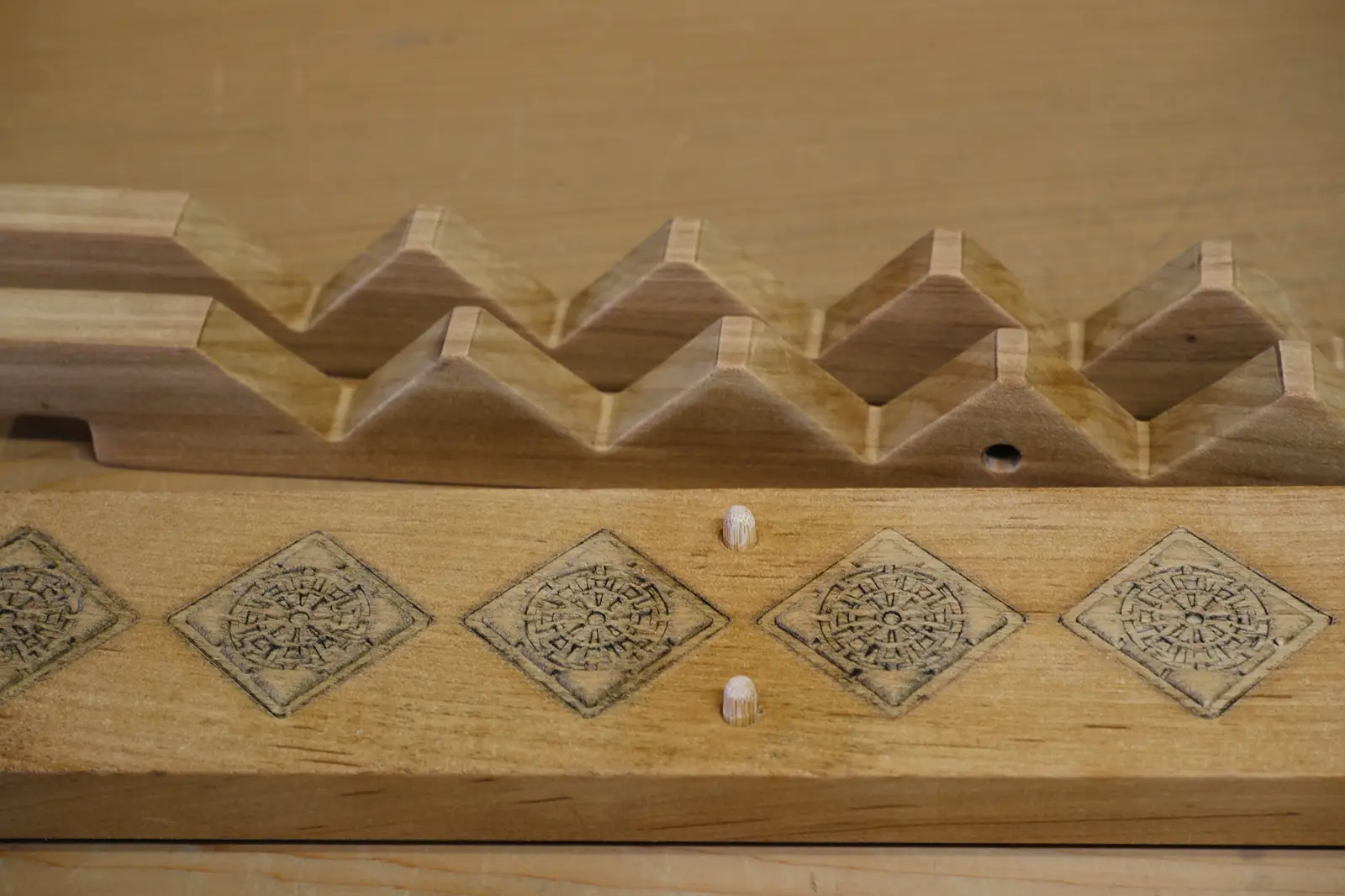
Their signature confection is called Gosho-Guruma—”The Imperial Carriage,” a cube of red bean paste covered with a layer of mochi flour. First sold during the 1920s, the motif at the top is inspired by the wheels of ox-drawn carriages used by nobility during medieval times. It is meticulously crafted using a three-piece wooden mold, with a firm texture and a subtle sweetness. This type of sweet, which is on the drier side, is usually served with a bowl of matcha during tea ceremonies.
Imperial Confectioner Oimatsu Kitano Store
Nearest bus stop: Kitano Tenmangū-mae
Official website (in Japanese only)
Gosho-Guruma
| Best by | about two weeks, if unopened |
| Availability | year-round |
| Quantity | box filled with six or twelve pieces |
| Ingredients | sugar, azuki red beans, mochi rice flour, starch, syrup, agar-agar |
Quick Detour: Kitano Tenmangū Shrine and Kamishichiken
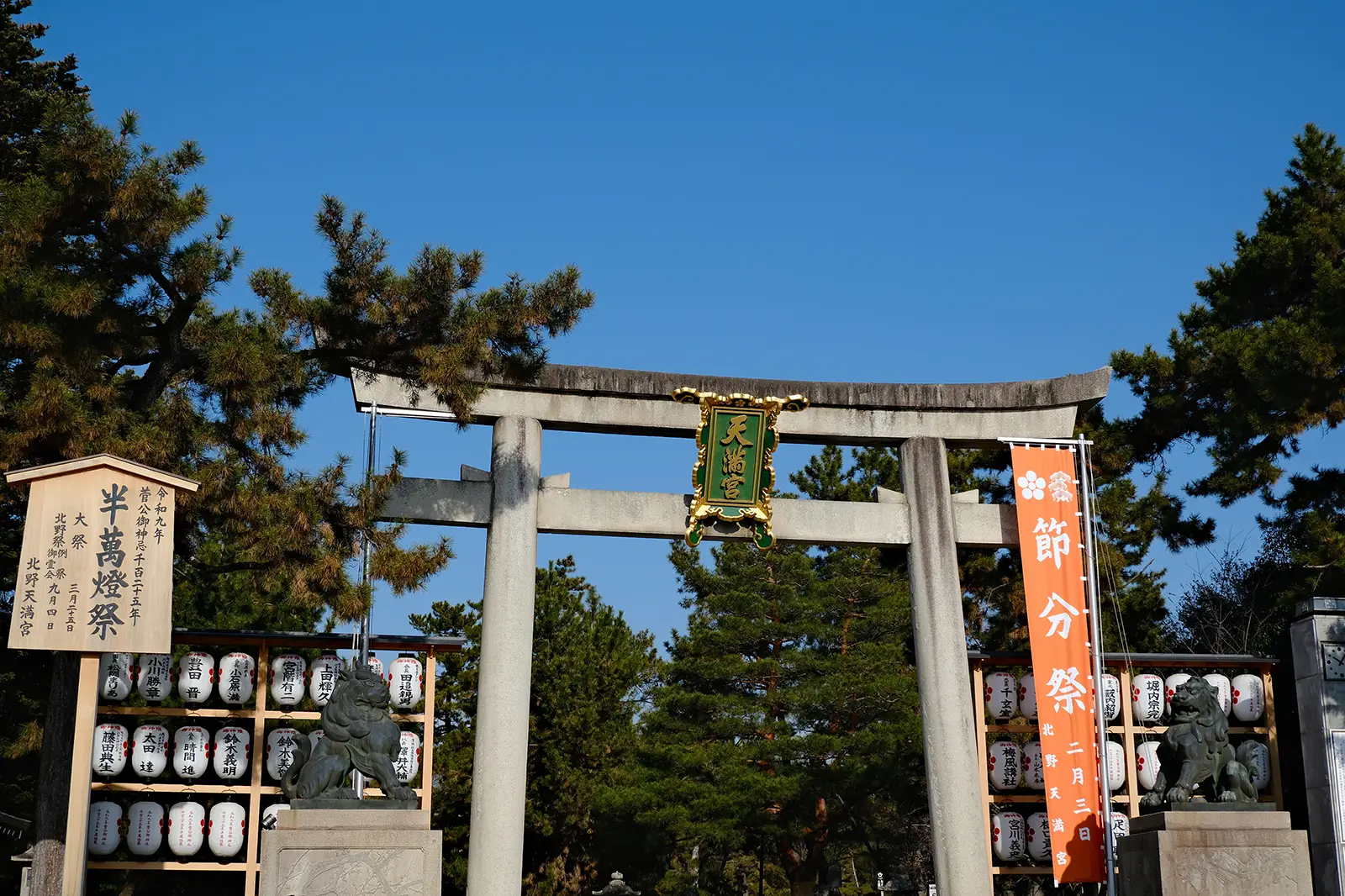
Kitano Tenmangū Shrine, one of the largest shrines in the Nishijin area, is particularly popular among Japanese students during exam season, as it is dedicated to Sugawara no Michizane, the Shinto god of learning.
Sugawara no Michizane was a scholar and politician during the Heian period (794–1185) who was unfairly exiled by his rivals. After his death, a number of natural disasters started happening in Kyoto, and people believed his vengeful spirit sought revenge on those who wronged him. They then built this shrine and deified him to appease his spirit.
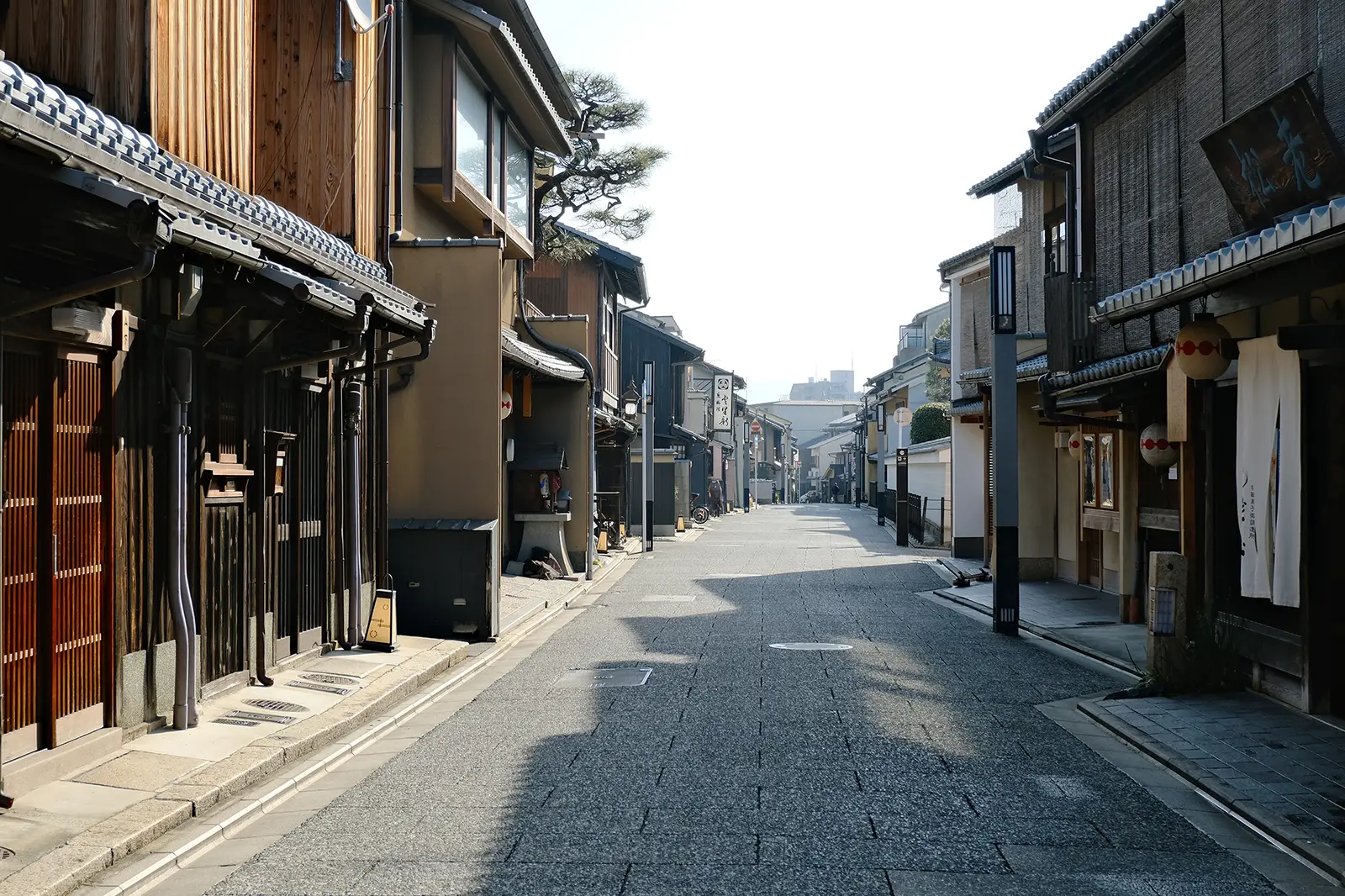
To the east of this shrine is Kamishichiken, where Oimatsu is located. It is a street lined with traditional wooden buildings, some of which are teahouses or restaurants. The name of the district literally means “Seven Upper Houses” referring to the seven teahouses built from leftover materials used during the rebuilding of the Kitano Tenmangū Shrine in the Muromachi period (1333–1573).
This district and Kitano Tenmangū Shrine are so intertwined that the geiko have been entertaining guests and performing tea ceremonies during shrine events for ages, especially during spring and autumn.
Kitano Tenmangū Shrine
Entrance fee: free of charge (admission to the flower garden and museum requires a separate paid ticket)
Nearest bus stop: Kitano Tenmangū-mae
Tsuruya Yoshinobu’s “Yūmochi”
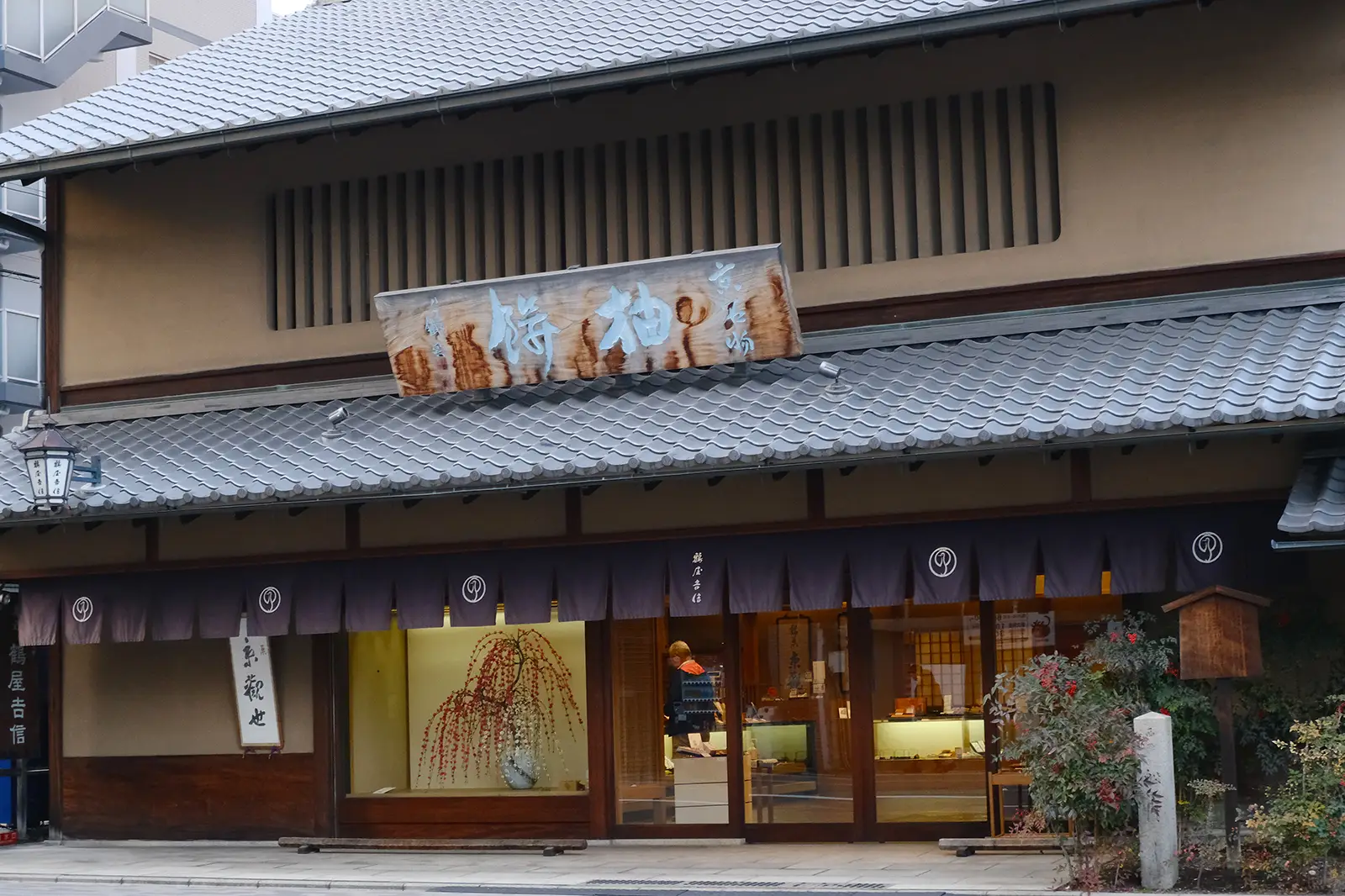
If you go eastward from Oimatsu along Imadegawa Street, you will find the second store featured in this article. Tsuruya Yoshinobu, is quite fortunate to be located not just near the textile makers of Nishijin, but also to the three schools with direct lineage to Sen no Rikyū (1522–1591), one of the most important figures in Japanese tea ceremony.
Since its founding in 1803, Tsuruya Yoshinobu has been crafting seasonal sweets for tea ceremonies, religious events, and celebratory events of Kyotoites through the years. Veteran staff members recall how until the 1980s, you could hear loud noises from the surrounding textile machines. They also reminisce how in January the store used to be packed with kimono merchants and tea masters on the hunt for confections to give when paying their respects to their regular customers during New Year celebrations.
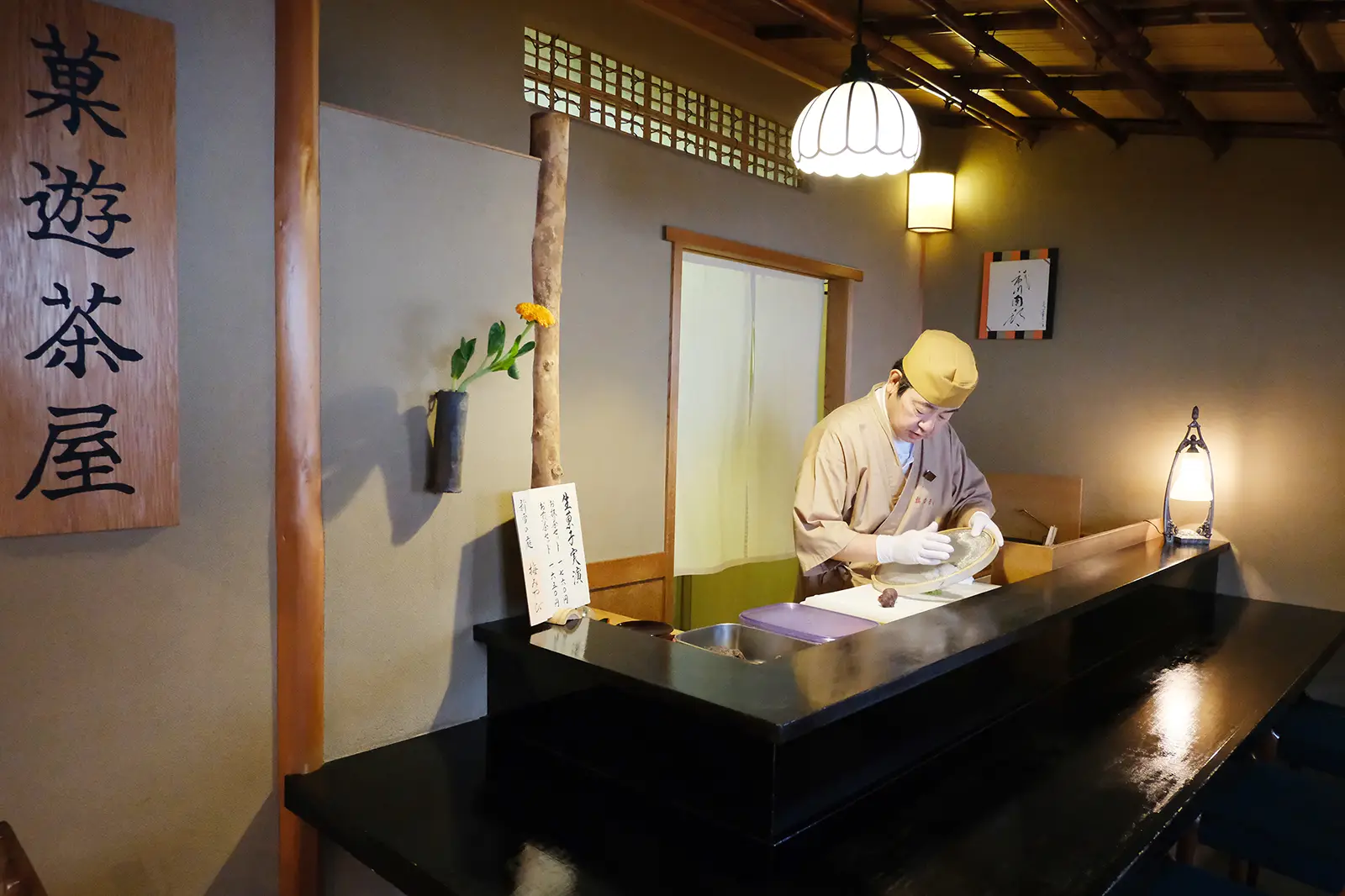
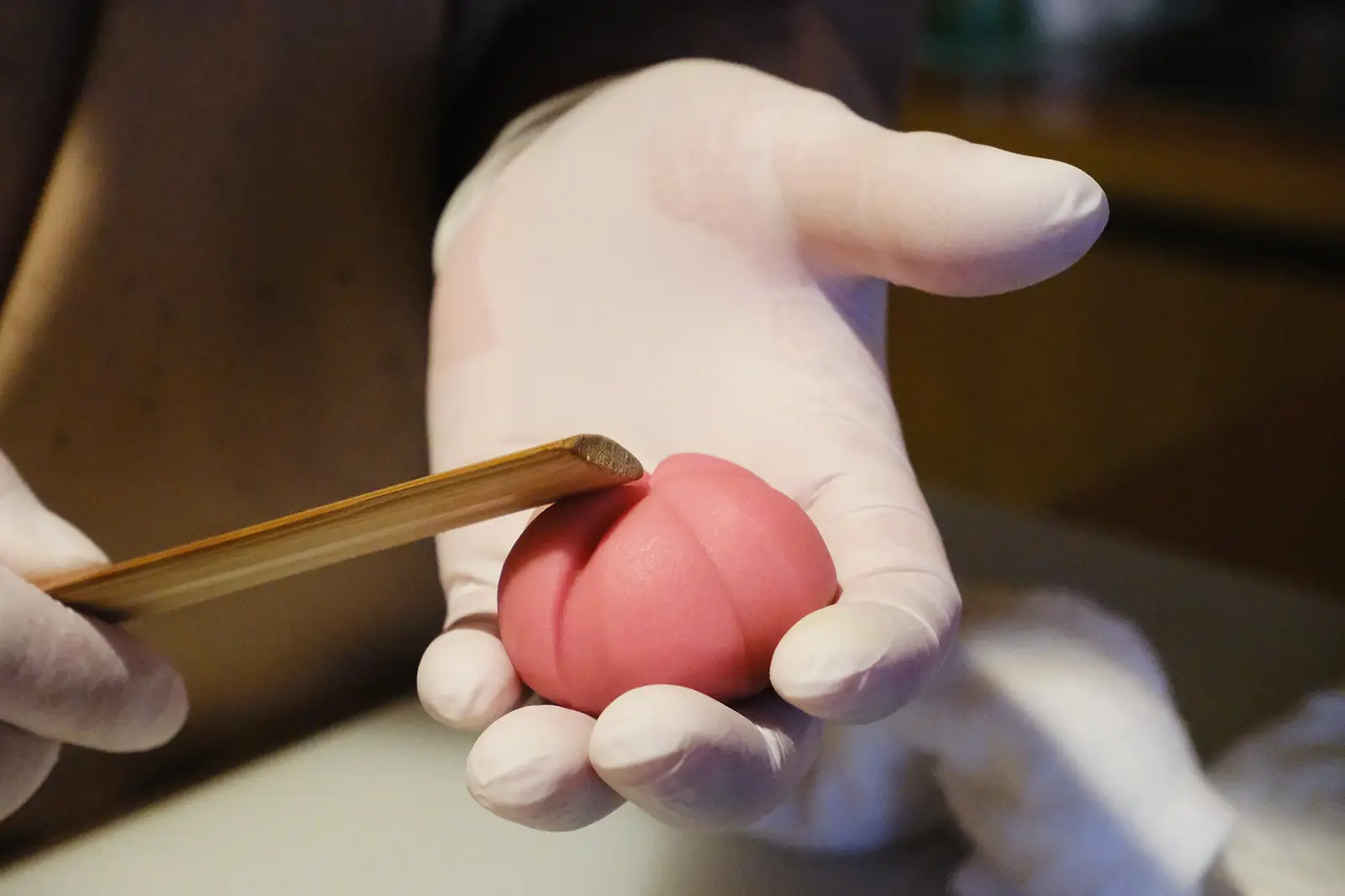
A visit to their main store would not be complete without seeing the second floor, their experience space called Kayu Jaya. Up to six people can sit at the counter and witness how those delicate sweets are hand crafted by an artisan right in front of them. The confections, which change every month to match the seasons, are then served with either a bowl of matcha or sencha green tea. You can’t get fresher sweets than this. Reservations are prioritized for this experience.
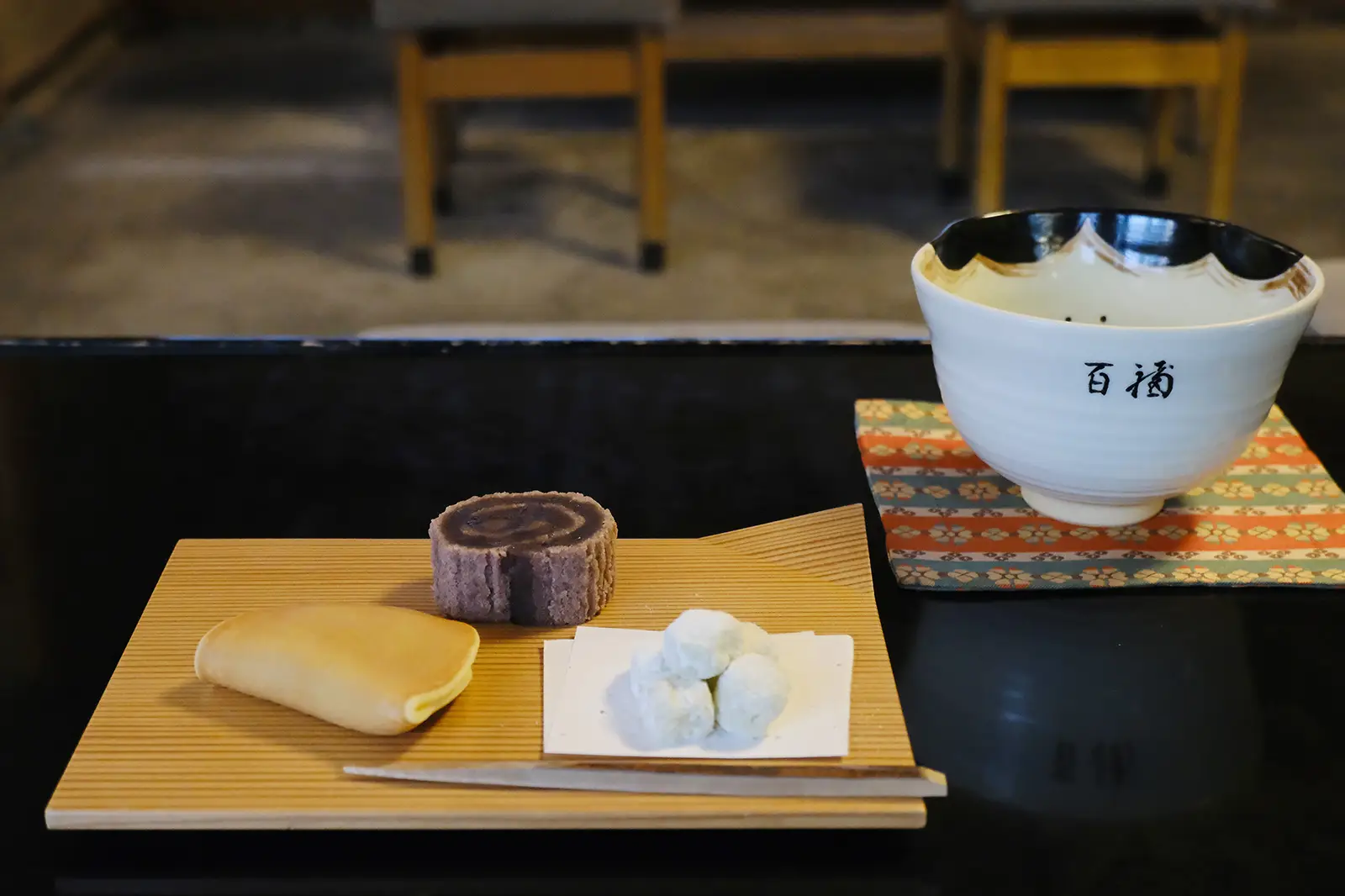
If you still have room left, you can enjoy even more sweets at the cafe on the same floor. One highly recommended menu item is the “Miyako Set,” featuring three signature sweets from different eras: “Yūmochi,” a yuzu citrus-flavored mochi rice cake dusted with Japanese sugar from 1868; “Kyōkanze,” a steamed azuki red bean roll from 1920; and “Tsubara Tsubara,” a pancake filled with azuki red bean from 1996.
The story behind the creation of Yūmochi in particular, is an interesting example of a new technique being created by pure chance.
One day, the third-generation owner was making a batch of confection using yuzu citrus, coarse mochi rice flour, and agar agar. Unfortunately, as he measured the ingredients incorrectly, the resulting sweets did not measure up to his standards. Instead of letting the batch go to waste, he added more mochi rice flour into the mix, steamed them, cut them into little pieces, and dusted them with sugar.
Considering them not fit for regular customers, he shared them only with family and neighbors, who then complimented him on how good the confection was. He saw an opportunity and sold this new confection to the public, and that is how Yūmochi became their longest selling sweets to this day.
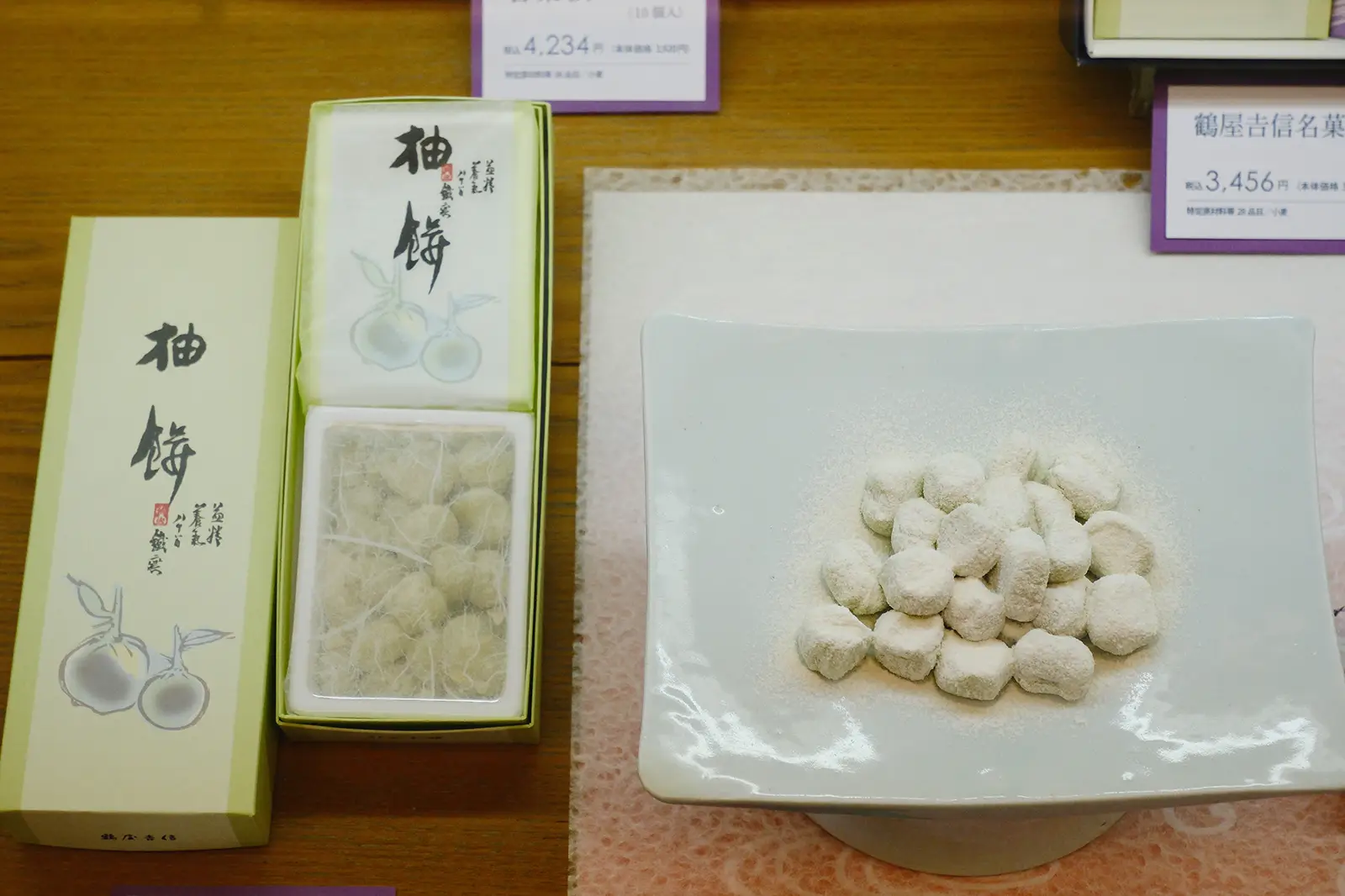
On the first floor, you can buy confections to go and look at beautifully decorated displays of seasonal sweets. Don’t miss the limited confections sold in small amounts exclusively in this particular store. It is highly worth the trip for a comprehensive experience of traditional Japanese sweets.
Kyoto Confectioner Tsuruya Yoshinobu Main Shop
Nearest bus stop: Horikawa Imadegawa
Official website (in Japanese only)
Yūmochi
| Best by | about two weeks from the date of purchase, if unopened |
| Availability | year-round |
| Quantity | about fifteen to twenty balls per package |
| Ingredients | sugar, rice syrup, mochi rice flour, wasanbon sugar, starch syrup, yuzu citrus paste, starch |
Quick Detour: Nishijin Textile Center
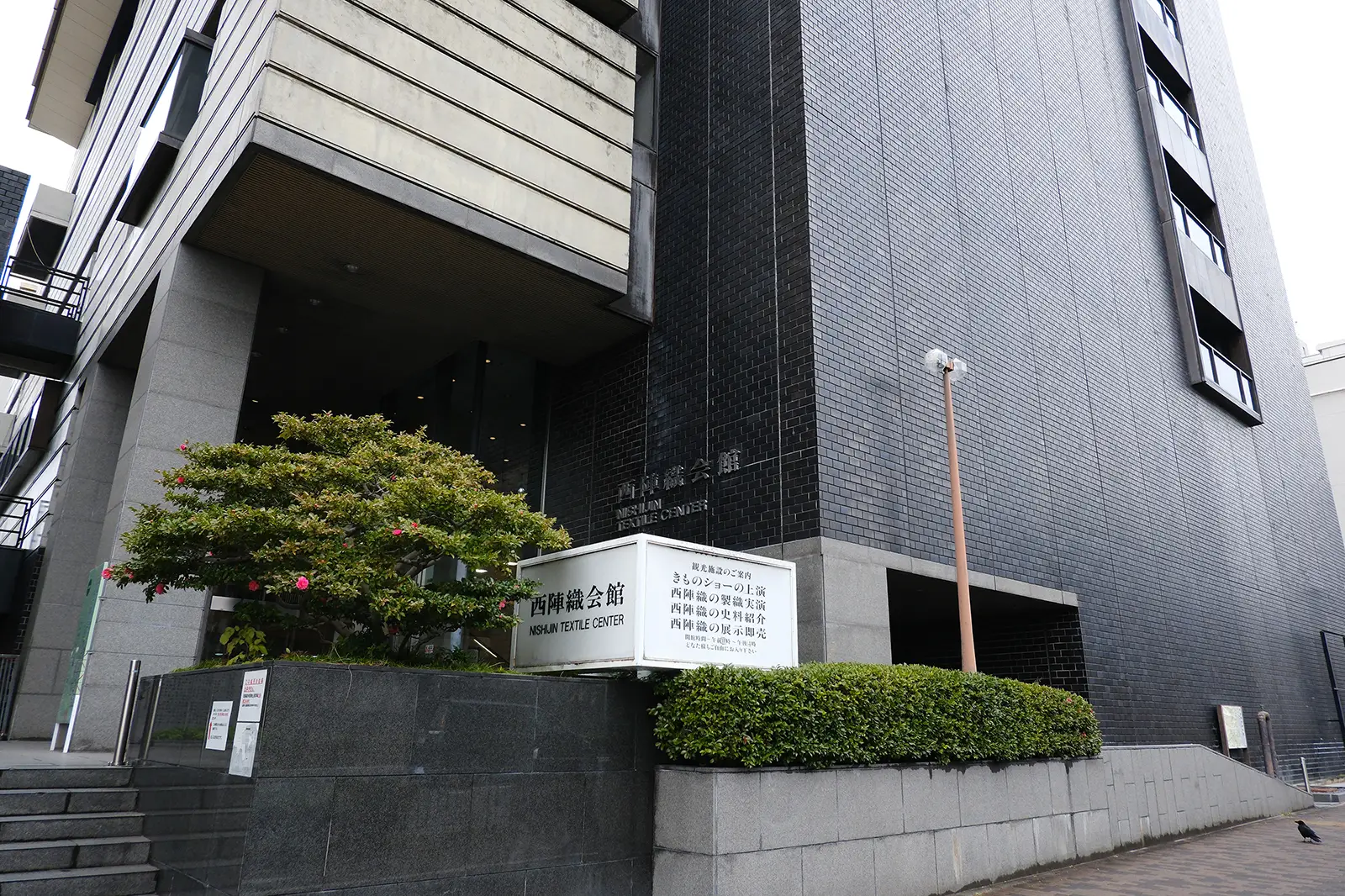
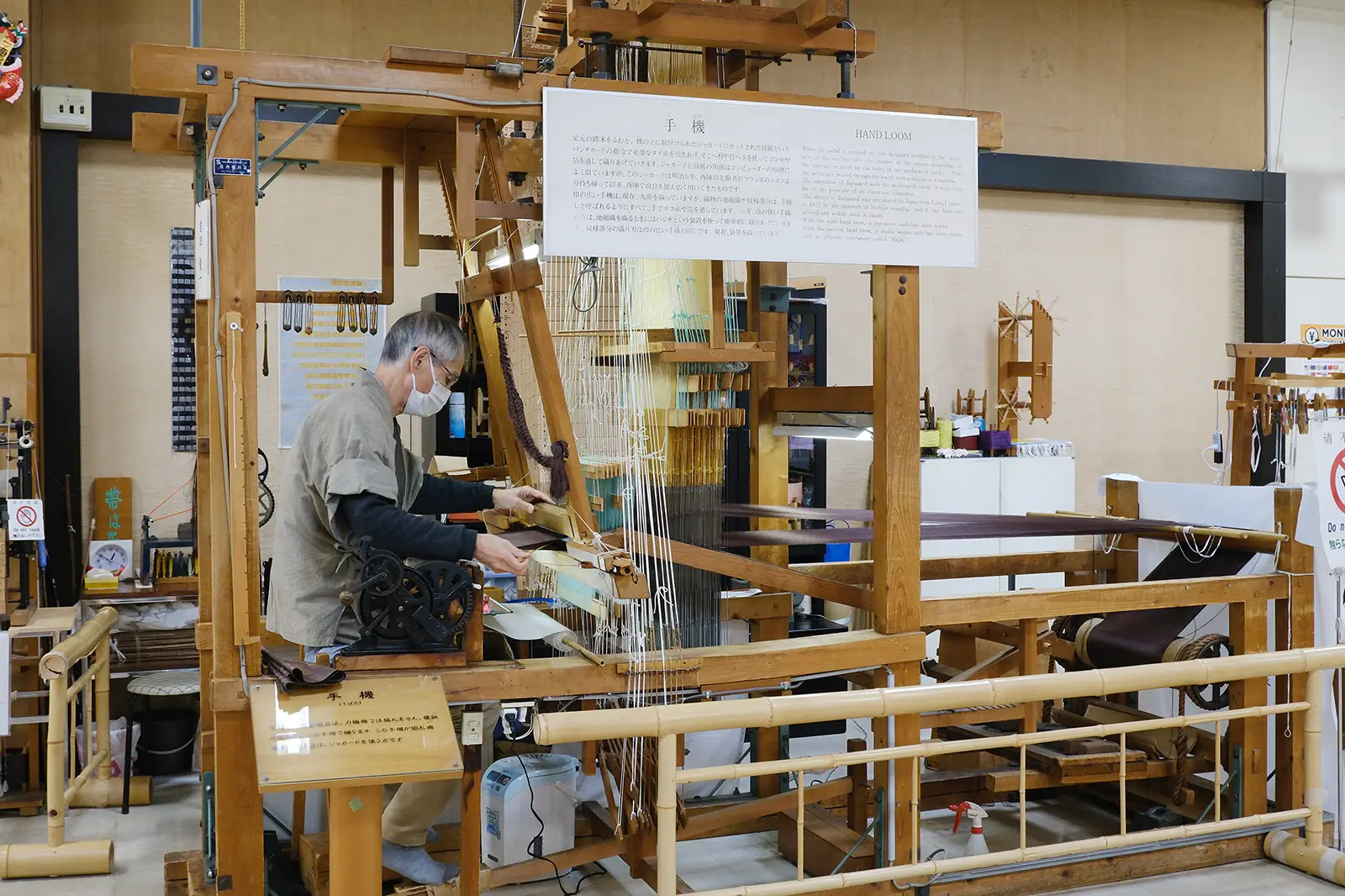
Just a stone’s throw away from the Tsuruya Yoshinobu Main Shop is the Nishijin Textile Center. Here you can learn about the area’s claim to fame, the Nishijin-Ori textile, one of Japan’s nationally designated traditional craft products.
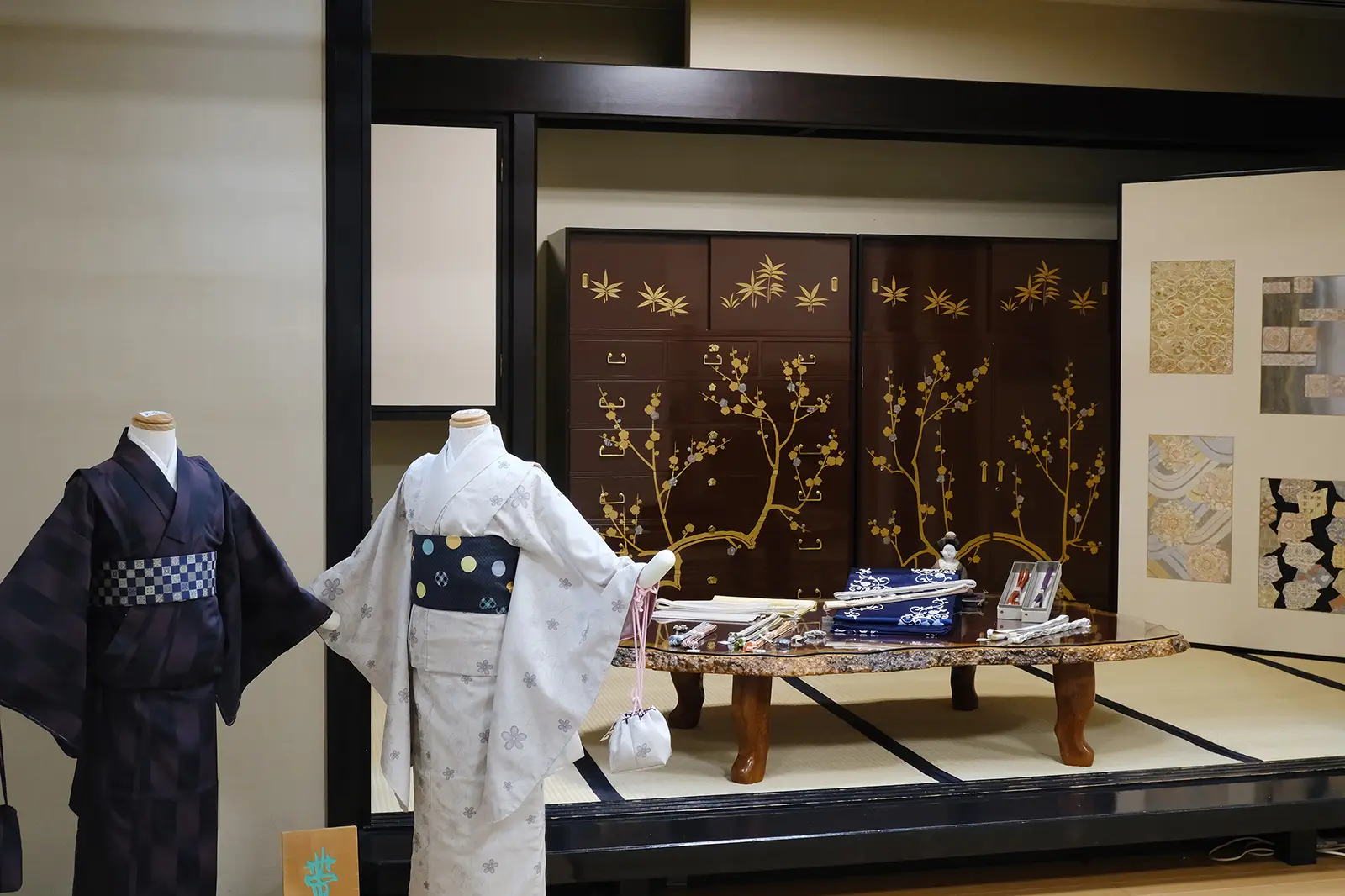
Depending on the time of day, you can see a craftsman working the jacquard hand machine, and on the second floor you can browse through a huge variety of goods made using Nishijin-Ori textiles, including wallets, scarves, neckties, handbags, and more.
The Nishijin Textile Center also offers hands-on experiences if you book ahead. This facility is a highly recommended spot for learning about how integral the textile industry was to the area and picking up a souvenir along the way.
Nishijin Textile Center
Nearest bus stop: Horikawa Imadegawa
Kanaya Masahiro’s “Shinseimame”
If you go southward from Tsuruya Yoshinobu along Horikawa Street, you will find the third store featured in this article, as well as the Horikawa Shopping Street. With history going back to the 1950s, this shopping street has gone through a revitalization recently with new shops opening such as: a vegetarian restaurant, a chocolatier, and a cafe inside a bookstore.
A few minutes walk from this shopping street is Kanaya Masahiro, a bona fide hidden gem as the only shop of its kind in Kyoto. The original owner hailed from Ishikawa Prefecture, where he made ironware for tea ceremonies. He opened Kanaya Masahiro here in 1856, where it continues to operate today.
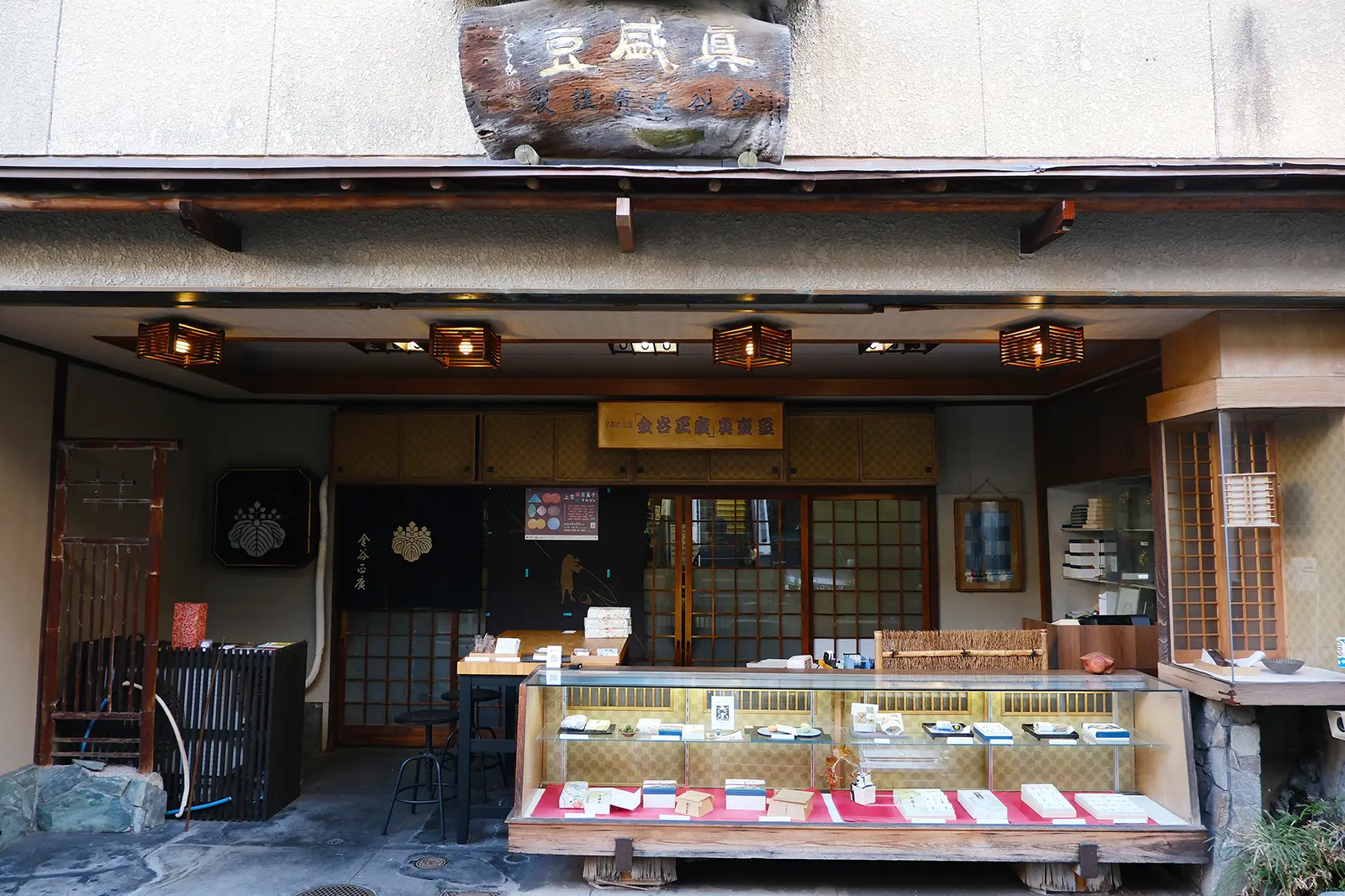
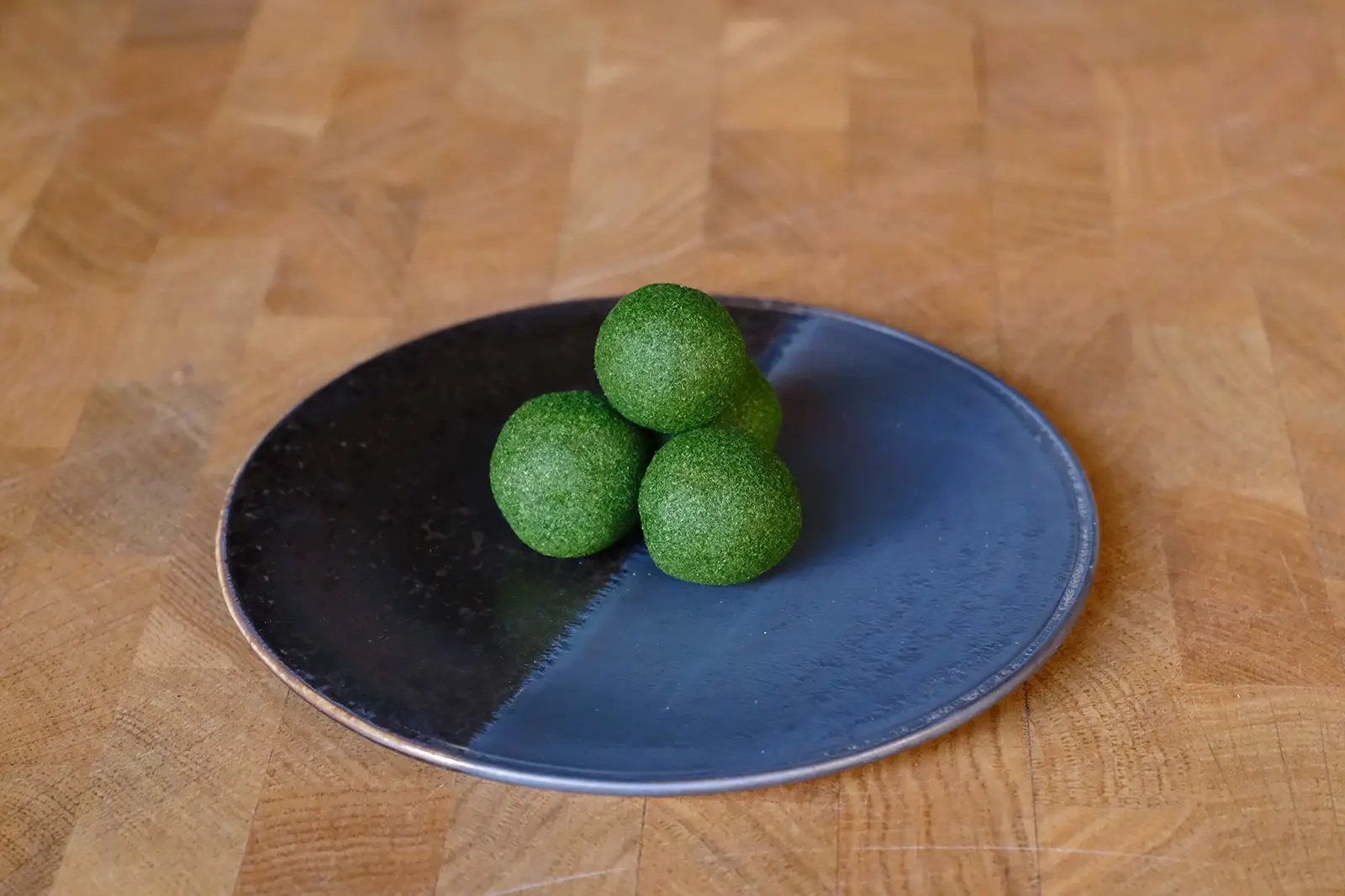
This shop’s signature confectioneries are the “Shinseimame,” possessing a unique look and a fascinating history. They are filled with roasted black soybeans, covered with a mixture of soy powder, sugar, and aonori (green dried seaweed) powder, making them look like tiny green moss balls.
You’d normally find this seaweed powder being used on savory foods in Japanese cuisine, so finding it on sweets is quite a surprise. And it’s not just for looks too; the seaweed powder gives off a savory aroma and a little bit of umami flavor as you bite into it.
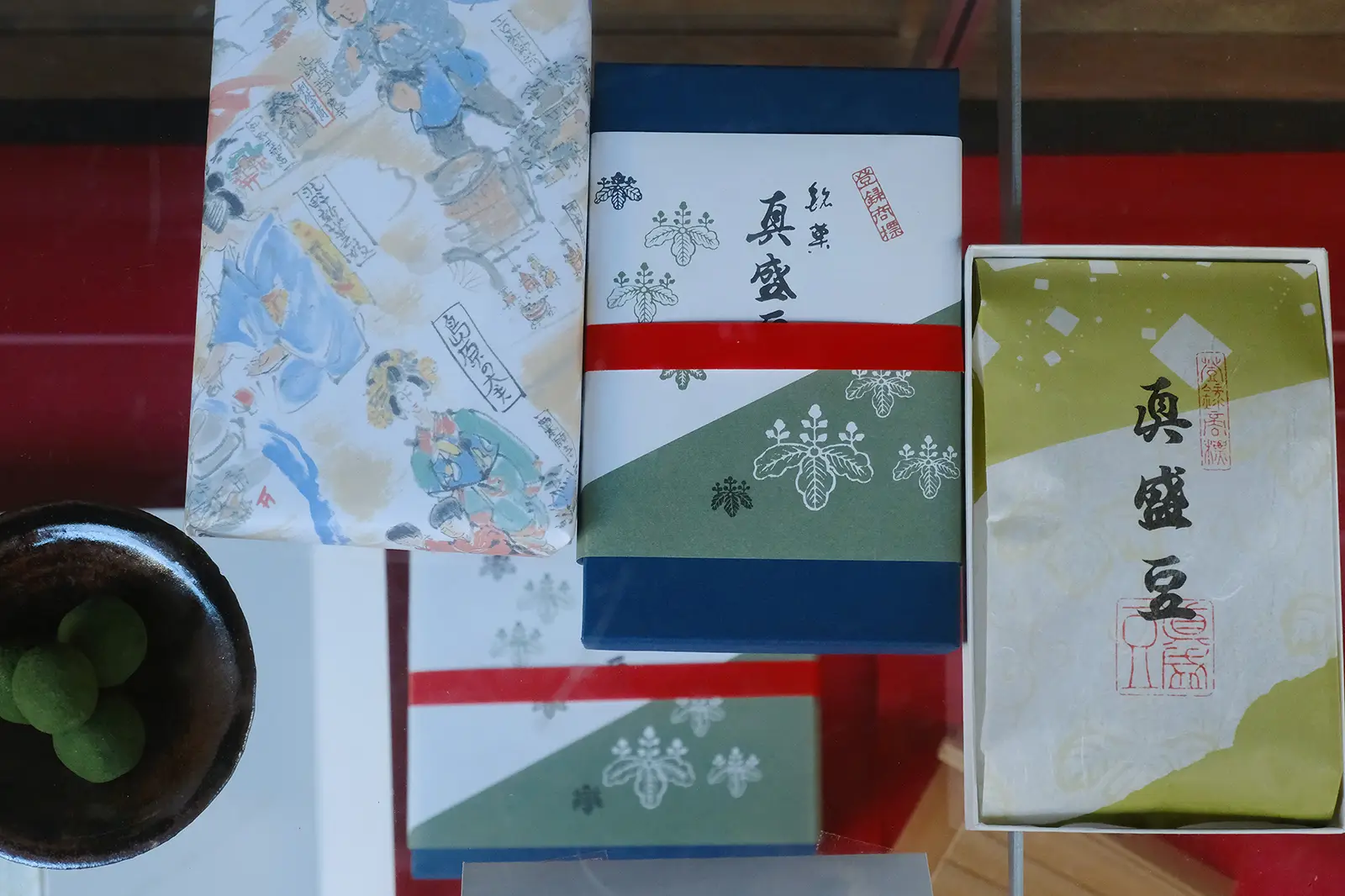
The history of Shinseimame is quintessentially Kyoto as it intertwines with Buddhist temples and the Japanese tea ceremony. A Buddhist priest called Shinsei Shōnin (1443–1495) came up with a snack to be eaten by monks during their constant chanting. Made with black soybean, salt, and rapeseed leaves, this savory bean snack was named after its inventor.
The recipe for Shinseimame has been preserved and passed down by two Buddhist nuns, disciples of Shinsei Shōnin, who opened a temple in the Kamishichiken District.
In 1587, when Toyotomi Hideyoshi decided to host a grand tea ceremony on the grounds of Kitano Tenmangū Shrine, his tea master Sen no Rikyū drew water from a well at a nearby temple to prepare tea. This temple belonged to the Buddhist disciples of the aforementioned Shinsei Shōnin, and it was there that the nuns taught Sen no Rikyū how to make Shinseimame. When Sen no Rikyū served Shinseimame at the tea ceremony, Toyotomi Hideyoshi praised it as matching really well with the flavor of matcha.
When Kanaya Masahiro opened up his confectionery shop in 1856, he was granted access to the temple in Kamishichiken. He learned the recipe for Shinseimame from the nuns there. He refined this recipe to create a new confection, and after receiving permission from said temple, started selling it publicly in 1868.
Throughout the years, Shinseimame has been enjoyed by monks, tea masters, locals and tourists alike. Be sure to stop by for an authentic local experience steeped in history.
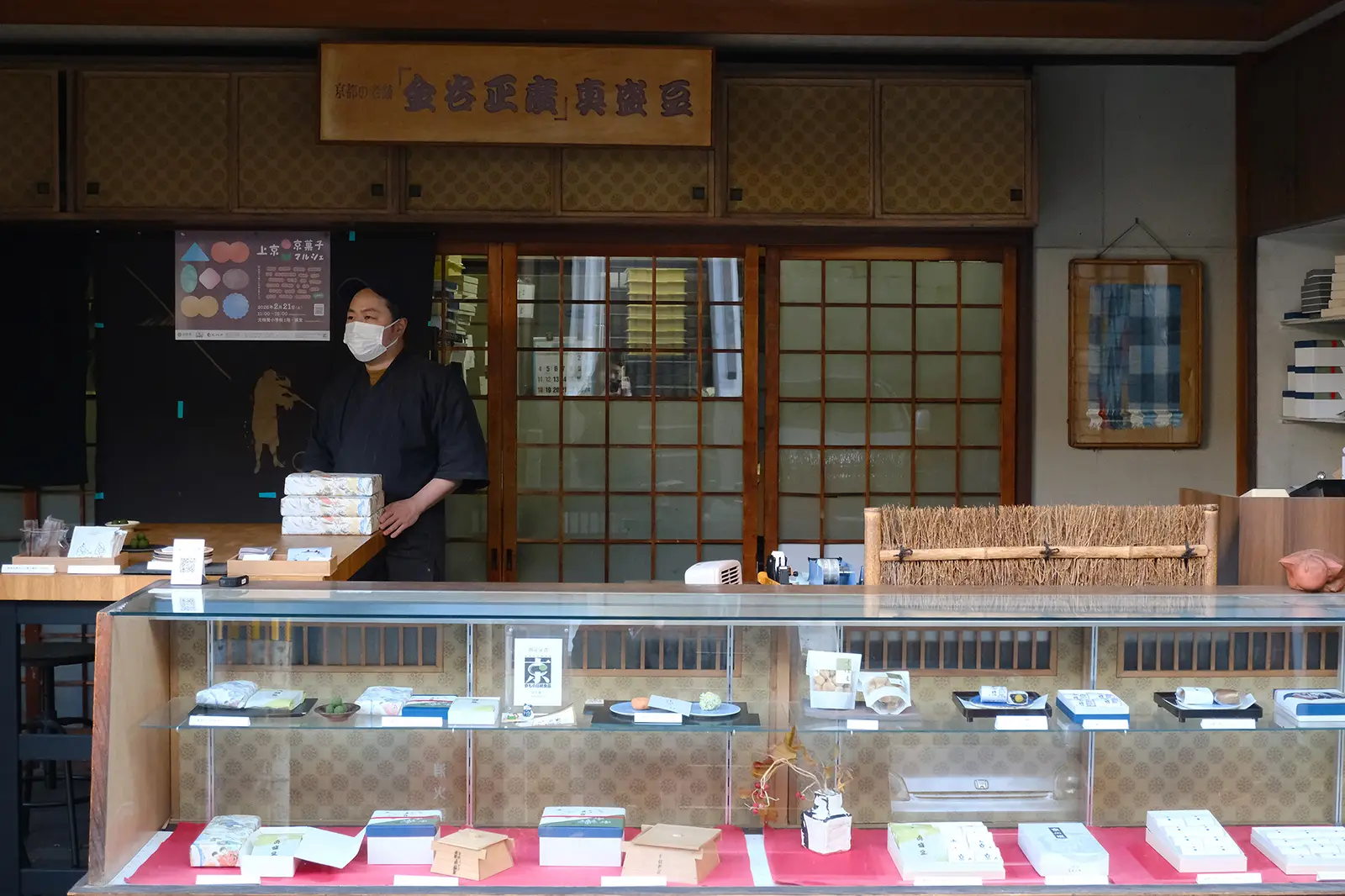
Kyoto Confectioner Kanaya Masahiro
Nearest bus stop: Horikawa Shimochojamachi
Official website (in Japanese only)
Shinseimame
| Best by | about two weeks, if unopened |
| Availability | year-round |
| Quantity | about fifteen balls per package |
| Ingredients | sugar, soy powder, black soybean, aonori (green dried seaweed powder) |
Note: The information written in the article is current as of the time of writing. For the latest update, please check the official website of each shop.
Article Author