Just a one-minute walk from Hankyu Line’s Kyoto Kawaramachi Station, François Kissashitsu (Salon de Thé Françoise) stands along Nishikiyamachi Street running by the Takase-gawa Canal in downtown Kyoto. This long-established café is known for an interior reminiscent of a luxurious ocean liner. It is said to have welcomed many cultural figures, including the novelist Osamu Dazai (1909-1948) and the painter Tsuguharu Foujita (1886-1968). Even today, the café retains a nostalgic, time-capsule atmosphere—and the enchanting custard pudding served here has become something of a sensation. What makes it so special?
A Landmark Café Recognized as a Registered Tangible Cultural Property
Founded in 1934, François Kissashitsu is one of Kyoto’s most iconic traditional cafés. Its founder was Shoichi Tatsuno, and in 2003 it became the first café in Japan to be designated a Registered Tangible Cultural Property by the national government.
Often counted among the “Three Great Cafés of Kyoto,” it is a shop that one cannot forget when talking about the city’s café culture.
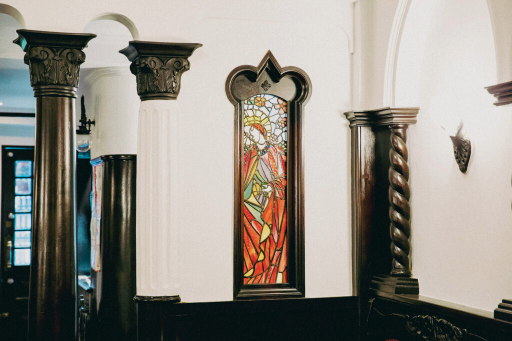
Opulent interior with intricate curved designs and lavish carving inspired by Italian Baroque Style. Photograph: François Kissashitsu
A Luxurious Interior Reminiscent of a Cruise Ship's Hall
Step inside and you are greeted by a classical space filled with red velvet chairs and paintings. The interior design dates back to a major renovation in 1941 and has been carefully preserved ever since.
The space was designed and created by Tatsuno’s friends, Alessandro Benchibenni, an Italian who was studying at Kyoto Imperial University at the time, and young artists including the painter Shiro Takagi. Drawing on Italian Baroque influences, they envisioned the café as the grand hall of a luxury passenger ship.
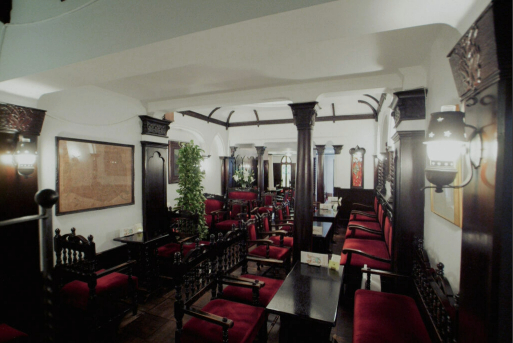
The architectural and interior designs were created by young artists. Photograph: François Kissashitsu
The domed ceiling at the center of the café evokes an ocean liner’s hall, while the pointed-arch stained-glass windows—also designed by Shiro Takagi—are particularly eye-catching. Remarkably, this gorgeous interior remains almost exactly as it was at the time of its creation.
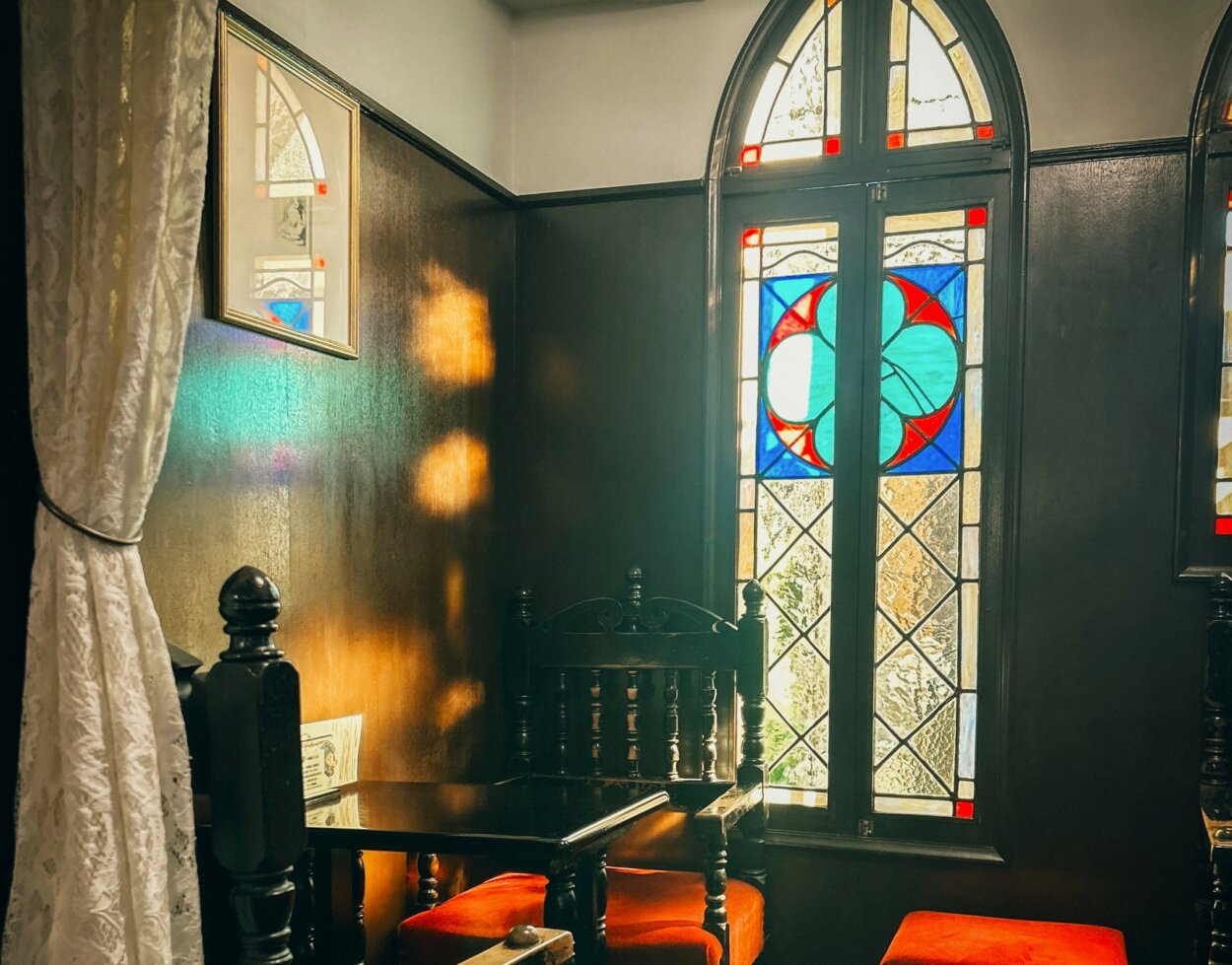
Visually striking pointed-arch stained-glass windows
A Café Devoted to Classical Music
From the very beginning, Tatsuno aspired to create an authentic meikyoku kissa—a café dedicated to classical music. To that end, he installed an electric gramophone and built an extensive collection of new classical records.
The repertoire focused on composers such as Beethoven, Mozart, and Schubert, with selections curated by his friend Tadaakira Seki, a vocalist and composer.
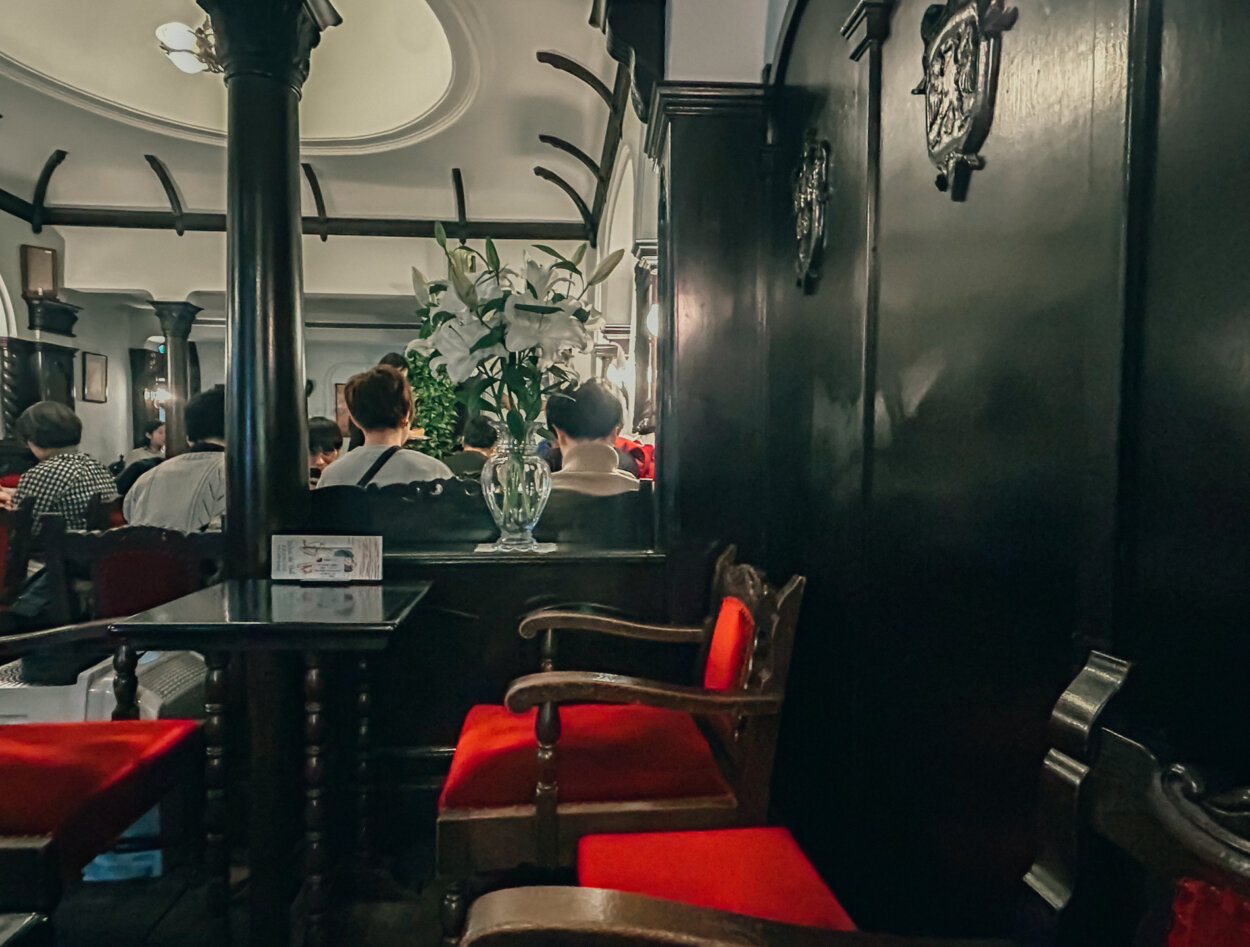
Sink into a red velvet chair and relax
In an era when most households had no way to listen to music at home, this café offered visitors the rare pleasure of immersing themselves in music for as long as they wished. Today, music is played through standard speakers, but the relaxed, contemplative mood remains.
The Elegant Allure of a Firm Custard Pudding
Among the many attractions of this historic café, one item now draws particular attention: its house-made custard pudding with an immaculate silhouette.
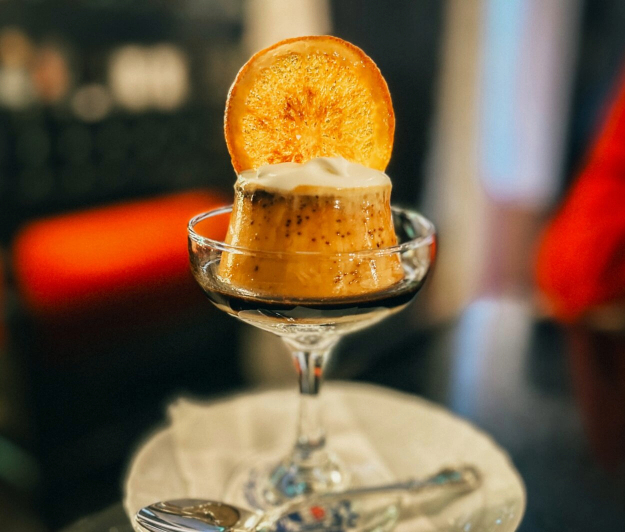
It is served as a Pudding Set (¥1,550), which includes a choice of coffee or tea. Although the pudding had once been discontinued, it made a celebrated return in 2021 following a collaborative project with the Kyoto City KYOCERA Museum of Art.
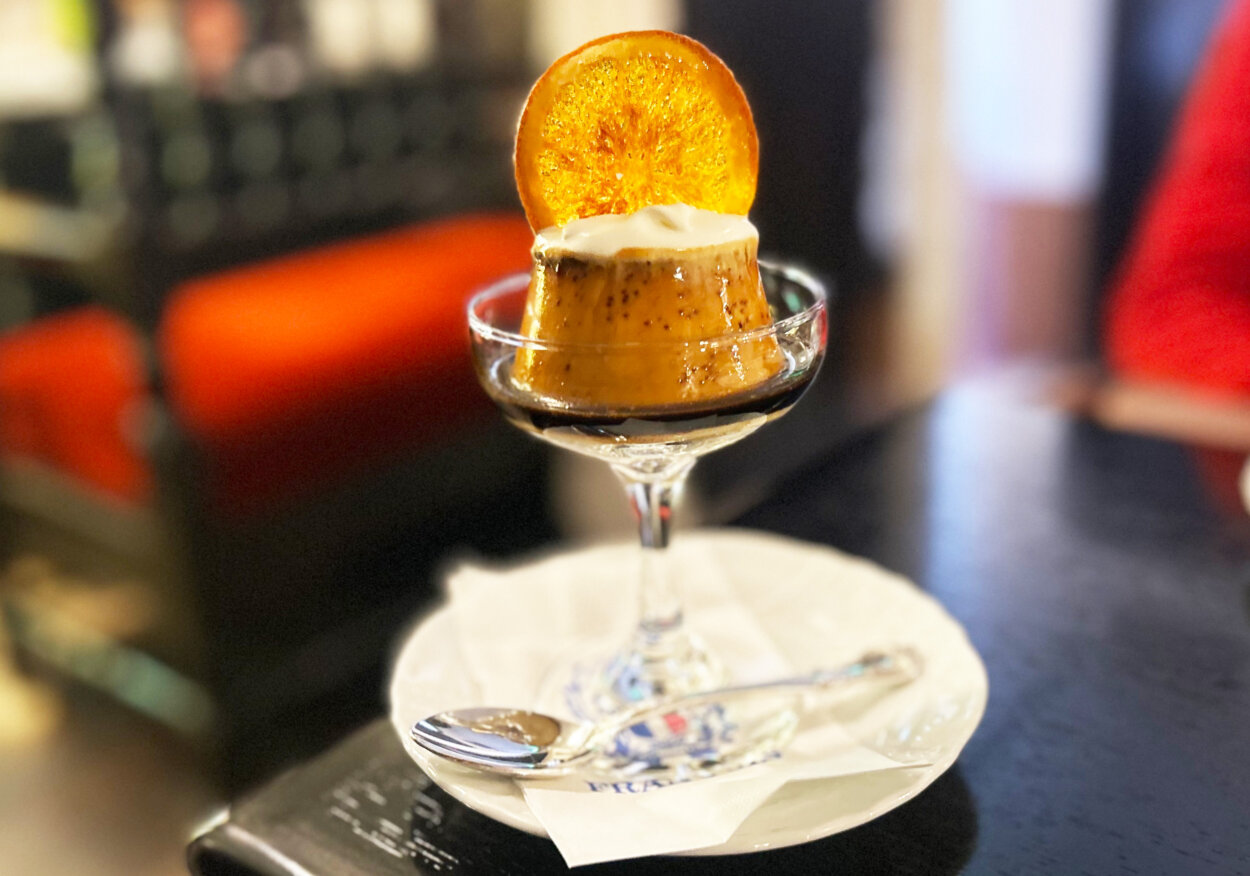
The “Pudding Set” (¥1,550), served with coffee or tea
The pudding has a satisfyingly firm, dense texture (in Japan, puddings are typically soft like jelly), with a rich egg flavor and a lightly bitter caramel sauce that is not overly sweet. A garnish of house-made dried orange on top adds a bright balance of sweetness and acidity, serving as a subtle accent to the overall taste.
The coffee, made from organic beans sourced from five countries and blended at two different roast levels, is noted for its deep sweetness, mellow body, and full aroma. The standard style is served with fresh cream—a gentle blend of whipped cream and unsweetened condensed milk—resulting in a smooth, comforting cup.
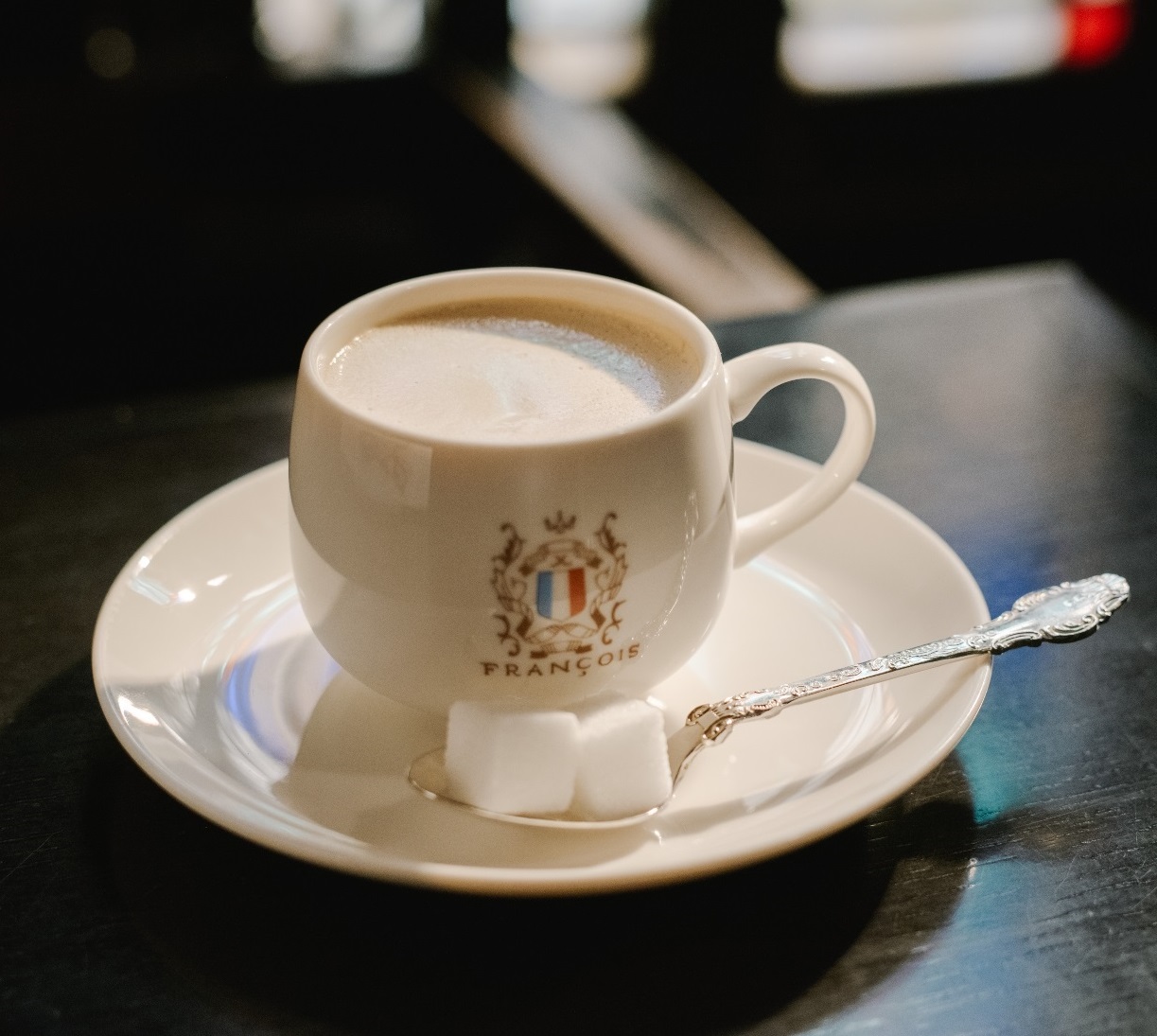
Coffee finished with fresh cream. Photograph: François Kissashitsu
An Oasis of Culture and Freedom in the Shōwa Era
Tatsuno originally studied at an art school with aspirations of becoming a painter. Influenced by his seniors, he later developed an interest in social movements and opened this café as a place to share ideas and culture.
From its earliest days, the café naturally attracted writers, painters, ceramic artists, and figures from the worlds of film and theater. During wartime, when freedom of expression was heavily restricted, François Kissashitsu served as a rare refuge—a true “oasis of culture and freedom”—where people could speak openly about peace, literature, and the arts.
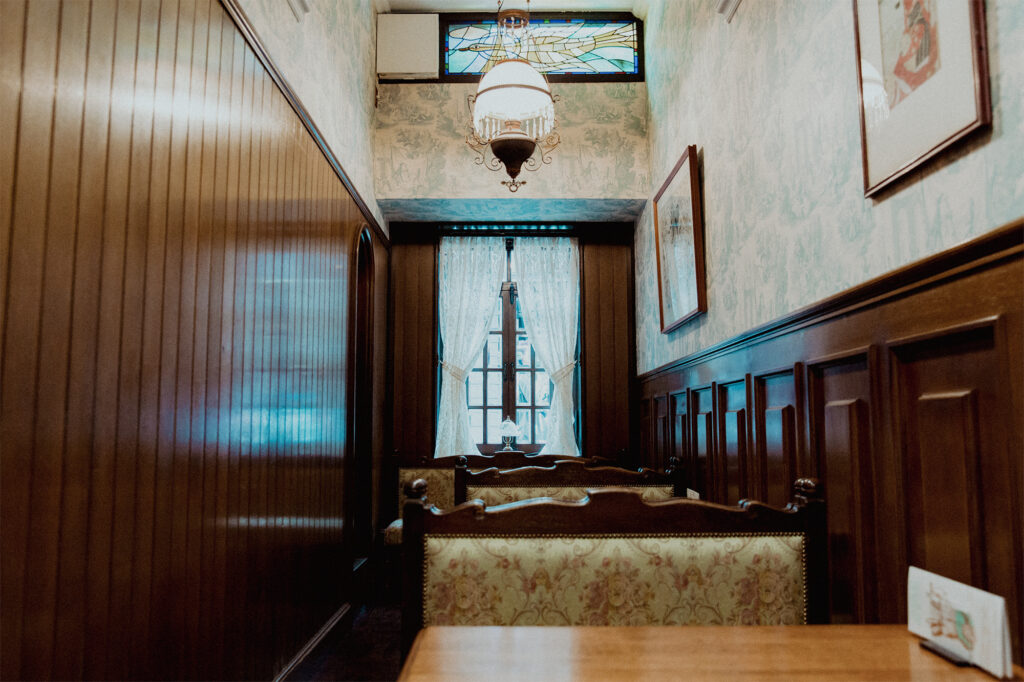
The back of the café, filled with a comforting early-mid twentieth century atmosphere. Photograph: François Kissashitsu
With its refined, European-style façade, serious classical music, and excellent coffee, the café captured the hearts of young people throughout the Shōwa period (1923–1989). Today, visitors are invited to savor its beautiful custard pudding while imagining the stories that once unfolded here—an experience that feels like stepping back in time.
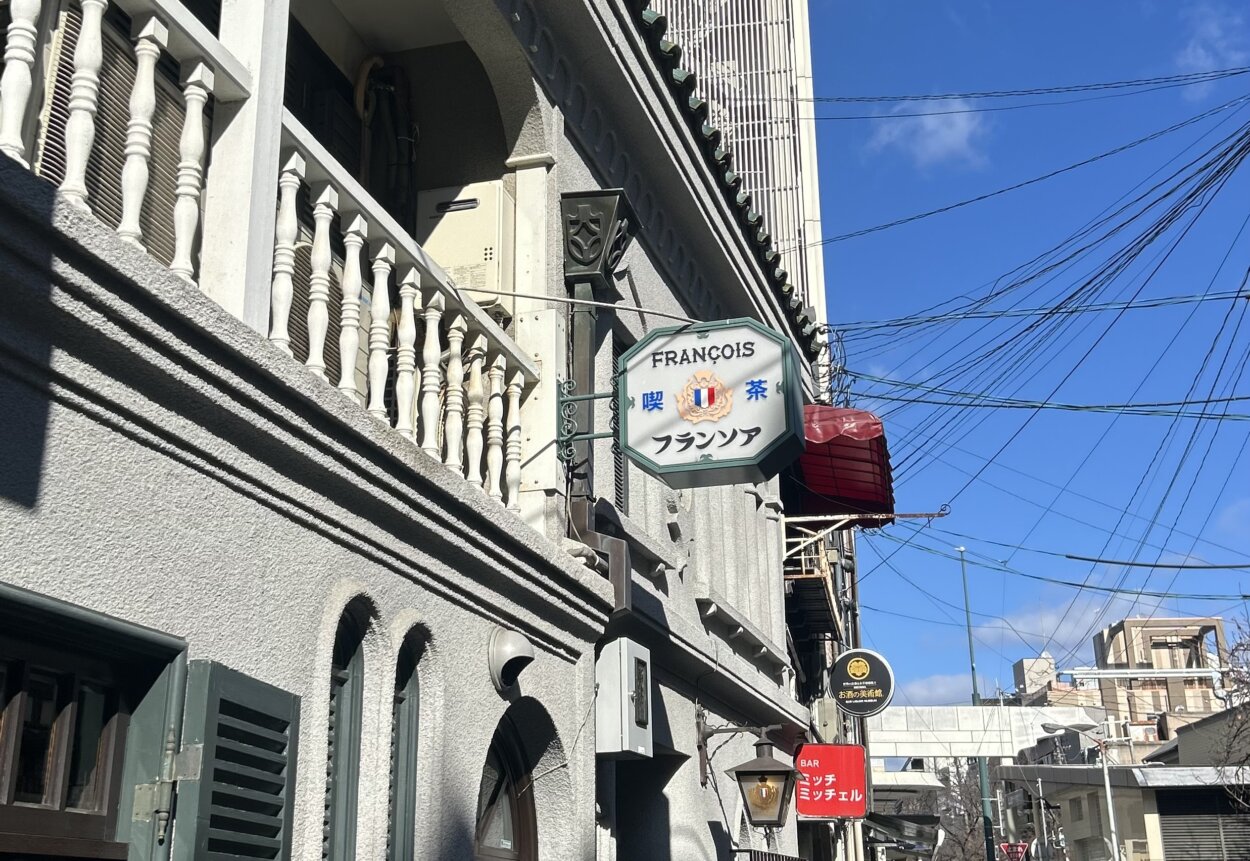
The sign of François Kissa Shitsu
François Kissashitsu
Address: 184 Funayacho, Nishikiyamachi-dori Shijō sagaru, Shimogyō-ku, Kyoto
Official website:
François Kissashitsu (official)
Article & photos by Tomomi Nakamura
Article Author
Tomomi Nakamura