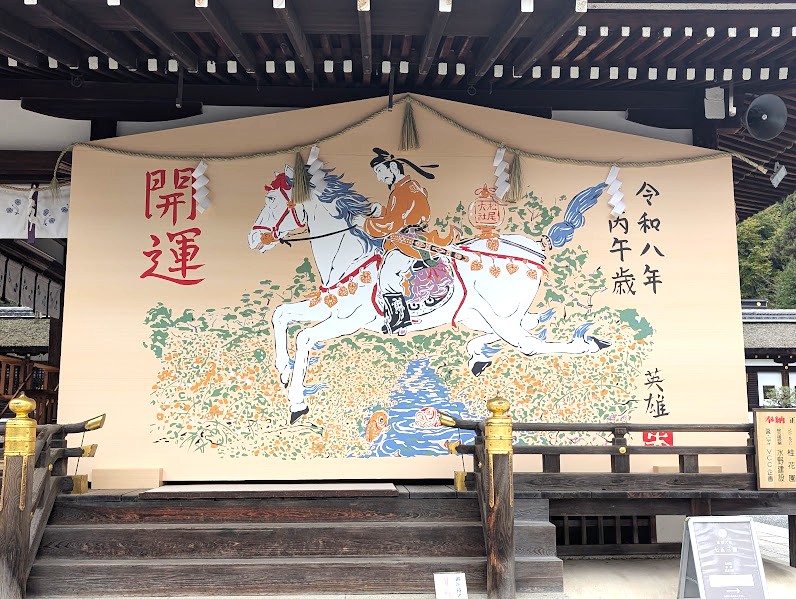
*Large ema votive plaque at Matsunoo-taisha Shrine.
In the Japanese zodiac, 2026 is the year of the horse. Drawing from the animal’s powerful image, this zodiac sign symbolizes vitality, progress, bold leaps, success, prosperity and luck in competition. Thus, 2026 is considered an auspicious year that will bring good fortune to those who take on new and difficult challenges.
In Japan, the guardian deity of the year of the horse is Seishi, also known as Bodhisattva Mahāsthāmaprāpta. As the right attendant to Amida Buddha, he is revered as the Bodhisattva of wisdom and compassion.
The Sacred Horse: Origin of Ema Votive Plaques
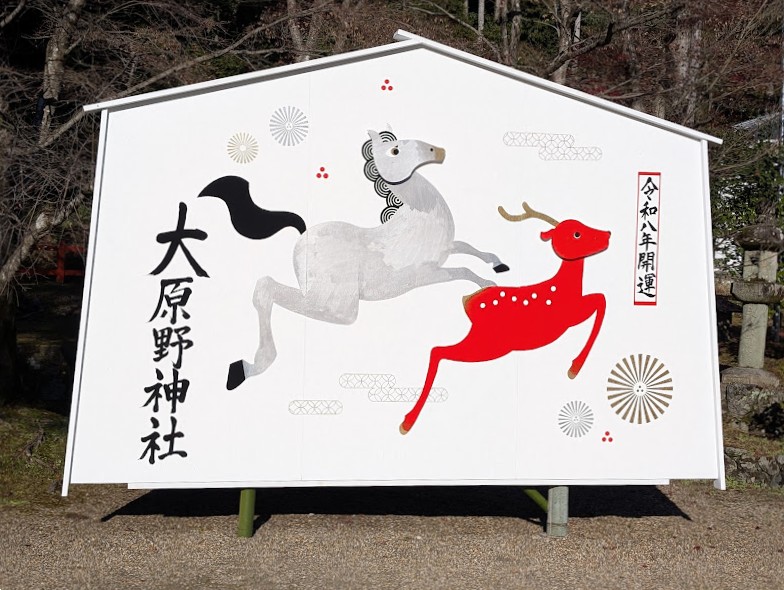
Large ema votive plaque in Oharano-jinja Shrine
Ema are wooden plaques bearing the shape or image of a horse, offered at Shinto shrines as a form of prayer or making a wish. Originally, it was customary to offer live horses to the shrine, as they were believed to be divine mounts for the gods. Later on, carved wooden horses or painted boards replaced live offerings—a shift that is considered the origin of ema.
Over time, animals associated with each shrine’s enshrined deity—such as foxes or snakes—began appearing on the plaques. Their designs have further diversified over time, and today they feature auspicious symbols such as cranes, turtles and Daruma dolls, as well as popular characters and landscapes.
Hatsuuma - The First Day of the Horse
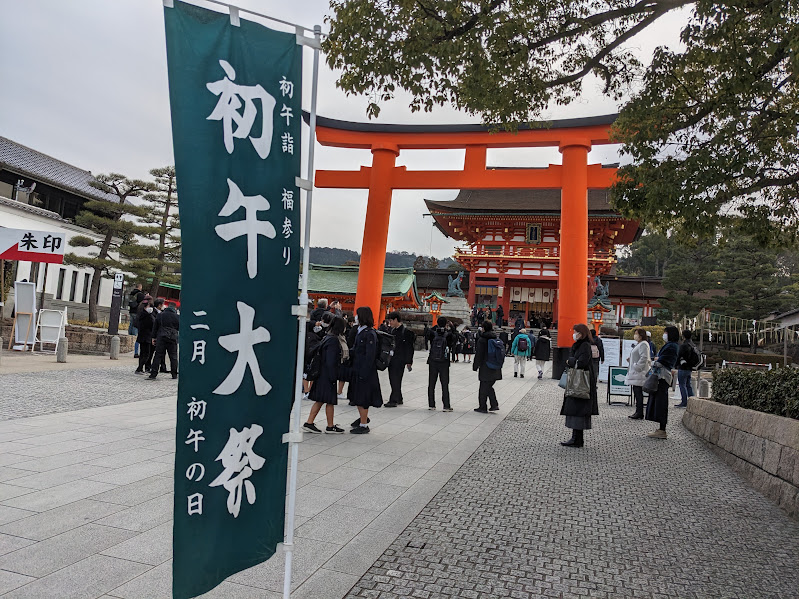
Hatsuuma Festival at Fushimi Inari Taisha Shrine
In the old lunar calendar still used today for many religious ceremonies, months and days were represented by the twelve zodiac animals. In 2026, hatsuuma—the first day of the horse—falls on February 1st.
It is said that in 711 CE, the deity of harvest, foxes and prosperity – Inari, descended upon Fushimi Inari Taisha Shrine on the first day of the horse. This legendary event is commemorated on the same day every year during the Hatsuuma Festival, held at numerous shrines throughout Japan.
At Fushimi Inari Taisha Shrine, “shirushi-no-sugi” lucky charms crafted from cedar wood are sold to visitors, while fried tofu and inari sushi are offered to fox statues, messengers of the Inari deity.
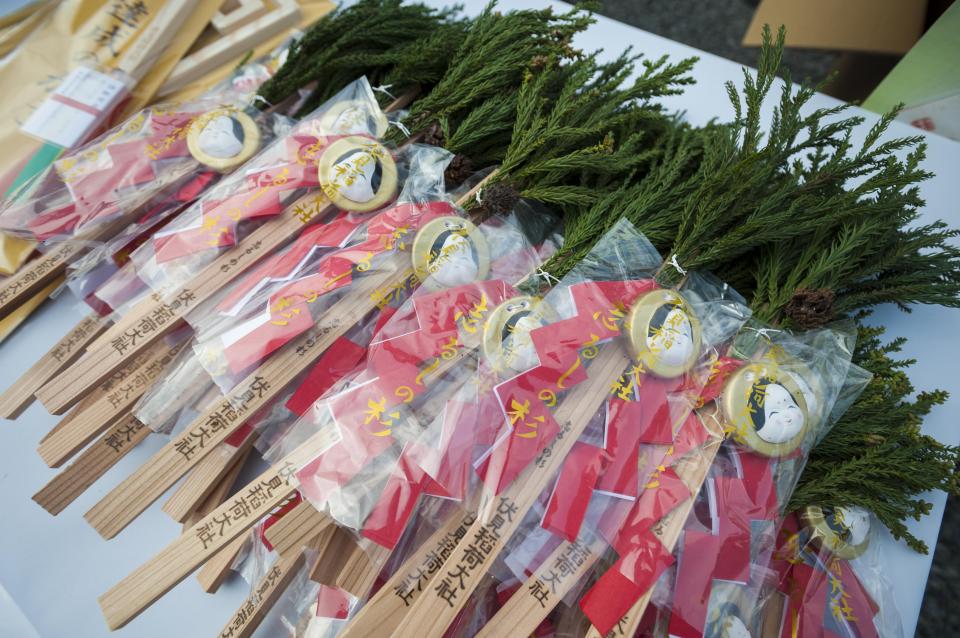
The “shirushi-no-sugi” lucky charms
At Sanzen-in Temple, locally grown organic radishes are blessed during a ritual offering to the Buddhist deity Fudo Myo-o, then cooked and served free of charge to worshippers as prayers for good health and fortune.
With each region adding its own unique characteristics, the Hatsuuma Festival has evolved beyond a simple agricultural observance into an event reflecting local culture and traditions.
The Guardian Deity Daiseishi
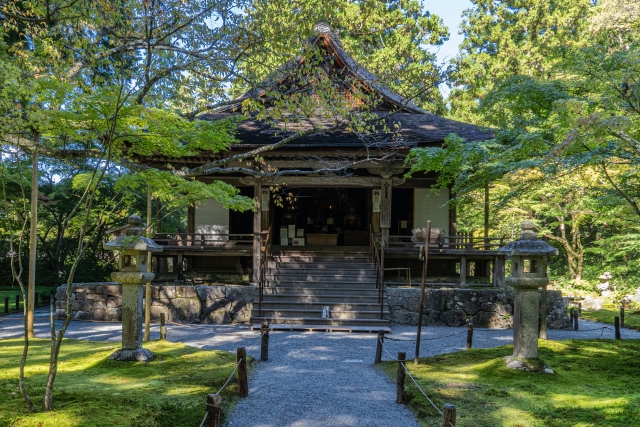
Sanzen-in Temple’s Ojo Gokuraku-in Hall, enshrining Seishi Bodhisattva
Seishi Bodhisattva serves as the right attendant of Amida Buddha, forming the Amida Triad alongside Kannon Bodhisattva. While Kannon embodies compassion, Seishi embodies wisdom, illuminating all sentient beings lost in the six realms with the light of wisdom and guiding them away from confusion and suffering.
When Amida Buddha comes to welcome souls from the Pure Land, Daiseishi leads the way together with Kannon Bodhisattva.
His full name is “Daiseishi Bodhisattva,” and he is believed to be so powerful that when he steps upon the earth, the ground trembles beneath him.
See below for a full map of the temples and shrines associated with horses and Daiseishi (available in Japanese):
(Information provided by: “Totteoki” Hidden Gems of Kyoto Project Office)